Showing posts with label technology. Show all posts

Sunday, June 17, 2018

A new oral treatment temporarily coats intestine, reduces blood sugar spikes

Harvard: In a recently published paper in Nature Materials, a team of Harvard Medical School researchers at Brigham and Women's Hospital reported results of a preclinical study in which an oral agent was administered to deliver a substance that could temporarily coat the intestine to prevent nutrient contact with the lining in the proximal bowel and avoid post-meal spikes in blood sugar.  

Tuesday, June 12, 2018

Copying movements could help manage Parkinson's

Manchester: New research by University of Manchester psychologists has revealed that imitation of movement can help people with Parkinson’s. Dr Ellen Poliakoff and Dr Judith Bek, whose paper appears in the print version of the Journal of Neuropsychology today, are on the team of the pioneering Economic and Social Research Council funded study. The study compared the reactions of 23 people with mild to moderate Parkinson’s and 24 people without the condition.

Sunday, June 10, 2018

Prosthetic arms can provide controlled sensory feedback, study finds

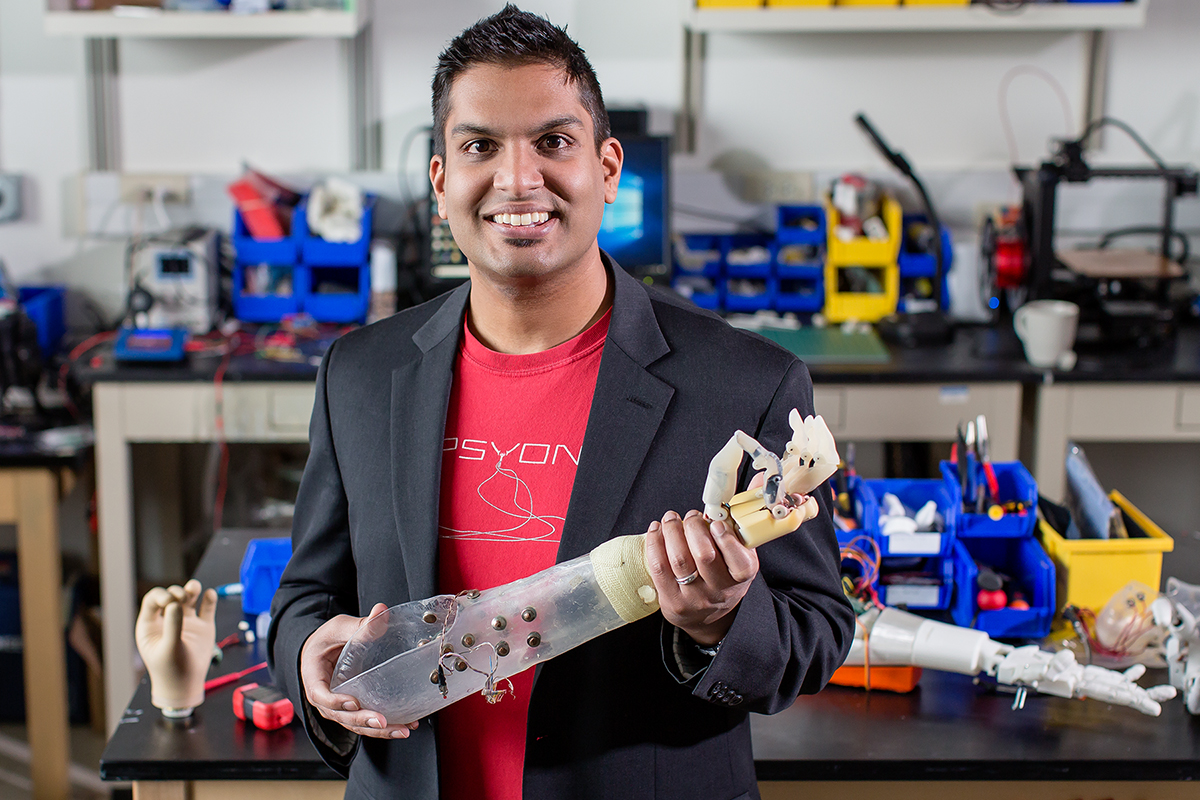
Illinois: Losing an arm doesn’t have to mean losing all sense of touch, thanks to prosthetic arms that stimulate nerves with mild electrical feedback. University of Illinois researchers have developed a control algorithm that regulates the current so a prosthetics user feels steady sensation, even when the electrodes begin to peel off or when sweat builds up.

Thursday, May 31, 2018

Researchers combine wearable technology and AI to predict the onset of health problems

Waterloo: A team of Waterloo researchers found that applying artificial intelligence to the right combination of data retrieved from wearable technology may detect whether your health is failing.
The study, which involved researchers from Waterloo’s Faculties of Applied Health Sciences and Engineering, found that the data from wearable sensors and artificial intelligence that assesses changes in aerobic responses could one day predict whether a person is experiencing the onset of a respiratory or cardiovascular disease.

Monday, May 7, 2018

Researchers developing device to enable pregnant women to detect serious health complications

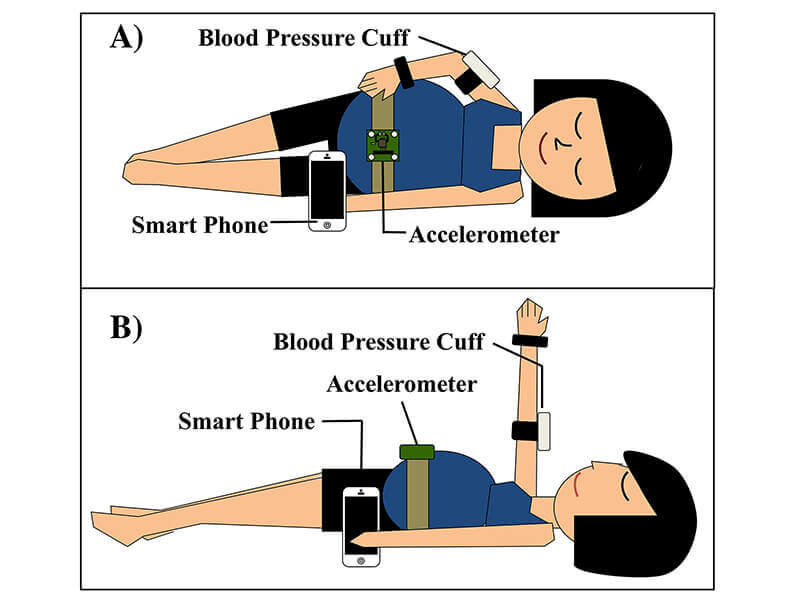
Purdue: Purdue University researchers are developing an app and wearable technology to enable pregnant women to use a smartphone to detect whether they have or are susceptible to a condition that could lead to serious health complications for them or their unborn child. The team, led by Craig Goergen, an assistant professor in Purdue’s Weldon School of Biomedical Engineering, is developing a low-cost automated early detection sensor of preeclampsia, a pregnancy complication caused by high blood pressure that can cause organ damage and premature birth.

Friday, May 4, 2018

Study shows easy-to-use, noninvasive stimulation device can help prevent migraine attacks

Mayo Clinic: A migraine is much more than just a bad headache. Migraine symptoms, which can be debilitating for many people, are the sixth leading cause of disability, according to the World Health Organization. While there is no cure, a new study published in Cephalalgia in March shows single-pulse transcranial magnetic stimulation is a new way to prevent migraine attacks. It's safe, easy to use and noninvasive.

Monday, April 24, 2017

The world’s smallest pacemaker

Maryland: The University of Maryland Medical Center’s Stephen Shorofsky, MD, PhD, was one of the first doctors in Maryland to implant the world’s smallest pacemaker for patients with bradycardia. Recently approved by the U.S. Food and Drug Administration (FDA), the Micra® Transcatheter Pacing System (TPS) is a new type of heart device that provides patients with the most advanced pacing technology at one-tenth the size of a traditional pacemaker. Micra is the only leadless pacemaker approved for use in the U.S.

Saturday, April 22, 2017

How can we use technology to support patients after bariatric surgery?

Kaiser Permanente: Bariatric surgery is a potentially life-changing procedure that can help ward off chronic illnesses like diabetes and heart disease. But going through the surgery itself is only part of the journey. Achieving and maintaining a healthy weight after surgery usually depends on adopting healthier eating and physical activity habits in the long term. We all know that’s easier said than done. But with the recent boom in mobile-health technologies such as activity trackers, lifestyle support for patients who’ve had bariatric surgery is moving in a whole new direction.

Video: Brain prints reveal children’s reading difficulties

A Binghamton neuroscientist and her team are developing a test to diagnose reading difficulties early on.

Saturday, March 11, 2017

Cool Tools: Pushing the Limits of High-Resolution Microscopy

NIH: Cell biologists would love to shrink themselves down and actually see, touch and hear the inner workings of cells. Because that’s impossible, they have developed an ever-growing collection of microscopes to study cellular innards from the outside. Using these powerful tools, researchers can exhaustively inventory the molecular bits and pieces that make up cells, eavesdrop on cellular communication and spy on cells as they adapt to changing environments. In recent years, scientists have developed new cellular imaging techniques that allow them to visualize samples in ways and at levels of detail never before possible. Many of these techniques build upon the power of electron microscopy (EM) to see ever smaller details.

Tuesday, March 7, 2017

A new predictive computer model could help optimize the recovery of stroke patients

NIH: After a stroke, patients typically have trouble walking and few are able to regain the gait they had before suffering a stroke. Researchers funded by the National Institute of Biomedical Imaging and Bioengineering (NIBIB) have developed a computational walking model that could help guide patients to their best possible recovery after a stroke. Computational modeling uses computers to simulate and study the behavior of complex systems using mathematics, physics, and computer science. In this case, researchers are developing a computational modeling program that can construct a model of the patient from the patient’s walking data collected on a treadmill and then predict how the patient will walk after different planned rehabilitation treatments. They hope that one day the model will be able to predict the best gait a patient can achieve after completing rehabilitation, as well as recommend the best rehabilitation approach to help the patient achieve an optimal recovery.

Scientists use light to control the logic networks of a cell

North Carolina: Proteins are the workhorse molecules of life. Among their many jobs, they carry oxygen, build tissue, copy DNA for the next generation, and coordinate events within and between cells. Now scientists at the University of North Carolina at Chapel Hill have developed a method to control proteins inside live cells with the flick of a switch, giving researchers an unprecedented tool for pinpointing the causes of disease using the simplest of tools: light.

Scientists Tissue-Engineer Part of Human Stomach in Laboratory

Cincinnati: Scientists report in Nature using pluripotent stem cells to generate human stomach tissues in a petri dish that produce acid and digestive enzymes. Publishing their findings online Jan. 4, researchers at Cincinnati Children’s Hospital Medical Center grew tissues from the stomach’s corpus/fundus region. The study comes two years after the same team generated the stomach’s hormone-producing region (the antrum).

Five innovations harness new technologies for people with visual impairment, blindness

NIH: During Low Vision Awareness Month, the National Eye Institute (NEI), part of the National Institutes of Health, is highlighting new technologies and tools in the works to help the 4.1 million Americans living with low vision or blindness. The innovations aim to help people with vision loss more easily accomplish daily tasks, from navigating office buildings to crossing a street. Many of the innovations take advantage of computer vision, a technology that enables computers to recognize and interpret the complex assortment of images, objects and behaviors in the surrounding environment.

Monday, February 20, 2017

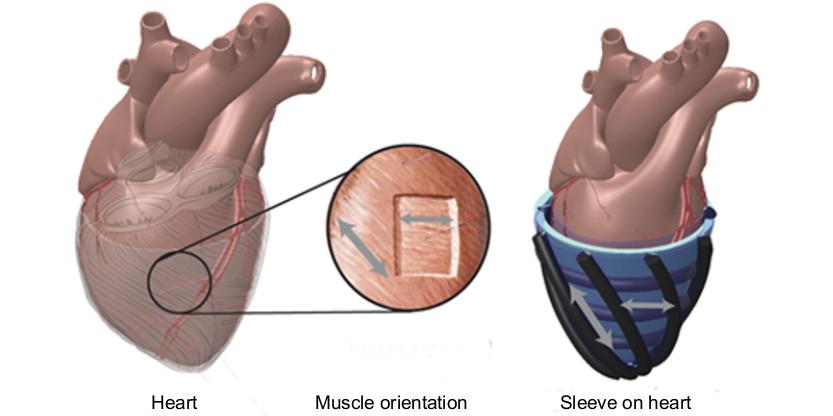
A prototype robotic sleeve to help the heart keep beating

Leeds: A prototype robotic sleeve, which can wrap around a weak heart before synchronising with its natural motion to help it keep beating, has been developed by an international team of engineers. Dr Ali Alazmani, a University Academic Fellow from the Faculty of Engineering at Leeds, is central to the team, which includes researchers from Harvard and the Boston Children’s Hospital. Dr Alazmani said: “We took the inspiration for how the heart itself already operates, to take a new approach to providing support for the muscle rather than trying to circumvent it as current devices do.”

Sunday, February 19, 2017

New technology to speed up testing of cancer drugs

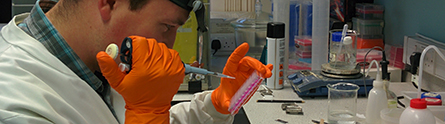
Nottingham: A new technology that could speed up the testing of drugs and reduce the use of animals in the lab has been developed by scientists at The University of Nottingham. The researchers in the University’s Division of Cancer and Stem Cells have designed a device that allows dozens of tiny balls of cells, called spheroids, to be sliced simultaneously to examine their structure and function. The method, which is detailed in the academic journal Scientific Reports, will enable other scientists to more rapidly assess whether new therapies and tissue engineering are likely to work in the real world, and could be up to 11 times more efficient than current methods.

Thursday, February 16, 2017

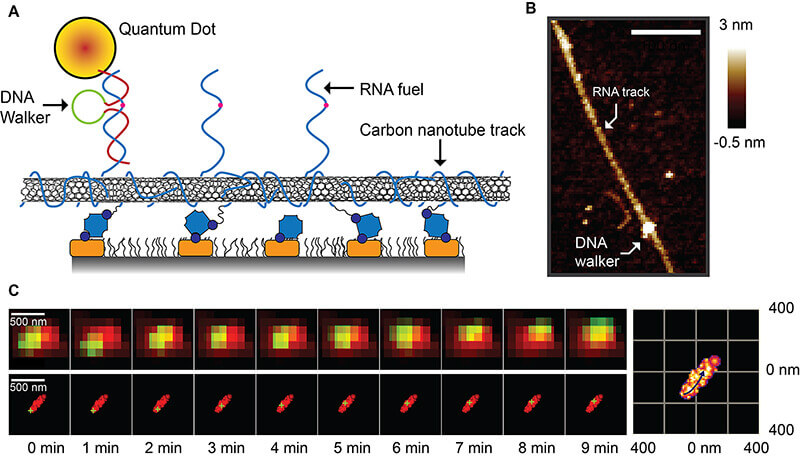
Super-resolution system reveals mechanics of tiny ‘DNA walker’

choi-dnawalkerPurdue: Researchers have introduced a new type of “super-resolution” microscopy and used it to discover the precise walking mechanism behind tiny structures made of DNA that could find biomedical and industrial applications. The researchers also demonstrated how the “DNA walker” is able to release an anticancer drug, representing a potential new biomedical technology, said Jong Hyun Choi, an associate professor of mechanical engineering at Purdue University.

Scientists develop ‘lab on a chip’ that costs 1 cent to make

Biochip next to a coinStanford: Researchers at the Stanford University School of Medicine have developed a way to produce a cheap and reusable diagnostic “lab on a chip” with the help of an ordinary inkjet printer. At a production cost of as little as 1 cent per chip, the new technology could usher in a medical diagnostics revolution like the kind brought on by low-cost genome sequencing, said Ron Davis, PhD, professor of biochemistry and of genetics and director of the Stanford Genome Technology Center. A study describing the technology was published online Feb. 6 in the Proceedings of the National Academy of Sciences. Davis is the senior author. The lead author is Rahim Esfandyarpour, PhD, an engineering research associate at the genome center.

Wednesday, February 15, 2017

Laser-based camera improves view of the carotid artery

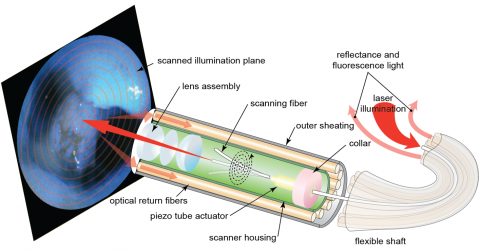
A unique application of a medical camera could one day help physicians know who is at risk for a cardiovascular event by providing a better view of potential problem areas.Ann Arbor: Michigan Medicine researchers employ novel technology to monitor vulnerabilities for cardiovascular events, aid in diagnosis and treatment.. Strokes and heart attacks often strike without warning. But, a unique application of a medical camera could one day help physicians know who is at risk for a cardiovascular event by providing a better view of potential problem areas.A new paper in Nature Biomedical Engineering (link is external) reports proof-of-concept results for this new imaging platform for atherosclerosis.

Future of glaucoma treatment lies in tiny tube, implanted in the eye, to preserve vision.

Ann Arbor: In a first for glaucoma treatment, the University of Michigan Kellogg Eye Center has used a tiny tube, implanted in the eye, to preserve vision. The XEN® Gel Stent creates an opening between the inside of the eye – called the anterior chamber – and the eye’s outer layer to allow fluid to drain, potentially decreasing pressure in the eye. This helps preserve vision by reducing intraocular pressure to a normal level. It’s a new way to treat glaucoma performed this week by glaucoma specialist Manjool Shah, M.D.,  and part of the advent of minimally invasive glaucoma surgery (MIGS) devices to help adults with mild-to-moderate glaucoma.