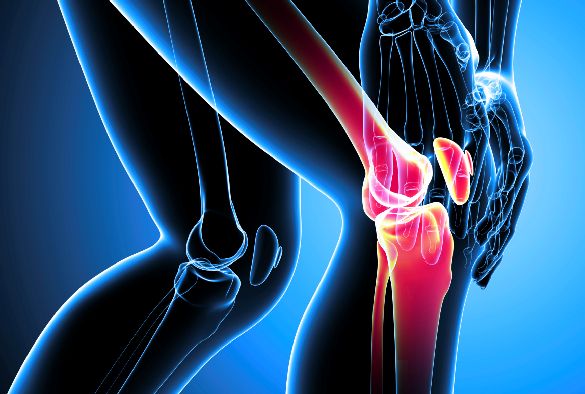
- RNSA: Researchers investigated the association between different regimens
of weight loss and the progression of knee cartilage degeneration in 760
overweight and obese patients. Individuals who lost weight through diet alone or diet and exercise
slowed the progression of cartilage degeneration in the knee.
Individuals who lost the same amount of weight through exercise alone did not slow the progression of cartilage degeneration.Obese people who lose a substantial amount of weight can
significantly slow down the degeneration of their knee cartilage, but
only if they lose weight through diet and exercise or diet alone,
according to a new MRI study presented today at the annual meeting of
the Radiological Society of North America (RSNA).
Only good, independent and reliable information about health from experts.
Showing posts with label knee. Show all posts
Wednesday, April 18, 2018
Weight Loss Through Exercise Alone Does Not Protect Knees
Friday, February 24, 2017
Wednesday, June 17, 2015
Knee surgery 'waste of time', researchers argue
NHS: "Knee surgery is 'pointless and potentially harmful' for thousands of patients,” the Daily Mirror reports.
Researchers have looked at previous studies that had compared arthroscopic (keyhole) knee surgery with exercise or sham surgery (placebo) for middle-aged people with knee pain – specifically, knee pain caused by osteoarthritis or a tear in the cartilage, but not those with a ligament condition. They found that both exercise and arthroscopy improved knee pain. Arthroscopy was slightly better, improving pain by a small amount, which was described as the equivalent to using a painkiller such as paracetamol or ibuprofen. There was no difference between the interventions for function of the knee.
Knee surgery on middle aged or older patients is only marginally beneficial
Scimex: A Danish and Swedish study has found knee surgery performed on middle
aged or older patients is only marginally beneficial, and could even
cause harm. The study brought together 18 trials of knee surgery, and
the researchers say the potential harms identified, which include deep
vein thrombosis and blocked arteries, outweigh the small benefits seen
in terms of pain relief in some studies.
Monday, May 18, 2015
New technology shows potential in repairing damaged tissue in knee joints
Liverpool: A company, founded by University of Liverpool scientist, Professor
Anthony Hollander, has been awarded £2 million to develop stem cell
technologies that have shown potential in repairing damaged tissue in
the knee. The team at Liverpool, in partnership with NHS Blood and Transplant,
is part of a £6.3 million funding initiative, supported by Innovate UK
and Cell Therapy Catapult, to help further technological development in
stem cell therapies in the UK.
Professor Hollander and colleagues launched the company, Azellon,
to produce stem cell therapies for treatment of damaged fibrous tissues
in the knee, called meniscal cartilage. Using Cell Bandage technology,
the team has shown encouraging test results from combining bone marrow
stem cells with a special membrane that helps deliver cells to the
injured site.

Tuesday, March 31, 2015
New technology shows potential in repairing damaged tissue in knee joints
Liverpool: A company is developping stem cell
technologies that have shown potential in repairing damaged tissue in
the knee. Professor Hollander and colleagues launched the company, Azellon,
to produce stem cell therapies for treatment of damaged fibrous tissues
in the knee, called meniscal cartilage. Using Cell Bandage technology,
the team has shown encouraging test results from combining bone marrow
stem cells with a special membrane that helps deliver cells to the
injured site.
Subscribe to:
Comments (Atom)