Showing posts with label fitness. Show all posts

Wednesday, May 2, 2018

Physical activity helps fight genetic risk of heart disease

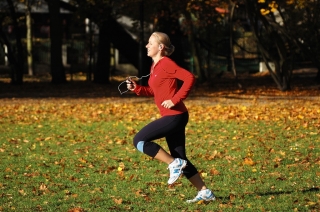
Woman running across grassStanford: In an observational study of almost a half-million participants, Stanford researchers discovered an association between high fitness levels and low heart disease, even among those at genetic risk
A new study found that keeping physically fit enhances heart health, even for those with a high genetic risk for heart disease.
Keeping fit, even if you’re born with a high genetic risk for heart disease, still works to keep your heart healthy, according to a study led by researchers at the Stanford University School of Medicine.

Thursday, November 3, 2016

The effectiveness of activity trackers and rewards to encourage physical activity

Singapore: Activity trackers such as Fitbit, Jawbone, Garmin and others have become increasingly popular. However, according to a new study from the Duke-NUS Medical School, activity trackers are unlikely to help people become more active, especially given that most stop wearing the devices within a few weeks or months. The study published in The Lancet Diabetes & Endocrinology recruited 800 working adults from Singapore and randomly assigned them to a control group, a tracker only group, or tracker plus one of two types of rewards schemes. One reward group accrued rewards in cash and the other had the rewards go to a charity of the individual’s choosing. The rewards were based on meeting weekly step goals over a period of six months. The researchers assessed physical activity outcomes, including steps and activity bouts, and health outcomes, including weight and blood pressure at study conclusion and after one year, six months after incentives were removed.

Wednesday, November 2, 2016

Mild Exercise Helps Decrease Pain and Improve Activity Level in Older Adults

HSS: It's never too late to reap the benefits of exercise, and that includes older adults with arthritis and other muscle and joint conditions, according to a study. Researchers at Hospital for Special Surgery (HSS) found that a low-impact exercise program in senior centers in New York City’s Chinatown and Flushing, Queens communities helped decrease pain, improve mobility and enhance quality of life for many participants.
The study, titled "Effects of a Culturally Tailored Low-Impact Exercise Program for Chinese Older Adults in NYC", was presented at the American Public Health Association annual meeting on November 1 in Denver.
According to the Centers for Disease Control and Prevention, Asian seniors had the highest rate of physical inactivity (defined as no physical activity beyond basic daily life activities), 29% of them lived in poverty, and 75% had limited English language proficiency in 2012. In addition, Chinese Americans were less likely to seek health care because of cost and language and cultural barriers.
Recreational, commuter biking linked to lower cardiovascular disease risk

American Heart Association:
  • People who bike regularly, either recreationally or as a way to commute, appear to have a lower risk of cardiovascular illness, according to studies conducted in Denmark and Sweden.
  • Middle-aged and older Danes who took up biking and stuck with it had a 26 percent lower risk of developing coronary artery disease, compared with non-bikers.
  • In Sweden, those who regularly biked to work were less likely to develop high blood pressure, high cholesterol, pre-diabetes and obesity — key risk factors for cardiovascular illness.

There’s money in your wearable fitness tracker

University of Illinois: Your wearable fitness tracker is great at counting the number of steps you took today, but it could also provide a new source of currency for the emerging health data economy, according to a new study in the journal Computer. The wearable device industry is estimated to grow to more than $30 billion by 2020. These sensors, often worn as bracelets or clips, count the number of steps we take each day; the number of hours we sleep; and monitor our blood pressure, heart rate, pulse and blood sugar levels. The list of biophysical functions these devices can measure is growing rapidly.

Tuesday, November 1, 2016

It's Time for Doctors to Prescribe Outdoor Therapy

Kaiser Permanente: Studies have shown that being outside has positive psychological and physiological benefits. Can the nature cure compete with Xanax? hen Stacy Bare returned from his deployment to Baghdad in 2006, he struggled with a host of problems: alcoholism, a cocaine habit, and suicidal thoughts, to name a few. It wasn’t until 2010, when a fellow veteran took him rock climbing on First Flatiron, in Boulder, Colorado, that things began to turn around. “If I hadn’t started climbing, I’d probably be another sad statistic,” says Bare. “The focus it gave me let me leave my troubles on the ground.”

Tuesday, May 26, 2015

Get fit with tailored videos

Adelaide:: Do you want to be more active and maybe lose some weight? You have come to the right place! Using personally tailored videos this website will help you to become more active in a fun and educational way! Start feeling healthy again. Best of all: it's FREE! The TaylorActive Project: Investigating the effectiveness of tailored videos in promoting physical activity via the Internet. This research is being conducted in Australia by a research team from CQUniversity Australia, University of Newcastle and the University of Alberta.

Monday, May 25, 2015

When fitness bands become student-tracking devices

Queensland: A “nightmarish” vision of a future in which technology makes physical education more boring, judgmental and narrow is driving a new study by a University of Queensland academic. Pr Michael Gard from the School of Human Movement and Nutrition Sciences has begun a three-year research project on the digitisation of school health and physical education. The project stems from the assumption that developments in digital technology present exciting educational opportunities but carry a new set of philosophical, educational and ethical questions and dilemmas.

Saturday, May 2, 2015

Are protein-based fitness products worth the money?

TheConversation: Protein-based fitness products are now big business. Once aimed largely at athletes and hardcore gym-goers seeking to “bulk up”, protein shakes, powders and bars are now being consumed by “ordinary” people seeking to lose weight or tone their bodies. UK sales increased from £73m in 2007 to £170m in 2012 and are expected to reach £358m by 2017. This rise can be partly explained by the creation of more protein-based weight loss products aimed at women. While some of these products have been criticised for inappropriate marketing strategies, it’s also worth asking whether protein-based food replacements are even worth the money. Weight loss is most often accomplished by restricting dietary energy intake. This means consuming fewer calories. But exactly what we eat also affects how our bodies change.

Thursday, March 26, 2015

Fitness Level Associated with Lower Risk of Some Cancers, Death in Men

JAMA: Men with a high fitness level in midlife appear to be at lower risk for lung and colorectal cancer, but not prostate cancer, and that higher fitness level also may put them at lower risk of death if they are diagnosed with cancer when they’re older, according to a study published online by JAMA Oncology.
While the association between cardiorespiratory fitness (CRF) and cardiovascular disease (CVD) has been well-established, the value of CRF as a predictor of primary cancer has gotten less attention, according to background in the study.