
Showing posts with label circadian clock. Show all posts
Showing posts with label circadian clock. Show all posts
Friday, May 18, 2018
Chronobiology: Getting the timing right
Wednesday, May 16, 2018
The Biological Clock Sets a Different Rhythm for Each Organ
 INSERM: A team of Inserm researchers led by Howard Cooper (Inserm
Unit 1208 “Stem Cell and Brain Institute”) in collaboration with their
colleagues in the U.S. have for the first time established a reference
map of gene expression, by organ and time of day. A mammoth task that
began a decade ago and has required two years of analysis. These
results, published in Science,
show just how important it is to consider the biological clock in order
to administer medication at the right time for optimized efficacy and
minimal side effects. The researchers are now preparing an atlas which
will be available for use by the entire scientific community.
INSERM: A team of Inserm researchers led by Howard Cooper (Inserm
Unit 1208 “Stem Cell and Brain Institute”) in collaboration with their
colleagues in the U.S. have for the first time established a reference
map of gene expression, by organ and time of day. A mammoth task that
began a decade ago and has required two years of analysis. These
results, published in Science,
show just how important it is to consider the biological clock in order
to administer medication at the right time for optimized efficacy and
minimal side effects. The researchers are now preparing an atlas which
will be available for use by the entire scientific community.Could the Biological Clock Be a Key Ally in the Fight Against Inflammatory Disease?
 INSERM: What if the symptoms and seriousness of certain inflammatory
diseases were linked to time of day? Researchers from Inserm, Institut
Pasteur de Lille and Université de Lille
have been working on this hypothesis, after noting that the seriousness
and mortality associated with fulminant hepatitis were dependent on the
time at which the disease was induced. Their study, conducted on human
cells and mice, shows that the anti-inflammatory action of a biological
clock protein could prevent the onset of fulminant hepatitis, by
alleviating symptoms and increasing survival rates. This research has been published in Gastroenterology.
INSERM: What if the symptoms and seriousness of certain inflammatory
diseases were linked to time of day? Researchers from Inserm, Institut
Pasteur de Lille and Université de Lille
have been working on this hypothesis, after noting that the seriousness
and mortality associated with fulminant hepatitis were dependent on the
time at which the disease was induced. Their study, conducted on human
cells and mice, shows that the anti-inflammatory action of a biological
clock protein could prevent the onset of fulminant hepatitis, by
alleviating symptoms and increasing survival rates. This research has been published in Gastroenterology.Wednesday, June 3, 2015
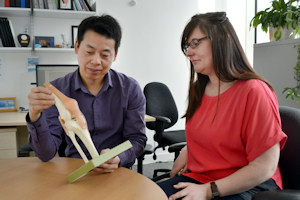
Hope to find out more about the role of the 24 hour body clock on arthritis
Sunday, May 24, 2015
How the Immune System Controls the Human Biological Clock in Times of Infection
 Pennsylvania: An important link between the human body clock and the immune system
has relevance for better understanding inflammatory and infectious
diseases, discovered collaborators at the Perelman School of Medicine at the University of Pennsylvania and Trinity College, Dublin. In a study published this week in the Proceedings of the National Academy of Sciences,
they report how a critical white blood cell called the macrophage,
when exposed to bacteria, makes the biological clock inside the
macrophage stop, allowing it to become inflamed.
Pennsylvania: An important link between the human body clock and the immune system
has relevance for better understanding inflammatory and infectious
diseases, discovered collaborators at the Perelman School of Medicine at the University of Pennsylvania and Trinity College, Dublin. In a study published this week in the Proceedings of the National Academy of Sciences,
they report how a critical white blood cell called the macrophage,
when exposed to bacteria, makes the biological clock inside the
macrophage stop, allowing it to become inflamed.Wednesday, May 6, 2015
Finding the body clock’s molecular reset button

Subscribe to:
Comments (Atom)