Showing posts with label Huntington's disease. Show all posts

Thursday, February 23, 2017

Hope for new treatment for Huntington’s disease

Karolinska Institute: Researchers working at Karolinska Institutet in Sweden and University of Southern Denmark have managed to produce short synthetic DNA analogues – oligonucleotides – that bind direct to the gene that is mutated in Huntington’s disease and prevent the production of a protein that damages the nerve cells. The discovery, published in the journal Nucleic Acids Research, opens the way for new approaches to treating the currently untreatable and deadly neurodegenerative disease.

Wednesday, November 2, 2016

Research Will Explore New Therapies for Huntington’s Disease

Rochester: A new award from the CHDI Foundation will advance promising research that aims to slow the progression of Huntington’s disease.  The funding, anticipated to total more than $10.5 million over next five years, will help University of Rochester Medical Center (URMC) scientists develop a stem cell-based therapy that swaps sick brain cells for healthy ones. Huntington’s is a hereditary neurodegenerative disease characterized by the loss of medium spiny neurons, a nerve cell in the brain that plays a critical role in motor control.  As the disease progresses over time and more of these cells die, the result is involuntary movements, problems with coordination, and cognitive decline, depression, and often psychosis. There is currently no way to slow or modify this fatal disease.

Sunday, October 30, 2016

Can some types of fat protect us from brain disease?

Berkeley: An intriguing finding in nematode worms suggests that having a little bit of extra fat may help reduce the risk of developing some neurodegenerative diseases, such as Huntington’s, Parkinson’s and Alzheimer’s diseases.What these illnesses have in common is that they’re caused by abnormal proteins that accummulate in or between brain cells to form plaques, producing damage that causes mental decline and early death.
Huntington’s disease, for example, is caused by aggregating proteins inside brain neurons that ultimately lead to motor dysfunction, personality changes, depression and dementia, usually progressing rapidly after onset in people’s 40s.

Thursday, June 18, 2015

Better understanding Huntington's disease
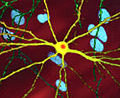
Auckland: A research team from Auckland is trying to understand Huntington’s disease better and investigate differences in genes and proteins, and brain cell development and function between normal and Huntington’s disease patients using live human brain cells. “By doing this, we hope to identify cell targets that may lead to new drug development,” says Dr Connor who is based in the University’s Centre for Brain Research. “The last step of the project is collaboration with Griffith University in Brisbane at the Eskitis Institute that has a natural drug compound library of more than 200,000 compounds.

Wednesday, May 6, 2015

Researchers get a closer look at how the Huntington’s gene works

British Columbia: Huntington’s disease is caused by a mutation in the Huntington’s disease gene, but it has long been a mystery why some people with the exact same mutation get the disease more severely and earlier than others. A closer look at the DNA around the Huntington’s disease (HD) gene offers researchers a new understanding of how the gene is controlled and how this affects the disease. These findings set the stage for new treatments to delay or prevent the onset of this devastating brain disease.

Tuesday, May 5, 2015

Gene variant determines early or late onset of Huntington’s disease
Stockholm: Researchers at Sweden’s Karolinska Institutet and the University of British Columbia, Canada, have identified a gene variant that influences whether Huntington’s disease breaks out earlier or later than expected. The findings, which are published in the scientific journal  Nature Neuroscience , can contribute to improved diagnosis and disease-modifying therapies. A typical symptom of the inherited, progressive, neurodegenerative Huntington’s disease is involuntary movements. While the symptom normally debuts in middle-age, there is wide individual variation in how the disease manifests itself, and even though two people carry the exact same genetic mutation that codes for the so-called huntingtin protein , there can be up to a 20-year difference in onset. Scientists have now discovered a small genetic change just outside the huntingtin gene that exchanges one base in the DNA molecule for another and that they think plays an important part in this phenomenon.

Saturday, January 17, 2015

Animal Study Points to a Treatment for Huntington’s Disease

Chidren's Hospital Of Philadelphia Gene Therapy Expert Fine-Tunes Protein Signals, Improves Motor Function and Reduces Brain Shrinkage in a Neurological Disorder.

Thursday, January 8, 2015

Huntington’s disease: therapeutic potential of triheptanoin confirmed


INSERM. France: A team of researchers from Inserm led by Fanny Mochel and located at the Brain and Spinal Cord Institute (Inserm/CNRS/UPMC/AP-HP) has just demonstrated the therapeutic potential of triheptanoin in ten patients with Huntington’s disease. Derivatives of this triglyceride, with its unique composition, might be able to slow the progression of the disease by improving the energy metabolism of the brain. This research is published in the journal Neurology.

Monday, June 9, 2014

Huntington disease

Source: Pr  Raymund ROOS MD. Orphanet. January 2011

What's Huntington Disease?

Huntington disease (HD) is a rare neurodegenerative disorder of the central nervous system characterized by unwanted choreatic movements, behavioral and psychiatric disturbances and dementia.

Monday, April 30, 2012

Huntington's Disease

 MRI. Source: Radiopaedia
Authors: Mark Groves and al. Departments Beth Israel Medical Center, New York

Definition:

Huntington’s disease (HD) is a progressive neurodegenerative autosomal dominant disease characterized by disturbed movements, changes in behaviour, and cognitive decline. Although the motor disturbances are both choreatic and hypokinetic, chorea is the most characterizing.