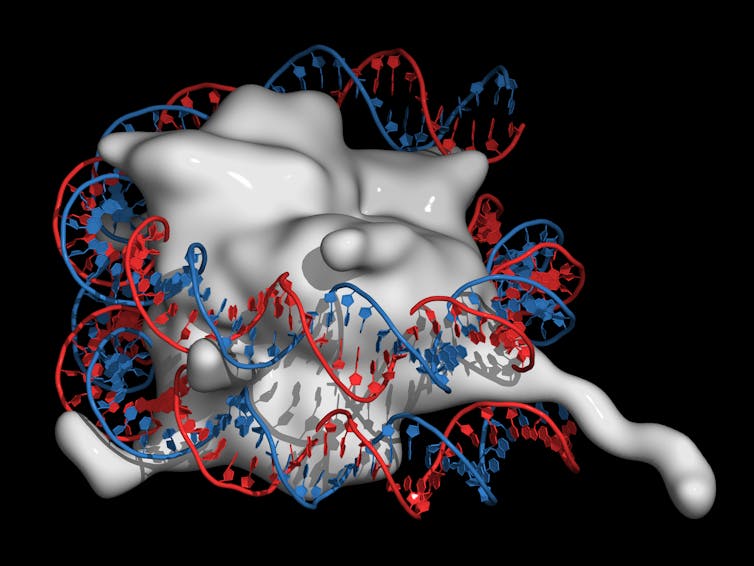
 TheConversation: The real danger of separating children from parents is not the
psychological stress – it’s the biological time bomb. The screaming and
crying, the anguish and desolation is gut-wrenching. But the fallout
pales in comparison to the less visible long-term effects that are more
sinister and dangerous. Separating children from their parents, in a strange land, among
strangers, causes the most extreme life stress a child can experience.
And it causes profound and irreversible changes in how their DNA is
packaged and which genes are turned on and off in the cells of the body,
in organs like the pancreas, the lungs, heart and brain – leading to
lifelong changes in its structure and function.
TheConversation: The real danger of separating children from parents is not the
psychological stress – it’s the biological time bomb. The screaming and
crying, the anguish and desolation is gut-wrenching. But the fallout
pales in comparison to the less visible long-term effects that are more
sinister and dangerous. Separating children from their parents, in a strange land, among
strangers, causes the most extreme life stress a child can experience.
And it causes profound and irreversible changes in how their DNA is
packaged and which genes are turned on and off in the cells of the body,
in organs like the pancreas, the lungs, heart and brain – leading to
lifelong changes in its structure and function.
Showing posts with label DNA. Show all posts
Showing posts with label DNA. Show all posts
Saturday, June 30, 2018
Extreme stress in childhood is toxic to your DNA
TheConversation: The real danger of separating children from parents is not the
psychological stress – it’s the biological time bomb. The screaming and
crying, the anguish and desolation is gut-wrenching. But the fallout
pales in comparison to the less visible long-term effects that are more
sinister and dangerous. Separating children from their parents, in a strange land, among
strangers, causes the most extreme life stress a child can experience.
And it causes profound and irreversible changes in how their DNA is
packaged and which genes are turned on and off in the cells of the body,
in organs like the pancreas, the lungs, heart and brain – leading to
lifelong changes in its structure and function.
Tuesday, March 7, 2017
The National Institutes of Health plans to expand its Encyclopedia of DNA Elements

Thursday, February 16, 2017
The Mysterious 98%: Scientists Look to Shine Light on Our Dark Genome
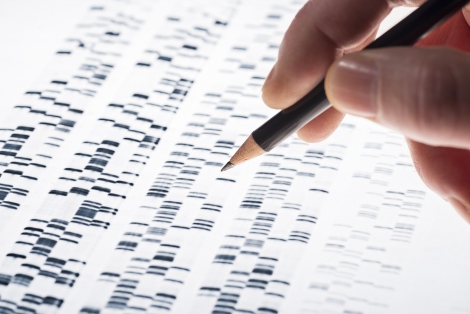
Super-resolution system reveals mechanics of tiny ‘DNA walker’
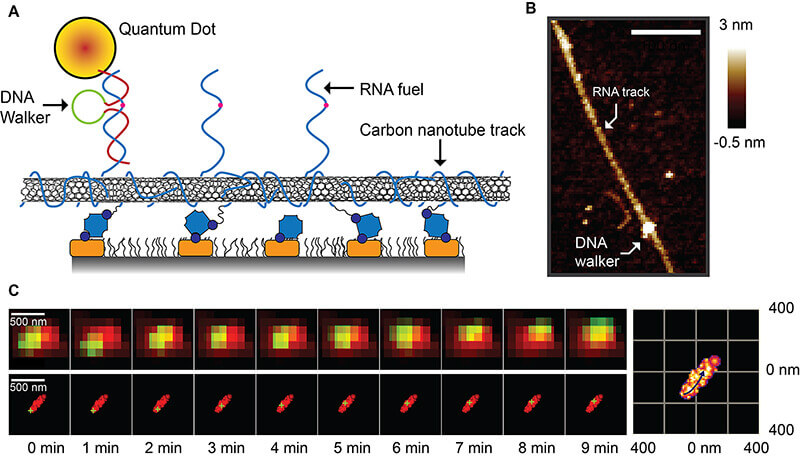 Purdue: Researchers have introduced a new type of
“super-resolution” microscopy and used it to discover the precise
walking mechanism behind tiny structures made of DNA that could find
biomedical and industrial applications. The researchers also demonstrated how the “DNA
walker” is able to release an anticancer drug, representing a potential
new biomedical technology, said Jong Hyun Choi, an associate professor of mechanical engineering at Purdue University.
Purdue: Researchers have introduced a new type of
“super-resolution” microscopy and used it to discover the precise
walking mechanism behind tiny structures made of DNA that could find
biomedical and industrial applications. The researchers also demonstrated how the “DNA
walker” is able to release an anticancer drug, representing a potential
new biomedical technology, said Jong Hyun Choi, an associate professor of mechanical engineering at Purdue University.Wednesday, November 9, 2016
Cancer Cells Hijack DNA Repair Networks to Stay Alive
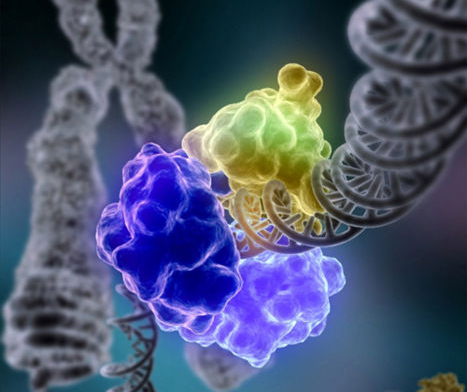
Pittsburgh: Research by scientists at the University of Pittsburgh Cancer Institute
(UPCI) has revealed how cancer cells hijack DNA repair pathways to
prevent telomeres, the endcaps of chromosomes, from shortening, thus
allowing the tumor to spread. The findings are published today in the
journal Cell Reports. The moment a cell is formed, a countdown clock starts ticking that
determines how long the cell can live. The clock is the telomere, a
series of repeating DNA letters at the ends of each chromosome in the
cell.
Friday, June 12, 2015
How much DNA is there on Earth?

Wednesday, June 10, 2015
DNA nanotechnology: new adventures for an old warhorse
 Curr Opin Chem Biol: As the blueprint of life, the natural exploits of DNA are admirable.
However, DNA should not only be viewed within a biological context. It
is an elegantly simple yet functionally complex chemical polymer with
properties that make it an ideal platform for engineering new
nanotechnologies. Rapidly advancing synthesis and sequencing
technologies are enabling novel unnatural applications for DNA beyond
the realm of genetics. Here we explore the chemical biology of DNA nanotechnology
for emerging applications in communication and digital data storage.
Early studies of DNA as an alternative to magnetic and optical storage
mediums have not only been promising, but have demonstrated the
potential of DNA to revolutionize the way we interact with digital data
in the future.
Curr Opin Chem Biol: As the blueprint of life, the natural exploits of DNA are admirable.
However, DNA should not only be viewed within a biological context. It
is an elegantly simple yet functionally complex chemical polymer with
properties that make it an ideal platform for engineering new
nanotechnologies. Rapidly advancing synthesis and sequencing
technologies are enabling novel unnatural applications for DNA beyond
the realm of genetics. Here we explore the chemical biology of DNA nanotechnology
for emerging applications in communication and digital data storage.
Early studies of DNA as an alternative to magnetic and optical storage
mediums have not only been promising, but have demonstrated the
potential of DNA to revolutionize the way we interact with digital data
in the future.
Thursday, March 26, 2015
Palm-sized portable DNA nano sequencer to detect pathogens

Saturday, February 28, 2015
Evolving a Bigger Brain With Human DNA
Duke University. US: The size of the human brain expanded dramatically during the course of
evolution, imparting us with unique capabilities to use abstract
language and do complex math. But how did the human brain get larger
than that of our closest living relative, the chimpanzee, if almost all
of our genes are the same?
Monday, January 19, 2015
Could DNA editing lead to designer babies?
NHS. UK: "Rapid progress in genetics is making 'designer babies' more likely and society needs to be prepared," BBC News reports. The headline is prompted by advances in “DNA editing”, which may
eventually lead to genetically modified babies (though that is a very
big “may”).
Subscribe to:
Comments (Atom)