Showing posts with label Emile R. Mohler. Show all posts

Thursday, January 12, 2012

Carotid artery disease

Author : Emile R. Mohler, M.D.
Director, Vascular Medicine University of Pennsylvania health system

Introduction 

Carotid disease is a vascular disorder of the arteries in the neck that carry blood to the brain.  The most common problem that develops in the carotid artery is a cholesterol plaque.  Rarely, the carotid arteries can tear, resulting in a carotid dissection.

Carotid artery anatomy 

The carotid arteries are medium sized arteries that originate from the aorta, the main blood vessel that emanates from the left side of the heart (Figure 1).  On the right side, the carotid forms from the innominate artery off the aorta whereas on the left it arises directly from the arch of the aorta.  The vertebral arteries (Figure 1) also carry blood to the brain and arise in the back of the neck from a neck artery called the subclavian.

What is a carotid plaque and how does it develop?

The carotid artery has three layers – the intima, the media, and the adventitia.  The layer closest to blood flow is the intima (Figure 2).  The arterial wall becomes thickened when cholesterol builds up in the intima and may protrude into flowing blood. This thickened area of the artery is called a plaque.  Atherosclerosis is the medical term used to describe the buildup of cholesterol and fibrotic tissue in the arterial wall.  The lining of an artery releases molecules that keep blood moving and inhibit a blood clot from forming.  However, an atherosclerotic plaque may rupture or ulcerate causing development of blood clot in the carotid artery.
 The most frequent cause of a blood clot travelling to the brain from the carotid is an atherosclerotic plaque.  Plaques also contain white cells called macrophages that absorb the cholesterol.  The development of carotid atherosclerotic plaque results from both genetic and environmental influences (see below for causes).  Patients with carotid stenosis (narrowing) are at higher risk for an ischemic stroke.  Other more rare conditions that do not involve cholesterol such as fibromuscular dysplasia and vasculitis may produce carotid blockage.
 

How does a stroke result from a carotid plaque?

A stroke, also known as a cerebrovascular accident, is a term that describes a problem within the vascular system in the brain that may cause permanent damage.  There are two types of stroke, one where the blood supply is blocked, called an ischemic stroke, and the other is bleeding into the brain, called a hemorrhagic stroke.  There are approximately 750,000 strokes in the United States per year.
 A stroke due to carotid disease results when a blood clot forms on the cholesterol filled plaque. The clot breaks off and then travels from the carotid artery up into the middle cerebral artery, a major supplier of blood to the brain, and blocks blood flow.  The resulting diminished blood flow deprives the brain of oxygen which results in brain cell death. Ischemic stroke may manifest as paralysis, slurred speech, or other neurological problems.

Are some plaques more dangerous than others?

Studies indicate that plaques with high cholesterol and high white cell content are more dangerous than plaques which are highly calcified.  One study examined plaques after surgical removal and reported that the plaques that were filled with sheets of calcium, and even bone, were less likely to cause a stroke.1  It is thought that the heavily calcified plaques are less likely to rupture and develop a blood clot.

How is carotid disease diagnosed?
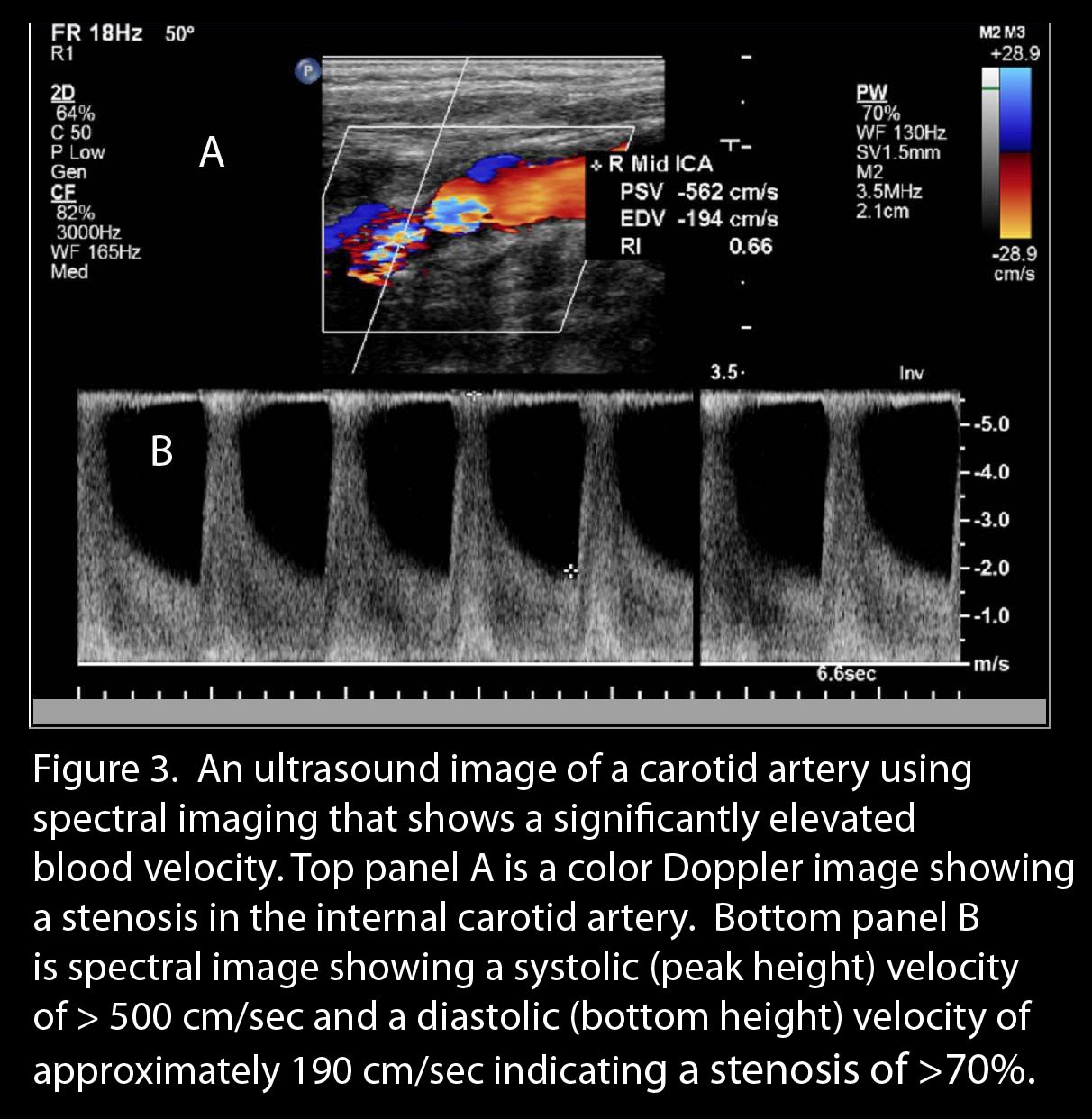
The initial study to evaluate carotid disease is a carotid ultrasound.  This technique utilizes sound waves to view the carotid artery.  A small amount of saline gel is placed on the neck and an ultrasound probe is used to visualize the carotid arteries (Figure 3).  Ultrasound images may reveal plaque.  The amount of blockage (stenosis in medical terminology) is determined by the velocity of blood flow through the artery; the higher the velocity, the higher the amount of stenosis or narrowing.  One ultrasound-based technique evaluates the thickness of the carotid artery to determine if there is increased risk for stroke or heart attack (Figure 4). http://www.youtube.com/watch?v=AdbCTjlYZy4The carotid artery intimal and medial layer thickness is measured, so called IMT, and a value generated and compared to individuals of similar age.2  http://www.youtube.com/watch?v=AdbCTjlYZy4A carotid IMT value of > 1mm is considered high risk at any age.
 

What are the risk factors for carotid disease?

The major non-modifiable risk factors for ischemic stroke include: age, inherited pre-disposition, sex, and race (more common in men and in African Americans). The modifiable risk factors include: hypertension, diabetes mellitus, cigarette smoking, elevated homocysteine, and cholesterol (especially in hypertensives).

What is the treatment for carotid disease?

The treatment for carotid atherosclerotic disease includes medical intervention (management of atherosclerotic risk factors, antiplatelet medication) and revascularization (opening the artery) for appropriate candidates.

What medications are available to treat carotid disease?

In the late 1980s to the mid 1990s when most of the carotid surgery studies were being done, the best medical therapy was aspirin.  Since then, new cholesterol lowering drugs and blood pressure control drugs have been developed that favorably impact on the carotid disease process.
High Blood Pressure Medication
High blood pressure is a known risk factor for a stroke, as approximately 60% of strokes are attributed to hypertension.  Blood pressure control is extremely important to prevent strokes.  One study called the Systolic Hypertension in the Elderly Program (SHEP) evaluated blood pressure control in patients over age 60 years.3  When compared with a placebo (inactive pill), there was a 36% reduction in stroke incidence over 4.5 years of follow-up with medication.
Antiplatelet Medication
A blood clot in the carotid artery is formed in part due to an aggregation of platelets on top of the atherosclerotic plaque.  The first-line treatment of stroke prevention in those who have had a stroke is antiplatelet medicine such as aspirin, clopidogrel (Plavix), or the combination of dipyridamole and aspirin (Aggrenox).  The data from an analysis of multiple antiplatelet studies indicate that the risk of a second stroke decreases by approximately 25%.4
These drugs act by blocking platelets from adhering and reduce the risk of a carotid thrombus (clot).  The data regarding treatment with an antiplatelet agent to prevent a stroke from occurring in those who never had a stroke is not as strong.  There are high-risk groups such as those with diabetes mellitus who will likely benefit from antiplatelet drug to prevent stroke.
Cholesterol Lowering Medication
High blood pressure is more of a risk factor for a stroke than high cholesterol, but recent data indicate that lowering high cholesterol reduces progression of carotid plaque and stroke.5  The SPARCL study used an HMG CoA reductase inhibitor (statin drug) to lower cholesterol and compared it with placebo in those with a stroke or mini-stroke (transient ischemic attack).6  After a follow-up of 4.9 years, the statin group had reduced incidence of fatal or nonfatal stroke.  Interestingly, the statin group also had a reduction in heart attacks.
 

What is the surgical treatment for carotid disease?

The surgical treatment for severe carotid disease is removal of the plaque by a carotid endarterectomy. The surgical removal of an atherosclerotic plaque has been proven safe and effective in numerous randomized clinical studies for symptomatic patients (Table 1). 
Table 1.  Amount of Stenosis and Benefit from Surgery
Percent of Stenosis
Benefit of Endarterectomy
70% Stenosis or greater
Significant
50-69% Stenosis
Marginal
50% Stenosis or less
None
The North American Symptomatic Carotid Endarterectomy Trial (NASCET) showed that symptomatic patients with more than a 70% diameter carotid artery stenosis had, at two years, a 9% risk of stroke after carotid surgery compared with a 26% risk in patients with the best medical intervention.7  The benefit remained after seven years of follow-up. Patients with a 50-69% stenosis had a marginal improvement from surgery and those with less than 50% stenosis did not benefit from surgery, as determined by a five-year follow up.  Some of the complications associated with carotid endarterectomy in the NASCET trial included: perioperative wound complications, cranial nerve injury, and cardiovascular complications.

Endarterectomy in asymptomatic individuals
Large clinical trials evaluating asymptomatic patients with carotid atherosclerosis and ≥ 60% stenosis, such as the Asymptomatic Carotid Atherosclerotic Study (ACAS), found a risk reduction of 50% over five years with carotid surgery compared with medical therapy with drugs.  The benefit of carotid endarterectomy was realized approximately two years after surgery.  This result was obtained with a very low surgical complication rate of 2.3%, half of which were due to cerebral angiography (contrast dye injection into the arteries of the brain).  A higher surgical complication rate that includes stroke, infection, and reocclusion of the artery, will delay the realized benefit from an endarterectomy.  Asymptomatic patients with ≥80% carotid stenosis are likely to benefit from surgery if their life expectancy is five years and if the operating surgeon has a post-operative complication rate less than 3%.  Of note, current data indicate that the benefit of carotid endarterectomy in asymptomatic patients is lower in woman compared with men.

What are the complications of carotid surgery?
Potential complications associated with vascular surgery include stroke, nerve damage, and infection.  Symptomatic patients have a higher post-operative complication rate than asymptomatic patients.  Some patients may re-occlude the artery due to scar tissue, so called recurrent carotid artery disease.  The rate of repeat surgery for recurrent carotid artery stenosis after endarterectomy has been under 10%.  For patients who underwent a repair of the carotid artery with a vein or patch graft, the recurrent stroke rate is under 2% for individuals with greater than 70% stenosis.  In one study, asymptomatic patients did not benefit from endarterectomy if they had a completely occluded carotid artery on the opposite side of the neck.

Percutaneous carotid revascularization (Angioplasty & Stenting)
There are two types of operations, the traditional one using a scalpel, and a relatively more recent technique where a puncture is done through the skin with a needle called a percutaneous approach.  In this latter method, a catheter (plastic tube) is inserted through the needle and into the artery being treated.  Percutaneous carotid artery revascularization has emerged as an alternative therapy to surgical carotid endarterectomy for the treatment of carotid stenosis.8  The percutaneous approach is attractive given that it is a less-invasive approach that may not have the complications associated with surgical treatment.
The first percutaneous method developed to treat artery blockages involves passing a catheter with a balloon attached into the artery and inflating the balloon to squeeze the plaque against the wall and open the vessel.  Carotid artery balloon angioplasty was first performed in 1979 and a clinical study of carotid angioplasty (CAVATAS) showed, at three years, there was no difference in the rate of stroke compared with surgery.9  However, percutaneous procedures are not without risk.  Catheter manipulation is associated with death and complications which include the potential for dislodging a plaque during the procedure resulting in embolic stroke.
The early studies of percutaneous carotid angioplasty were directed at lesions with lower risk of embolic complications, such as early carotid restenosis and fibromuscular dysplasia.  The stroke rates attributed to the procedure range from 1.4 to 12%.  During long-term follow-up, restenosis of the internal carotid artery is reported to occur in up to 15% of patients and dissection in 5% of patients.
A second percutaneous method involves placing a metallic stent in the artery after the balloon angioplasty, in order to keep the artery open.  A carotid stent is preferred to angioplasty, as it can reduce the risk of threatened vessel closure due to a dissection and, over the long-term, restenosis.  Newer stents are coated with medication to further reduce the risk of carotid restenosis.  Of note, there are ongoing clinical trials to evaluate if the benefit of a lower restenosis rate is not offset by later clotting in the artery.

Comparison of percutaneous versus surgical carotid revascularization
Clinical trials comparing angioplasty and stenting with carotid endarterectomy have yielded insight into both the success rate and complication rate of both procedures.  There is conflicting data on the efficacy of angioplasty and stenting compared with endarterectomy.  Two initial trials that did not use embolic protection (see below) indicated a worse outcome with the percutaneous technique.  One such study, the WALLSTENT Study, showed a one-year, ipsilateral stroke rate higher in the percutaneous group compared with surgery (12.2% versus 3.6%).  Other trials, such as the Carotid and Vertebral Artery Transluminal Angioplasty Study (CAVATAS) and a separate randomized trial in a community hospital found that both treatments had similar major risks and effectiveness.

Carotid protection devices against stroke
In order to reduce complication rates from carotid angioplasty and stenting, protection devices were developed to reduce embolic debris traveling to the brain.  The complication that is trying to be avoided is dislodging of small bits of plaque lining the blood vessel during the procedure which could travel in the blood stream and lodge in a brain artery causing a stroke. Filtering devices or “damming” devices are temporarily inserted either immediately at the procedure site, or somewhat upstream to catch the debris and filter it out of the body- Each of these approaches had some disadvantages but these protection devices clearly reduce complication rates.

Clinical Trials using embolic protection devices
A large trial employing distal protection to evaluate against complicating stroke was the Stenting and Angioplasty with Protection in Patients at High Risk for Endarterectomy (SAPPHIRE).10  High-risk patients were defined as having at least one of the following:
·         Contralateral carotid artery occlusion
·         Radiation therapy to the neck
·         Previous carotid endarterectomy with recurrent stenosis
·         Difficult surgical access, contralateral laryngeal nerve palsy
·         Severe multiple lesions in the carotid artery
·         Heart failure
·         Coronary artery bypass grafting or open heart surgery within 6 months
·         Myocardial infarction (heart attack) 1 day to 4 weeks prior
·         Angina (chest pain from blocked heart artery) at low work load or unstable angina
·         Severe pulmonary disease
·         Age greater than eighty years
A total of 334 patients who had either a symptomatic carotid-artery stenosis of ≥ 50 % or an asymptomatic stenosis of at least 80 % were treated with carotid-artery stenting or surgical endarterectomy.11  The primary end-point of the study was death, stroke, or heart attack after the intervention, which occurred in 20 patients randomly assigned to undergo carotid artery stenting and in 32 patients randomly assigned to undergo endarterectomy.  Both of the groups in the SAPPHIRE Study had a relatively high risk of complications at 30 days, which exceeded the ≤ 3% recommended as the maximum rate according the American Heart Association guidelines.12  Other trials are underway to further define the benefit and risk of percutaneous versus surgical carotid revascularizationThe Food and Drug Administration has approved a coronary stent for use in carotid arteries.

What are the Complications From a Carotid Stent?

Potential complications due to carotid stenting include: bradycardia (slowed heart rate), hypotension (low blood pressure), and minor or major stroke. Hyperperfusion syndrome is a relatively uncommon secondary result of carotid endarterectomy, which manifests as headache on the same side as the revascularized artery and may be accompanied by focal seizures and intracerebral hemorrhage. There are few data regarding prevalence of hyperperfusion syndrome after carotid stenting.

Who Should Have a Carotid Stent?
Clinical trial data continues to accumulate regarding the efficacy and safety of carotid stenting.  The current data indicates that the following conditions favor carotid stenting with embolic protection over surgical endarterectomy:
  • High-risk patients where anesthesia and surgical repair would pose excess risk such as with congestive heart failure, uncontrolled angina pectoris, and severe obstructive pulmonary disease.
  • Anatomic characteristics that increase risk of carotid endarterectomy such as previous radiation therapy to the neck, previous radial neck dissection, restenosis after endarterectomy, and contralateral laryngeal palsy.

References

     (1)   Hunt JL, Fairman R, Mitchell ME et al. Bone formation in carotid plaques: a clinicopathological study. Stroke 2002 May; 33(5):1214-9.
     (2)   Roman MJ, Naqvi TZ, Gardin JM, Gerhard-Herman M, Jaff M, Mohler E. Clinical application of noninvasive vascular ultrasound in cardiovascular risk stratification: a report from the American Society of Echocardiography and the Society of Vascular Medicine and Biology. J Am Soc Echocardiogr 2006 August; 19(8):943-54.
     (3)   Prevention of stroke by antihypertensive drug treatment in older persons with isolated systolic hypertension. Final results of the Systolic Hypertension in the Elderly Program (SHEP). SHEP Cooperative Research Group. JAMA 1991 June 26;265(24):3255-64.
     (4)   Antiplatelet Trialists' Collaboration. Collaborative overview of randomised trials of antiplatelet therapy--I: Prevention of death, myocardial infarction, and stroke by prolonged antiplatelet therapy in various categories of patients. BMJ 1994 January 8;308:81-106.
     (5)   Mohler ER, III, Delanty N, Rader DJ, Raps EC. Statins and cerebrovascular disease: plaque attack to prevent brain attack. Vasc Med 1999;4(4):269-72.
     (6)   The Stroke Prevention by Aggressive Reduction in Cholesterol Levels (SPARCL) Investigators. High-Dose Atorvastatin after Stroke or Transient Ischemic Attack. The New England Journal of Medicine 2006 August 10;355:549-59.
     (7)   Beneficial effect of carotid endarterectomy in symptomatic patients with high-grade carotid stenosis. North American Symptomatic Carotid Endarterectomy Trial Collaborators. N Engl J Med 1991 August 15;325(7):445-53.
     (8)   Mohler ER, III. Carotid stenting for atherothrombosis. Heart 2007 September;93(9):1147-51.
     (9)   Endovascular versus surgical treatment in patients with carotid stenosis in the Carotid and Vertebral Artery Transluminal Angioplasty Study (CAVATAS): a randomised trial. Lancet 2001 June 2;357(9270):1729-37.
   (10)   Yadav JS. Carotid stenting in high-risk patients: design and rationale of the SAPPHIRE trial. Cleve Clin J Med 2004 January;71 Suppl 1:S45-S46.
   (11)   Yadav JS, Wholey MH, Kuntz RE et al. Protected carotid-artery stenting versus endarterectomy in high-risk patients. N Engl J Med 2004 October 7;351(15):1493-501.
   (12)   Sacco RL, Adams R, Albers G et al. Guidelines for prevention of stroke in patients with ischemic stroke or transient ischemic attack: a statement for healthcare professionals from the American Heart Association/American Stroke Association Council on Stroke: co-sponsored by the Council on Cardiovascular Radiology and Intervention: the American Academy of Neurology affirms the value of this guideline. Circ 2006 March 14;113(10):e409-e449.


Venous thrombosis

Author : Dr Emile R. Mohler Physician University of Pennsylvania

2008-07-28
Venous Thrombosis
 
Emile R. Mohler, M.D.
Director, Vascular Medicine University of Pennsylvania health system
 
Introduction
Deep venous thrombosis (DVT) is a clinical disorder caused by a blood clot in a large vein of the body. This is known in medical terminology as a thrombus.  The condition is also called a venous thromboembolism (VTE) as the thrombus can travel from the vein to the lungs and cause a pulmonary embolus, which may be life threatening.  It is estimated that 60,000 people in the United States die each year from pulmonary embolus.

Venous Anatomy
The body has superficial veins located near the skin and deep veins located closer to the bones (Figure 1). The superficial veins empty into the deeper veins and in the lower extremities blood flows from the legs into the pelvis.  At the level of the umbilicus, the venous blood enters the inferior vena cava and then the right side of the heart.  Similarly, venous blood from the upper extremities enters the superior vena cava and then flows down to the right side of the heart.  Approximately 70- 80% of DVTs occur in the thigh region and 20- 30% occur in the calf.  A clot in the veins of the thigh is more likely to travel to the lung than one in the calf 1.  The superficial veins can also develop a thrombus but clots in the superficial veins rarely travel to the deeper system of the body and are not generally life-threatening.  The most common site for a DVT is the leg.  A DVT can also develop in an arm vein or even in the pelvis.

What causes DVT?
The cause for a DVT is attributed to 3 factors, either alone or in combination: 1) slow (or sluggish) blood flow through a deep vein, 2) a damaged inner lining of the vein, and 3) a tendency to develop a thrombus quickly (thrombophilia).  The factors of this triad increase the threshold of developing DVT.
The risk of DVT increases with age.  There are also situations that predispose to the development of DVT some of which include prolonged bed rest such as after a surgical procedure or medical illness where blood flow in the legs may not be as brisk as usual (Table 1).  It is well recognized that people with active cancer are predisposed to developing DVT.  Also, the presence of an abnormal clotting gene increases the risk of DVT.  Medical conditions such as varicose veins, severe obesity, congestive heart failure, and chronic respiratory failure predispose to DVT.  Medications with estrogen, such as birth control pills, also increase risk of DVT.  Long travel with restricted movement, as may occur with an overseas airline flight, is associated with a small risk of DVT.
Table 1. Risk Factors for DVT
Surgery
Prolonged immobilization
Birth control pills
Obesity
Cancer
Inflammatory bowel disease
Varicose veins
Hereditary disposition to clotting
 
What are the symptoms of DVT?
The symptoms typically associated with DVT are pain, tenderness, and swelling in the area where the clot occurs.  The skin may be warm to the touch and discolored.  If the thrombus travels to the lung (pulmonary embolus), shortness of breath and chest discomfort (especially with deep breathing) may occur.  It is important to seek immediate medical attention if these symptoms occur.  The physical examination may reveal a tender, firm vein called a “palpable cord.” The doctor may squeeze the affected area to determine if pain is present.  If only one leg is swollen, this is more suspicious for a DVT than if both legs are swollen.  However, a DVT can simultaneously develop in both legs, causing bilateral swelling.

How is the diagnosis of DVT made?
The diagnosis of DVT can be difficult to establish based only upon the medical history and physical examination as a variety of disorders such as musculoskeletal problems and congestive heart failure can present similarly (Table 2).

Table 2. Cause of leg swelling and pain that may mimic DVT.
Venous Insufficiency
Musculoskeletal strain or bruising
Lymphatic blockage
Heart Failure
Cellulitis
Bakers cyst
Furthermore, the valves in the veins may not work correctly leading to back pressure and swelling, so-called venous insufficiency.  The swelling due to venous insufficiency may mimic the swelling of DVT.  Thus, further evaluation is usually necessary, with an imaging study to confirm the suspected diagnosis of DVT.  The clinical suspicion of DVT can be substantiated with medical criteria called the Wells criteria2.  This algorithm of care is based upon the presence of criteria associated with increased risk of DVT such as cancer, paralysis, being bed ridden for more than 3 days, major surgery within last 4 weeks, entire leg swollen and one leg larger in circumference compared with the other.
Although there is no specific blood test for DVT, a blood clotting test called D-dimer, if negative, indicates a very low likelihood of DVT3.  However, the D-dimer test is not specific for DVT as elevated levels of this protein are also seen in hospitalized patients with other conditions.  Thus, the D-dimer test is only useful if negative and indicates a low probability of DVT.  For example, a “normal” D-dimer test (usually less than 500 ng/ml for enzyme test) in conjunction with a low Wells probability score appears useful in excluding DVT and forgoing further testing with ultrasound4, 5.
The diagnosis of DVT is made noninvasively and accurately with an ultrasound imaging scan of the leg veins 6.  You will be asked to lie on a medical bed and saline gel will be applied on the skin above the veins.  A small ultrasound probe will be placed on the skin and the veins observed on a monitor (Figure 2).  There is no radiation involved in this study.  The body usually dissolves the clot over several months and blood flow through the veins returns to normal.  However, sometimes the vein remains permanently damaged and may be severely narrowed or remain occluded.  New, small veins called collaterals may develop around the occluded vein. Patients with residual clot on ultrasound have a higher risk of recurrent DVT than those with normal veins7.
A more invasive test called venography may be performed, where the anatomy is imaged after injecting  contrast dye into a leg vein.  Also, a special computed tomography scan (CT) using contrast dye8, 9 or magnetic resonance venography (MRV)10 can be used to evaluate for DVT.  However, because of the relative invasive nature of these tests they are not considered first line evaluation.  The diagnosis of a pulmonary embolus is made with a special type of chest CT scan, a nuclear lung scan, or a pulmonary angiogram.

How is DVT treated?
The treatment of DVT is with a blood thinner known in medical terminology as an anticoagulant11.  It is estimated that if anticoagulation is not given, that 50% of individuals will experience a pulmonary embolus12. Heparin is the anticoagulant given initially for treatment of DVT.  The type and mode of administration of heparin has evolved from so called “standard” heparin to “low molecular weight” heparin (Table 3). 

Table 3.  Types of Heparin
Standard (unfractionated) heparin
Enoxaparin (Lovenox)
Dalteparin ((Fragmin)
Tinzaparin (Innohep)
Nadroparin
Fondaparinux (Arixtra)
In the past, heparin was given intravenously (by vein) in the hospital but now heparin can be given subcutaneously (skin injection) in the home.  Heparin does not work by dissolving the clot, but rather, by preventing more clot from forming in the veins.  Patients with a massive DVT, symptomatic pulmonary embolism, other high risk medical conditions, and increased risk of bleeding are usually admitted to the hospital for anticoagulation.
Warfarin (Coumadin) is given shortly after starting heparin and the heparin is usually continued for 4-5 days13.  The blood clotting ability is inhibited with warfarin and the level of inhibition is assessed with a test called the prothrombin time which is expressed as the INR (International Normalized Ratio) level.  Warfarin works by inhibiting vitamin K which is an essential factor for producing clotting factors in the liver.  Unfortunately, various foods high in vitamin K content, such as found in green leafy vegetables, interfere with the effectiveness of warfarin, which makes dietary vigilance a must when using this medication (Table 4). 

Table 4.  Vitamin K Content of Selected Foods

Food
Vitamin K content (µg/100g)
Kale
726
Turnip greens
650
Collards
440
Spinach
413
Brussels Sprouts
250
Soy bean oil
198
Broccoli
147
Cabbage
110
Lettuce
75
Olive oil
56
Butter
30
Margarine
30
The initial dose of warfarin is 5-10 mg per day for the first 2 days, and adjusted thereafter according to the INR level.  The therapeutic INR level is 2.0 to 3.0.  Various drugs can also interact with warfarin so it is important to monitor the INR closely when drugs changes are made.  In general, the length of treatment with warfarin is typically 3- 6 months but may be prolonged indefinitely, especially if the reason for the thrombus is unknown14.  A prolonged course of warfarin is advocated in those with recurrent DVT and those with a continuing risk for DVT, such as active malignancy.
In severe cases of DVT involving the pelvic veins, a drug that promotes the dissolving of a clot called a thrombolytic may be necessary.  The thrombolytic is typically given via a catheter in a vein in the leg.  Patients not medically qualified for anticoagulation may receive a filter in the inferior vena cava (a large pelvic vein) to prevent the clot from traveling to the lung.  The filter does not prevent more clot from forming but acts as a barrier to a dislodged clot so that it does not enter the lung.  Rarely, a complication may occur where the filter migrates from the point of attachment or a clot develops on the filter material; this impedes blood flow, causing severe leg swelling.

Treatment of distal DVT
The presence of DVT in the calf (distal DVT) has a lower risk of traveling to the lung.  The medical recommendation for treating isolated calf DVT with anticoagulation is not as strong as more proximal DVT in the thigh.  However, many physicians advocate treatment of an isolated and symptomatic DVT in the calf with anticoagulation for at least six to twelve weeks.  Those asymptomatic patients with an isolated calf DVT, if not treated with anticoagulation, may undergo serial ultrasound monitoring of the lower extremity to ensure that the clot is resolving and not moving higher in the leg.

Are there complications to anticoagulation?
A potential serious complication of anticoagulation is bleeding.  The bleeding may occur in the intestinal tract, the brain, or other parts of the body.  However, this risk is typically outweighed by the benefit of anticoagulation.  Heparin can rarely cause a low platelet count so monitoring of the platelet level in the blood is required if taking this drug for a prolonged time.  Some patients are not considered a candidate for anticoagulation, such as those involved in a motor vehicle accident with head trauma, or those with recent stroke.
Are there long-term problems after having a DVT?
Approximately one quarter to one third of patients who have DVT develop residual leg swelling and discomfort called post thrombotic syndrome (PTS)15.  This syndrome may result from damage to valves in the veins and/or vein narrowing which does not allow for normal flow from the legs up to the lungs.  This results in back pressure on the veins forcing fluid into the tissue and causing swelling.  The situation may improve over time with prolonged anticoagulation.  In order to reduce risk and symptoms of PTS, a special stocking called a graduated compression stocking is prescribed.  This garment is especially made to put pressure at the ankle level with gradual decrease in pressure at the knee which provides support to the veins and facilitates upward blood flow.  Patients with DVT are encouraged to be as active as possible but are advised to try and avoid prolonged standing, which may result in pooling of blood in the legs and swelling.

Pregnancy and DVT
While the risk of DVT in young women is low, it is slightly increased with pregnancy.  This risk for DVT is highest during the period immediately after delivery (postpartum).  Woman with an inherited increased risk of clotting may be given prophylactic anticoagulation to prevent DVT.  If a DVT occurs during pregnancy, heparin is given as is recommended for the nonpregnant patient.  Warfarin crosses from the blood stream into the baby’s circulation and can cause fetal damage during the first trimester of pregnancy and therefore heparin is usually continued until delivery.  After delivery, warfarin is given for 4-6 weeks.

How is DVT prevented?
DVT can be prevented in the hospital setting by receiving anticoagulation according to medical guidelines.  Leg exercises such as flexing the calf muscles while sitting and occasionally walking are recommended during prolonged and confined travel in order to promote circulation and reduce sluggish blood flow. Since cigarette smoking increases the tendency of blood to clot, it is very important to stop smoking.  Regular aerobic exercise is also thought to reduce risk of DVT.

More information
Web Sources:
Vascular Disease Foundation: http://www.vdf.org/
American Venous Forum: http://www.venous-info.com/
Venous Coalition: http://www.vdf.org/community/vdc.php
Biology of Leg Disorders: http://www.legdisorders.org/default.aspx

Aortic dissection

Author :
Emile R. Mohler, M.D.
Director, Vascular Medicine University of Pennsylvania health system

2008-07-01

Introduction

The aorta, an artery, is the body’s largest and thickest blood vessel, through which oxygenated blood leaves the heart and courses to the rest of the body. Its wall is composed of three layers. An aortic dissection occurs when the intimal (inner) layer of the aorta tears away from the medial (middle) layer, allowing blood to flow within the wall of the aorta. This causes a dangerous weakening of the aortic wall.

Aortic dissections are described by one of two different classification schemes. The schemes use the site of the intimal aortic tear to classify the syndrome. Tears that involve the ascending aorta, the portion closest to the heart, are called Stanford type A dissections. Tears that do not involve the ascending aorta and are confined to the descending aorta, the segment further from the heart, are called Stanford type B dissections. An older classification scheme was coined by cardiac surgeon Michael DeBakey. The DeBakey type I tear involves both the ascending and descending aorta. The DeBakey type II tear involves only the ascending aorta. The DeBakey type III tear involves only the descending aorta. For clarity, the remainder of this article will use the Stanford system when referring to different anatomic classifications of aortic dissection (Figure 1).


The classification of an aortic dissection is important. Stanford type B dissections have a significantly lower rate of rupture than do Stanford type A dissections, and often, type B dissections can be managed with medications, without the urgent surgical correction that is recommended for type A dissections. Also, complications of dissection are largely based on the segment of aorta involved, as most complications are due to extension of the dissection into adjoining blood vessels or structures.

While the exact incidence of aortic dissection is unknown, population studies estimate it to be roughly 3/100,000 person-years.[1] This translates to about 9,000 cases per year in the Unites States. Acute aortic dissection is a medical emergency and anyone with symptoms of a dissection should call emergency medical services for transport to the nearest hospital emergency room for prompt evaluation.


What are the symptoms of aortic dissection?

Classically, the onset of aortic dissection has been characterized as abrupt, severe, sharp, tearing chest or back pain. The pain may radiate or migrate down the back as the dissection extends down the aorta. This excruciating pain has even been termed “acute aortic agony” in some writings.

However, it is important to recognize this classic description of aortic dissection does not describe all patients with the syndrome. Many patients experience less typical presentations of dissection. These may include less abrupt or waxing/waning pain, less severe pain, abdominal pain, syncope (fainting), or stroke.[2]


Who is at risk for aortic dissection?

Hypertension (elevated blood pressure) is the most common risk factor seen in patients with aortic dissection. Greater than 70% of patients with dissection have a history of hypertension. Men are about two times more likely to experience an aortic dissection than women. While the average age of victims of aortic dissection is around sixty five years, dissections have been reported in a very wide range of patient ages. Patients under forty years of age who sustain aortic dissections often have a predisposing condition apart from hypertension. These include genetic connective tissue disorders such as Marfan’s syndrome and Ehlers-Danlos syndrome that predispose to weakness in the medial layer of the aortic wall and dissection as a result of faulty collagen synthesis. Patients with a bicuspid aortic valve, a congenital abnormality, have aortic root abnormalities and dissect at much higher rates than those with anatomically normal valves. Turner’s syndrome, another genetic illness, predisposes to aortic root problems and dissection. Vasculitides, diseases that cause inflammation of blood vessels such as Takayasu’s arteritis and giant cell arteritis, have been linked to dissection. Cocaine use has been associated with acute aortic dissection. More rarely, aortic dissection can occur as a result of direct traumatic injury to the aorta, such as after a motor vehicle accident. Aortic dissection is also a recognized complication of cardiac catheterization and cardiac surgeries.[3]


How is aortic dissection diagnosed?

Aortic dissection can be difficult to diagnose, particularly because many other potentially life-threatening chest pain syndromes, such as myocardial infarction (heart attack) and pulmonary embolism, are significantly more common, sometimes making the clinical diagnosis confusing. Many other common, non-emergent causes of chest pain such as pericarditis (inflammation of the lining of the heart), gastroesophageal reflux disease (heartburn), and musculoskeletal pain can share similar symptoms with dissection as well. Especially with atypical presentations, it takes a high degree of clinical suspicion to make the diagnosis of aortic dissection.

Initial work-up of a patient suspected to have an aortic dissection based on symptoms starts with a careful physical examination and chest x-ray. On physical examination, patients with an acute aortic dissection may have hypertension (elevated blood pressure), tachycardia (elevated heart rate), and, in a minority of cases, a significant blood pressure difference between the two arms. Cardiac auscultation with a stethoscope may reveal a tell-tale murmur that points toward a malfunctioning aortic valve, the connection between the heart and the aorta. In the majority of cases of aortic dissection, chest x-ray will reveal a widened mediastinum (Figure 2).


The mediastinum (as shown in above x-ray) is an area in the middle of the chest that houses the heart, aorta, pulmonary arteries, esophagus, trachea, thymus, and thoracic lymph nodes. However, there are instances when dissection exists without an obviously widened mediastinum on chest x-ray. Also, a widened mediastinum is often seen on chest x-ray in the absence of dissection. There are no electrocardiographic (ECG) findings that assist in diagnosing aortic dissection. Ultimately, no specific symptom, physical examination sign, or chest x-ray finding reliably makes or excludes the diagnosis of aortic dissection. In patients who have a combination of symptoms and signs that are suspicious for aortic dissection, the definitive diagnosis can be made by one of three methods, computed tomographic angiography (CTA), magnetic resonance angiography (MRA), or transesophageal echocardiography (TEE). All of these methods reliably diagnose aortic dissection with greater than 90% accuracy.[4,5]

Computed tomographic angiography (CTA)

CTA is the preferred method for diagnosis of aortic dissection in most US hospitals due to its speed, availability, and non-invasiveness. A patient is taken for a computed tomographic scan, also called a CT scan, that is an x-ray specifically focused on the aorta. This special CT scan involves injection of iodinated contrast dye through a small intravenous catheter in the arm that allows for visualization of the aorta and arteries. The CTA scan can be performed and interpreted within minutes. This technology is widely available in most US emergency rooms. Limitations can include the availability of a scanner and an experienced radiologist available to read the study. Also, patients with a history of kidney disease are at risk of worsening their kidney function through exposure to the iodinated contrast dye needed to perform the scan (Figure 3).


Magnetic resonance angiography (MRA)


Similar to the above CTA, MRA involves the patient having a non-invasive magnetic resonance scan that is specifically focused on the aorta. MRA is not as widely available as CTA. It also requires injection of dye. Also, MRA takes somewhat longer to perform (usually at least thirty minutes) than does CTA. Like CTA, an experienced radiologist is necessary to interpret the study. Additionally, the scanning machine is a small, enclosed space that can be difficult for patients with claustrophobia. Unstable patients are inaccessible when in the scanner and this can make MRA unsuitable in this group. Patients with metal devices in their body (pacemakers, defibrillators, ear implants, etc.) are also precluded from having magnetic resonance scans. Rarely, a severe skin problem can arise in patients with a history of kidney failure when they are exposed to the dye used in MRA scans.


Transesophageal echocardiography (TEE)


TEE involves the passage of an ultrasound probe through the mouth and into the esophagus in order to visualize the heart and aorta. Limitations include the availability of an experienced cardiologist or anesthesiologist who is able to perform and interpret the study. Additionally, significant sedation is usually necessary to be able to perform the procedure. Patients with a history of severe esophageal disease are precluded from having the procedure done. Rarely, TEE can result in severe complications such as oropharyngeal trauma, bleeding, aspiration, esophageal perforation, and death. Practically, a TEE can be difficult to obtain promptly on nights and weekends.


Historically, aortography was the preferred method for diagnosing an aortic dissection but as other imaging technologies have matured it has fallen out of favor due its invasiveness and the time needed to perform it. Additionally, some studies indicate it is less accurate than the above three modalities. The procedure involves the puncture of the femoral artery (a large blood vessel in the leg) and the advancement of a thin catheter up the femoral artery and aorta. Iodinated contrast dye is directly injected through the catheter into the aorta under fluoroscopic (X-ray) imaging. Limitations include the availability of an experienced cardiologist, interventional radiologist, or vascular surgeon to perform and interpret the study. Also, complications of the procedure include bleeding, damage to the aorta from catheter advancement, damage to the femoral artery, and worsening of kidney function from exposure to iodinated contrast dye.


 What are the complications of aortic dissection?


In addition to aortic rupture resulting in massive hemorrhage, there are a number of complications of aortic dissection that are based upon the location of the dissection.


Complication
Mechanism
Pericardial tamponade
Dissections near the heart can rupture into the space between the heart and its lining, the pericardium.  This results in the rapid accumulation of blood around the heart, squeezing it and impairing its function.
Aortic insufficiency
Dissections that involve a segment of aorta very near the heart often cause dysfunction in the valve connecting the heart to the aorta.  This is manifest as backward flow of blood into the heart from the aorta and, when severe, can result in respiratory failure.
Myocardial infarction
Dissections near the heart can extend into coronary arteries, the blood vessels that supply the heart, causing myocardial infarctions (heart attacks).  The right coronary artery is more at risk from aortic dissection due to its location on the aorta than its left-sided counterpart.  When dissection and myocardial infarction coexist, the diagnosis of dissection is particularly difficult to make.  Additionally, the common treatment of myocardial infarction with blood thinners and powerful clot-busting thrombolytic drugs is contraindicated in dissection as it can precipitate aortic rupture, pericardial tamponade, and death.
Paraplegia
Dissections can progress into the arteries that supply the spinal cord, potentially causing paralysis.
Renal ischemia
Dissections that involve the descending aorta can progress into arteries supplying the kidneys, causing a loss of blood flow to one or both kidneys.
Mesenteric ischemia
Dissections that involve the descending aorta can progress into the mesenteric arteries, those that supply the gut, causing a loss of blood flow to the intestines.
Lower extremity ischemia
Dissections that involve the descending aorta can progress into the arteries that supply the legs, causing loss of blood flow to the legs.


What is the treatment of aortic dissection?


Definitive treatment of an acute Stanford type A aortic dissection is the urgent surgical replacement of severely damaged segments of aorta with Dacron (a synthetic fiber) grafts. If the dissection has caused aortic valvular dysfunction, the operation often includes an aortic valve replacement as well. These surgeries are high-risk with operative mortality rates in the 10-30% range depending on a patient’s age and co-morbidities.[3] However, attempted medical management of acute type A aortic dissections has been shown in studies to be inferior to urgent surgery, despite the high peri-operative mortality associated with surgery. It is a common axiom that, without surgery, the hourly mortality of an acute type A dissection is about one percent per hour over the first 48 hours.6 More recent registry data has confirmed in-hospital mortality rates of greater than 50% in patients with acute type A dissections who are treated only with medications.[3]

While awaiting surgical evaluation, patients with type A aortic dissections should be placed on powerful intravenous medications to control blood pressure and heart rate in order to reduce stress on the aortic wall. The most effective medications to reduce shear stress on the aortic wall are beta-blockers administered via continuous infusion through an intravenous pump. These medications should be titrated for goal heart rates of 55-65 beats per minute. If a patient remains hypertensive even after an intravenous beta-blocker is maximally titrated, intravenous sodium nitroprusside should be added to target goal systolic blood pressures below 120 mm Hg and mean arterial pressures of 60-70 mm Hg. Intravenous calcium channel blockers can also be used in patients with contraindications to beta-blockers. Patients should be cared for in monitored intensive care units, ideally with continuous blood pressure monitoring via an intra-arterial catheter.[7]

Acute Stanford type B aortic dissections do not have the same mortality risk as type A dissections, in the absence of surgical correction. The decision to go to surgery for type B dissections must be determined on a case-by-case basis. Factors involved in making the decision include the age and health of the patient, the predicted complication rate of surgery, the precise location of the dissection, and the presence or likelihood of complications from the dissection. In many cases, type B dissections can be managed medically. The goals for heart rate and blood pressure are the same as stated above for initial type A dissection management. With an acute type B dissection, patients usually require initial intravenous continuous infusions of beta-blockers and sodium nitroprusside in order to optimally decrease stress on the aortic wall. However, over the course of a few days to a week, these medications can be transitioned to oral hypertensive agents that the patient can continue to take as an outpatient.[8,9]

Chronic aortic dissections, those greater than two weeks old, can usually be managed medically regardless of their location. The determination that a dissection is chronic is reached by the lack of clear presenting symptoms and sometimes by anatomical characteristics seen on imaging. These dissections may be found incidentally when a patient is getting a CT or MRI scan for other indications.


What is the long-term management and prognosis of aortic dissection?


Survivors of acute aortic dissection must be carefully managed with medication after their initial hospitalization. First, blood pressure must be tightly controlled with goals identical to those in the acute setting. The class of medication called beta-blockers is the first-line drug to control blood pressure and reduce stress on the aorta. The classes of drugs called ACE-inhibitors and calcium channel blockers are often added to improve blood pressure control. Also, patients should be monitored carefully with imaging to identify extension of the dissection, complications related to it, and aneurysm formation in the aorta. Generally, patients are imaged with MRA or CTA every three to six months for the first one to two years after an acute dissection. After this, re-imaging usually occurs every one to two years.

The statistics regarding mortality and re-operation rates for patients who survive acute aortic dissection are disparate. Overall, survivors of aortic dissection clearly have increased rates of death compared to those who have never had the syndrome but complications are minimized by aggressive medical management and monitoring.


References


1)      Meszaros, I, Morocz, J, Szlavi, J, et al. Epidemiology and clinicopathology of aortic dissection. Chest 2000; 117:1271.
2)      Nallamothu, BK, Mehta RH, Saint S, et al. Syncope in acute aortic dissection: diagnostic, prognostic, and clinical implications. Am J Med 2002; 113:468.
3)      Hagan, PG, Nienaber, CA, Isselbacher, EM, et al. The International Registry of Acute Aortic Dissection (IRAD): new insights into an old disease. JAMA 2000; 283:897.
4)      Cigarroa, JE, Isselbacher, EM, DeSanctis, RW, Eagle, KA. Diagnostic imaging in the evaluation of suspected aortic dissection. Old standards and new directions. N Engl J Med 1993; 328:35.
5)      Hayter, RG, Rhea, JT, Small, A, et al. Suspected aortic dissection and other aortic disorders: multi-detector row CT in 373 cases in the emergency setting. Radiology 2006; 238:841.
6)      Hirst AE Jr, Johns VJ Jr, Kime SW Jr. Dissecting aneurysm of the aorta: a review of 505 cases. Medicine 1958;37:217-79. 
7)      Tsai, TT, Nienaber, CA, Eagle, KA. Acute aortic syndromes. Circulation 2005; 112:3802.
8)      Umana, JP, Lai, DT, Mitchell, RS, et al. Is medical therapy still the optimal treatment strategy for patients with acute type B aortic dissections? J Thorac Cardiovasc Surg 2002; 124:896.
9)      Estrera, AL, Miller CC, 3rd, Safi, HJ, et al. Outcomes of medical management of acute type B aortic dissection. Circulation 2006; 114:I384.