Showing posts with label infectious diseases. Show all posts

Wednesday, July 1, 2015

From a bad salad to the Black Death: evolution of a killer

Scimex: Scientists have pinpointed the exact genetic point at which the bug behind the Black Death which killed 75 to 200 million people in Europe in the 14th Century - Yersinia pestis - evolved from a relatively benign gastric bug into a deadly killer. The researchers found that ancient types of the bacteria, after swapping genetic material, gained a gene that made them cause pneumonic plague. Later, another genetic change made them highly infectious - resulting in bacteria that are not only deadly but have the potential for pandemic spread.

Thursday, June 18, 2015

What is the MERS outbreak in South Korea?

TheConversation: Twelve years ago the world was threatened by an outbreak of a new coronavirus called SARS (severe acute respiratory syndrome). SARS infected more than 8,000 people and killed one in ten of those infected. In 2012 and 2013, a second coronavirus emerged in Saudi Arabia and was named MERS (Middle East respiratory syndrome). The MERS virus is a beta-coronavirus (MERS-CoV), which belongs to the same family as SARS but has some novel biological features.

Saturday, June 13, 2015

Viruses on a plane!

Hutch: Flu that infects mainly children circles globe more slowly than types that hit jet-setting adults.
Influenza viruses that infect mainly children circulate more slowly worldwide than those that infect mainly adults. The difference may be explained by an increasingly important factor in the spread of infectious diseases: modern air travel. Researchers at Fred Hutchinson Cancer Research Center and Cambridge University developed a mathematical model that looks at RNA mutations to track how different flu viruses move around the world. The study, published today in the journal Nature, is the first large-scale attempt to track H1N1 and influenza B viruses rather than the more frequently studied – and it turns out, faster-traveling – H3N2 flu virus.

Thursday, June 11, 2015

MERS-CoV in the Republic of Korea: risk for importation remains, but low risk for spread within Europe

WHO: Republic of Korea reports the largest MERS-CoV outbreak outside the Arabian PeninsulaThe outbreak of Middle East respiratory syndrome coronavirus (MERS-CoV) in the Republic of Korea continues to unfold since the first case was reported on 20 May 2015. While the occurrence of such a large outbreak outside the Middle East is a new development, there is currently no indication that the virus is behaving differently than elsewhere. Like previous outbreaks, the outbreak in the Republic of Korea is associated with transmission in the health care setting and among close family contacts; so far, there is no evidence of sustained community transmission. Therefore, the overall pattern of infection observed previously remains unchanged. 

Tuesday, June 9, 2015

Rickettsia felis fever: a culprit found

Scimex: French and Senegalese researchers have found the culprit responsible for  a spree of an 'unknown origin fever' - a bacterium, Rickettsia felis, which appears to be transmitted by mosquitoes. That's surprising because mosquitoes are not known for transmitting bacterial infections, and this bug is generally transmitted by fleas - including in Australia. But these fever outbreaks have occurred in known malarial areas in sub-Saharan Africa, suggesting mozzies are the guilty party.

Virus evolution and human behaviour shape global patterns of flu movement

Melbourne: New research from The Peter Doherty Institute for Infection and Immunity published in Nature today has revealed surprising differences in how each of the four types of influenza that cause seasonal viruses is spread. Researchers showed that the rate at which each virus evolves is important for determining which flu virus is in circulation. All four influenza viruses that cause seasonal flu in humans - influenza A viruses H3N2 and H1N1, and influenza B viruses Yamagata and Victoria - cause similar symptoms and evolve by similar mechanisms.

Friday, May 29, 2015

Lassa Fever Confirmed in Death of U.S. Traveler Returning from Liberia

Atlanta: The CDC and the New Jersey Department of Health have confirmed a death from Lassa fever which was diagnosed earlier today in a person returning to the United States from Liberia. The patient traveled from Liberia to Morocco to JFK International Airport on May 17th. The patient did not have a fever on departure from Liberia, did not report symptoms such as diarrhea, vomiting, or bleeding during the flight, and his temperature was taken on arrival in the U.S. and he did not have a fever at that time. On May 18th, the patient went to a hospital in New Jersey with symptoms of a sore throat, fever and tiredness.

Thursday, May 21, 2015

Rapidly growing outbreak of meningococcal disease in Niger

WHO: From 1 January to 10 May 2015, Niger’s Ministry of Public Health notified WHO of 5,855 suspected cases of meningococcal meningitis, including 406 deaths. This is a rapidly growing outbreak with some unprecedented features. Suspected cases have been increasing very quickly, tripling over the last 2 weeks (see previous notification from 29 April 2015: http://www.who.int/csr/don/29-april-2015-niger/en/ ). This is the first large-scale meningitis outbreak caused by Neisseria meningitides serogroup C to hit any country in Africa’s meningitis belt.

Tuesday, May 12, 2015

Antibiotic resistant typhoid tracked across the globe, giving new vaccine target

Melbourne: Multidrug resistant typhoid infections are increasing globally, thanks to the spread of a single dominant strain called H58, reveals a new international study. The findings will provide new targets to design a vaccine against the strain, that causes serious and untreatable infections in millions of people each year. The new data will also inform strategies for surveillance of the bacterium and the emergence of antimicrobial resistance, and will inform the prevention and control of typhoid through the use of effective antibiotics, introduction of vaccines, water and sanitation programs.

Drug resistant typhoid is hidden African epidemic

Scimex: The bug that causes typhoid, Salmonella typhi, developed resistance to antibiotics in the last 30 years, and has caused an ongoing, previously unrecognised, epidemic in Africa, according to an international team that includes Australian and New Zealand researchers. Analysing the DNA of 1,832 samples of typhoid bacteria from 63 countries, they found around half belonged to a single drug resistant strain known as H58.

Wednesday, May 6, 2015

Portable DNA sequencer impresses first users

Nature: In April, Joshua Quick boarded a plane to Guinea with three genetic sequencers packed in his luggage. That fact alone is astonishing: most sequencing machines are much too heavy and delicate to travel as checked baggage in the hold of a commercial airliner. What came next was even more impressive. For 12 days, Quick used these sequencers — called MinIONs — to read the genomes of Ebola viruses from 14 patients in as little as 48 hours after samples were collected. That turnaround has never been available to epidemiologists in the field before, and could help them to trace sources of infection as they try to stamp out the West Africa epidemic. The European Mobile Laboratory Project, based in Hamburg, Germany, is building a dedicated MinION lab at a treatment centre in Coyah, Guinea, where the machines will be used to sequence patient DNA.

Tuesday, May 5, 2015

H7N9 bird flu could spread between humans

London: A new study suggests there have been multiple clusters of human-to-human transmission in recent outbreaks of the bird flu strain H7N9. There were around 400 human cases of H7N9 influenza and 177 deaths in 2013 and 2014, all of them in China. Most patients are believed to have caught the infection from close contact with birds, but the virus’s ability to spread between humans has been uncertain. In a study published in Emerging Infectious Diseases, scientists from Imperial College London studied data from these outbreaks and used statistical methods to estimate how transmissible the virus is.

Friday, May 1, 2015

A team to fight killer african salmonella

University of Liverpool Pr Hinton, has received a prestigious award for his work on a new type of Salmonella bacteria that is causing thousands of deaths in sub-Saharan Africa. The £1.5 million funding will support a major five-year research project focused on invasive non-typhoidal Salmonellosis (iNTS), a disease responsible for a new epidemic of bloodstream infections in African people.

Friday, April 17, 2015

How to stop the flu spreading without drugs

Scimex: An Australian-led study has brought together previous research that looked into methods, other than drugs, that can stop the spread of seasonal influenza. The scientists found very few reliable studies on the subject, and say the only methods for which there is convincing evidence of benefits are oral hygiene and hand washing. During seasonal influenza epidemics and pandemics, virus transmission causes significant public health concern. Reduction of viral transmission by non-pharmaceutical interventions (NPI) has significant appeal and is often recommended. However the efficacy of such interventions is unclear.

Tuesday, April 14, 2015

Deadly superbugs cross borders
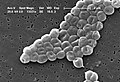
Queensland: Dangerous superbug clones have successfully spread beyond the borders of the Middle East Gulf States, University of Queensland researchers have found. The superbug Acinetobacter baumannii, a bacteria well known for being antibiotic-resistant and associated with dangerous hospital-acquired infections and subsequent outbreaks, has been found in Saudi Arabia, United Arab Emirates, Kuwait, Qatar, Oman and Bahrain. The University of Queensland lead the first region-wide collaborative study on superbugs (antibiotic-resistant bacteria) in the Gulf Cooperation Council.

Tuesday, March 31, 2015

Pig-borne disease jumped into humans when rearing practices changed

Cambridge: The most virulent strains of Streptococcus suis, the leading cause of bacterial meningitis in adult humans in parts of southeast Asia and in pigs around the world, are likely to have evolved and become widespread in pigs at the same time as changes in rearing practices, according to research from an international consortium published today in the journal Nature Communications.

Friday, March 13, 2015

High rate of potentially deadly strep bacteria bugging kids

Auckland: More than half of healthy New Zealand pre-school children are carriers of Staphylococcus aureus, and one in six hosts Streptococcus pyogenes in their nostrils, throat or crook of the arm, according to new research from the Growing Up in New Zealand study.

Monday, March 2, 2015

Warning signals from the volatile world of influenza viruses

WHO: The current global influenza situation is characterized by a number of trends that must be closely monitored. These include: an increase in the variety of animal influenza viruses co-circulating and exchanging genetic material, giving rise to novel strains; continuing cases of human H7N9 infections in China; and a recent spurt of human H5N1 cases in Egypt. Changes in the H3N2 seasonal influenza viruses, which have affected the protection conferred by the current vaccine, are also of particular concern.

Saturday, February 28, 2015

Airport screening for viruses misses half of infected travelers but can be improved

UCLA. US: In the past decade, the H1N1 virus and Ebola are just two of the diseases whose spread was spurred by international airline travel. Screening passengers at airports, therefore, could be one key method for slowing the global spread of infectious diseases.

Friday, February 27, 2015

International research project tackles spread of virus among Hajj pilgrims

Sydney University. Australia: University of Sydney researchers are working on a project to find the best way of stopping the spread of potentially fatal infectious respiratory disease among the two million pilgrims who converge on Mecca each year for Hajj.