Showing posts with label Parkinson's disease. Show all posts

Tuesday, March 16, 2021

Simple Skin Swab Could Diagnose Parkinson’s Disease


Clinicalomics :Researchers at the University of Manchester have developed a test that can diagnose Parkinson’s disease from sebum collected by swabbing the skin.

The test uses mass spectrometry and was able to identify 10 chemicals in the sebum skin swabs from Parkinson’s patients that differed from those without the neurodegenerative condition. According to a press statement, it was able to diagnose the disease with 85% accuracy.

Wednesday, June 27, 2018

Patients with inflammatory bowel disease (IBD) have 22% higher risk of Parkinson’s compared with non-IBD individuals, study shows

BMJ: Doctors may be able to modify or slow down the progress of the neurological condition Parkinson’s disease in the future by spotting signs of it in patients with inflammatory bowel disease (IBD), suggest a study published in the journal Gut. Danish researchers found patients with IBD appeared to have a 22% greater risk of developing Parkinson’s disease in a study that monitored participants for almost 40 years.

Tuesday, June 12, 2018

Copying movements could help manage Parkinson's

Manchester: New research by University of Manchester psychologists has revealed that imitation of movement can help people with Parkinson’s. Dr Ellen Poliakoff and Dr Judith Bek, whose paper appears in the print version of the Journal of Neuropsychology today, are on the team of the pioneering Economic and Social Research Council funded study. The study compared the reactions of 23 people with mild to moderate Parkinson’s and 24 people without the condition.

Saturday, April 28, 2018

Certain drugs for muscle conditions may be linked to increased risk of dementia

BMJ: Use of certain anticholinergic drugs - that help to control involuntary muscle movements for conditions such as Parkinson’s disease - is associated with an increased risk of dementia, finds a UK study published by The BMJ today. The study is the largest of its kind to date and the findings prompt the researchers to say that clinicians should avoid long term prescribing of some anticholinergics to patients aged 45 and over.

Tuesday, February 28, 2017

Brain researchers show how Parkinson’s spreads

Auckland: Researchers at the University of Auckland have provided the first strong evidence on how Parkinson’s disease spreads in the brain, helping to advance treatment of the disease. In a paper, published today in Scientific Reports – Nature, the study revealed that pathological proteins (known as Lewy bodies) in Parkinson’s disease could be spread from cell to cell. “This theory of Parkinson’s disease spread is topical, but here we have the first proof in cell culture of the mechanism controlling the spread,” says Associate Professor Maurice Curtis from the University’s Centre for Brain Research, who leads the Centre’s research on Parkinson’s disease.

Wednesday, February 15, 2017

Targeting Parkinson’s-Linked Protein Could Neutralize 2 of the Disease’s Causes

Johns Hopkins: Researchers report they have discovered how two problem proteins known to cause Parkinson’s disease are chemically linked, suggesting that someday, both could be neutralized by a single drug designed to target the link. A report on their discovery appears in the Jan. 24 issue of Cell Reports. The investigators’ new experiments build on evidence reported in 2011 that reducing the amount of a protein called PARIS in mice with the rodent equivalent of Parkinson’s disease protects against the loss of dopamine-making neurons.

Wednesday, January 25, 2017

Low levels of manganese in welding fumes linked to neurological problems

Saint-Louis: Manganese-containing welding fumes cause neurological problems at estimated levels under federal safety limits, according to research from Washington University School of Medicine in St. Louis. The findings suggest that current allowable limits for manganese exposure are not adequately protecting welders from the dangers of the job. Welders exposed to airborne manganese at estimated levels below federal occupational safety standards exhibit neurological problems similar to Parkinson’s disease, according to new research at Washington University School of Medicine in St. Louis. Further, the more they are exposed to manganese-containing welding fumes, the faster the workers’ signs and symptoms worsen.

Wednesday, January 4, 2017

Imaging Links Structural Brain Changes and Cognitive Decline in Parkinson’s

Massimo Filippi, M.D.RNSA: People with Parkinson's disease and cognitive impairment have disruptions in their brain networks that can be seen on a type of MRI, according to a study appearing online in the journal Radiology. Parkinson's disease (PD) is a progressive disorder of the central nervous system characterized by tremors or trembling and stiffness in the limbs, impaired balance and coordination. It affects about 10 million people worldwide. As PD progresses, many patients develop mild cognitive impairment (MCI), a decline in cognitive abilities, including thinking, memory and language. MCI can be identified in approximately 25 percent of newly diagnosed PD patients, and patients with MCI progress to dementia more frequently than those with normal cognitive performance.

Sunday, November 6, 2016

New therapeutic approach expected in Parkinson's Disease

ICM: CNRS researchers from Etienne Hirsch’s team at the ICM (CNRS, Inserm, UPMC), as well as other researchers from the Biomolecular, Conception, Isolation and Synthesis Lab (CNRS/ParisSud University), led by professor Bruno Figadère, propose the use of a small molecule, 3-phenyl-6-aminoquinoxaline (PAQ), to slow the progression of Parkinson’s disease. Capable of crossing the blood-brain barrier, this molecule could protect neurons from disappearing in this disease. This work, funded in part by the CARNOT programme for Future Investments, has just been published in the Journal of Medicinal Chemistry. This discovery could eventually pave the way for a curative treatment of Parkinson’s disease.

Friday, November 4, 2016

Single mutation in recessive gene increases risk of earlier onset Parkinson’s disease

Mayo Clinic: A collaboration of 32 researchers in seven countries, led by scientists at Mayo Clinic’s campus in Florida, has found a genetic mutation they say confers a risk for development of Parkinson’s disease earlier than usual. The major study, published in Brain, is important because the risk comes from a single mutation in the PTEN-induced putative kinase 1 (PINK1) gene. Investigators had believed that this rare form of Parkinson’s developed only when a person inherited mutations in both PINK1 alleles (one from each parent).

Sunday, October 30, 2016

Can some types of fat protect us from brain disease?

Berkeley: An intriguing finding in nematode worms suggests that having a little bit of extra fat may help reduce the risk of developing some neurodegenerative diseases, such as Huntington’s, Parkinson’s and Alzheimer’s diseases.What these illnesses have in common is that they’re caused by abnormal proteins that accummulate in or between brain cells to form plaques, producing damage that causes mental decline and early death.
Huntington’s disease, for example, is caused by aggregating proteins inside brain neurons that ultimately lead to motor dysfunction, personality changes, depression and dementia, usually progressing rapidly after onset in people’s 40s.

Wednesday, June 17, 2015

FDA approves brain implant to help reduce Parkinson’s disease and essential tremor symptoms

FDA: The U.S. Food and Drug Administration today approved the Brio Neurostimulation System, an implantable deep brain stimulation device to help reduce the symptoms of Parkinson’s disease and essential tremor, a movement disorder that is one of the most common causes of tremors. The Brio Neurostimulation System can help some patients when medication alone may not provide adequate relief from symptoms such as walking difficulties, balance problems, and tremors.

Tuesday, June 16, 2015

Gene Therapy Prevents Parkinson’s Disease in Animal Model

Pittsburgh: Gene therapy to reduce production of a brain protein successfully prevented development of Parkinson’s disease in an animal study, according to researchers at the University of Pittsburgh School of Medicine. The findings, published online today in the Journal of Clinical Investigation, could lead to new understanding of how genetic and environmental factors converge to cause the disease, and the development of effective treatments to prevent disease progression.

Thursday, June 11, 2015

Fibrillar strain behind Parkinson's disease identified

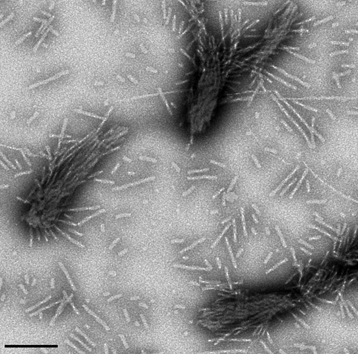
CNRS: Several neurodegenerative disorders are caused by aggregates of a single protein, alpha-synuclein, in the brain. A French-Belgian team1 including scientists from the Institut des Neurosciences Paris Saclay (CNRS/Université Paris-Sud) and KU Leuven has identified two specific fiber "strains" , which take the form of "ribbons" and "cylinders", and have been shown to cause Parkinson's disease and Multiple System Atrophy (MSA), respectively. This work is published in Nature on 10 June 2015.

Single protein causes Parkinson's disease and Multiple System Atrophy

Anvers: In a collaboration with CNRS and the University of Antwerp, KU Leuven neurobiologists have discovered that the shape of aggregates – 'cylinders' or 'ribbons' – determines whether a patient develops Parkinson's disease or Multiple System Atrophy, respectively. Several neurodegenerative disorders are caused by aggregates of a single protein known as alpha-synuclein. Typical of neurodegenerative disorders is the disrupted communication between brain cells together with a loss of cells in specific brain regions. For some brain diseases this phenomenon is linked to a protein known as alpha-synuclein. The exact function of this protein remains unclear, but it may play a role in the communication between brain cells. However, in the case of specific diseases, including Parkinson’s disease, Multiple System Atrophy (MSA), and dementia with Lewy bodies (DLB), this protein forms aggregates that cause neurodegeneration.

Wednesday, April 29, 2015

Nanoparticle drug reverses Parkinson’s-like symptoms in rats

American Chemical Society: Trans-Blood Brain Barrier Delivery of Dopamine Loaded Nanoparticles Reverses Functional Deficits in Parkinsonian Rats. As baby boomers age, the number of people diagnosed with Parkinson's disease is expected to increase. Patients who develop this disease usually start experiencing symptoms around age 60 or older. Currently, there’s no cure, but scientists are reporting a novel approach that reversed Parkinson's-like symptoms in rats. Their results, published in the journal ACS Nano, could one day lead to a new therapy for human patients.

Tuesday, April 14, 2015

Deep brain stimulation for Parkinson's

Scimex: Researchers in the US suggest that deep brain stimulation (DBS, electrodes implanted in the brain) reduces abnormally intense activation between certain regions of the brain in Parkinson's patients, which could explain why DBS is so effective for Parkinson's related motor problems. The authors suggest that their findings could be used in upcoming studies with the intent to develop a 'smart' DBS device that could apply stimulation as needed based on brain activity. Deep brain stimulation (DBS) may work by reducing abnormally strong co-activation between of brain regions in patients with Parkinson's disease, reports a paper published online in Nature Neuroscience. This may explain why DBS is an effective treatment for Parkinsonian locomotor deficits.

Thursday, April 2, 2015

Parkinson: Diagnosis by keyboard

MIT: By revealing loss of motor skills, typing patterns may help to identify early onset of Parkinson’s. Analyzing people’s keystrokes as they type on a computer keyboard can reveal a great deal of information about the state of their motor function, according to a new study from MIT. In a paper appearing in Scientific Reports, the researchers found that their algorithm for analyzing keystrokes could distinguish between typing done in the middle of the night, when sleep deprivation impairs motor skills, and typing performed when fully rested.

A new tool for understanding Parkinson's disease

Lausanne: EPFL scientists have developed a new method that can accurately simulate the chemical modification of the protein behind Parkinson’s disease. The technique, has opened a new way of understanding Parkinson’s, and can be expanded to other proteins and diseases as well.

Monday, March 23, 2015

Long-Term Effect of Deep Brain Stimulation on Pain in Patients with Parkinson Disease

JAMA: Patients with Parkinson disease who experienced pain before undergoing subthalamic nucleus deep brain stimulation (STN DBS) had that pain improved or eliminated at eight years after surgery, although the majority of patients developed new pain, mostly musculoskeletal, according to an article published online by JAMA Neurology.