BMJ: Autoimmune disease may be linked to a heightened risk of dementia, indicates a large long term study, published in the Journal of Epidemiology & Community Health. Although significant, the extent of the association found was small,
caution the researchers. But the findings are consistent with the theory
that Alzheimer’s disease may have an autoimmune component, they point
out. It has been suggested that autoimmune and inflammatory activity may have a role in the development of dementia.
In a bid to try and quantify this further, the researchers drew on
hospital admissions data, including day cases, from 1998 to 2012 for
England.
Showing posts with label Addison disease. Show all posts
Showing posts with label Addison disease. Show all posts
Thursday, March 2, 2017
Thursday, August 28, 2014
Addison disease
Addison disease is also called: Adrenal insufficiency, Adrenocortical hypofunction, Hypocortisolism
Your adrenal glands are just above your kidneys. The outside layer of these glands makes hormones that help your body respond to stress and regulate your blood pressure and water and salt balance. Addison disease happens if the adrenal glands don't make enough of these hormones.
A problem with your immune system usually causes Addison disease. The immune system mistakenly attacks your own tissues, damaging your adrenal glands. Other causes include infections and cancer.
Symptoms include
- Weight loss
- Muscle weakness
- Fatigue that gets worse over time
- Low blood pressure
- Patchy or dark skin
More about Addison disease
Saturday, January 14, 2012
Addison disease
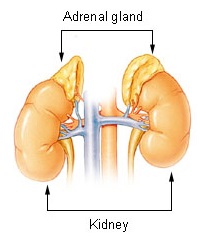
The
adrenal glands are two pyramid-shaped glands that sit on top of each
kidney. Anatomically, the adrenal glands are composed of an outer
compartment called the adrenal cortex and an inner compartment called
the adrenal medulla. The adrenal medulla is regulated by the nervous
system and secretes three distinct hormones: epinephrine (adrenaline),
norepinephrine (noradrenaline), and dopamine. These are often referred
to as the “fight or flight” hormones. The adrenal cortex can be further
subdivided into three regions, each of which secretes its particular
steroid hormone. The adrenal cortex is primarily regulated by the
pituitary gland (an endocrine gland located in the brain) and releases
more than 50 steroid hormones. Among these are the hormones called
cortisol and aldosterone. Cortisol and aldosterone are considered
life-sustaining hormones because they regulate blood pressure, blood
sugar, and electrolyte balance, and also play an important role in our
body’s response to stress.
Subscribe to:
Posts (Atom)