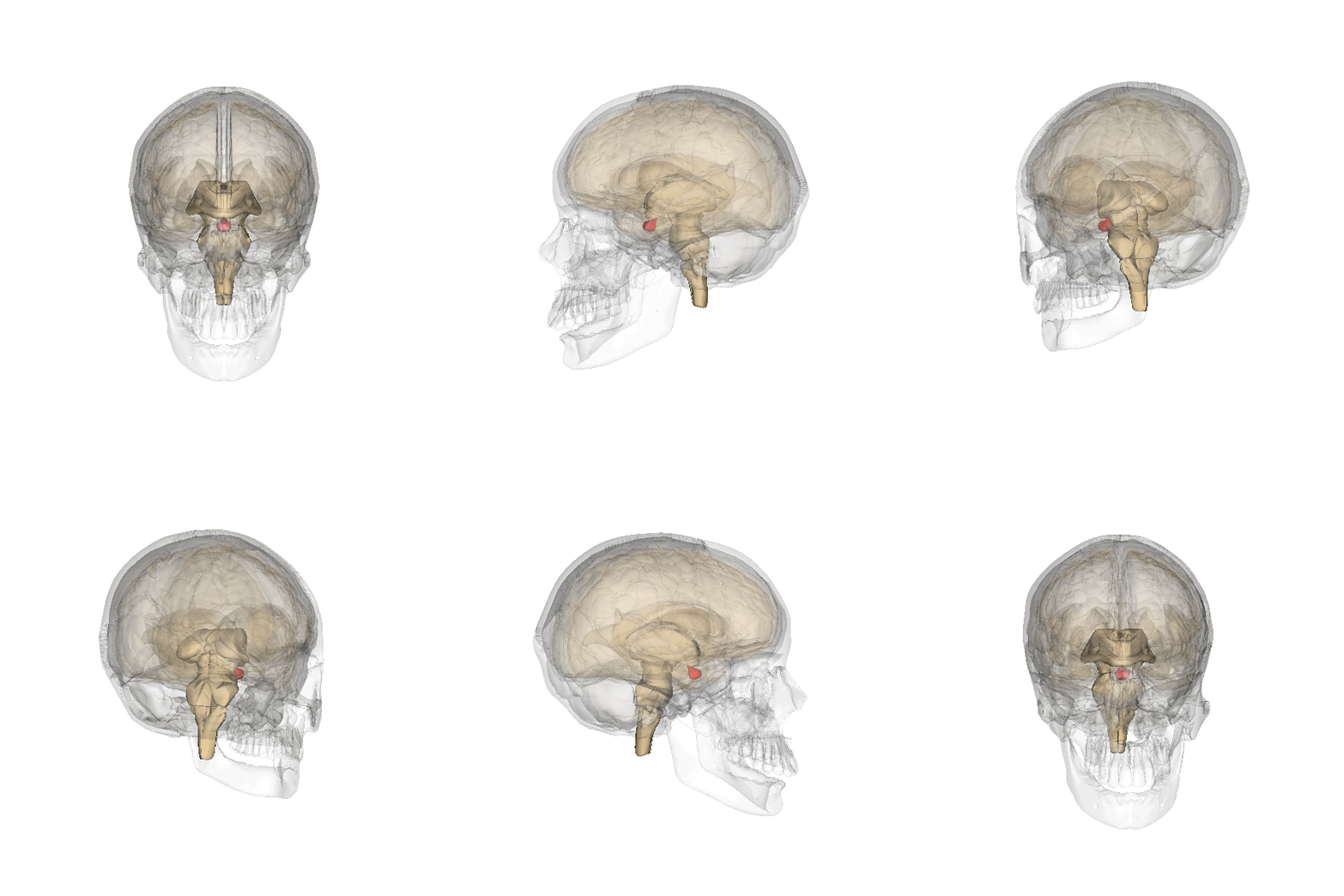
Imperial College: The hormone kisspeptin can enhance activity in
brain regions associated with sexual arousal and romantic love,
according to new research. The scientists behind the early-stage study, from
Imperial College London, are now keen to explore whether kisspeptin
could play a part in treating some psychosexual disorders - sexual
problems which are psychological in origin, and commonly occur in
patients with infertility. The work was funded by the National Institute for Health Research (NIHR) the Wellcome Trust and the Medical Research Council.
Only good, independent and reliable information about health from experts.
Showing posts with label hormones. Show all posts
Friday, February 17, 2017
Thursday, October 2, 2014
Pheochromocytoma
Pheochromocytoma is a rare tumor that usually starts in the cells of one of your adrenal glands (glands on top of the kidneys).
Their frequency is about 0.1% in patients with hypertension and 4% in patients with a fortuitously discovered adrenal mass.
The cause is unknown although valuable information has recently been provided by work on the genomics of familial diseases including these tumors.
Although they are usually benign, pheochromocytomas often cause the adrenal gland to make too many hormones (dopamine, epinephrine and norepinephrine). This can lead to high blood pressure, diabetes and cause symptoms such as
Doctors use lab tests and imaging tests to diagnose it.
The purpose of pre-operative imaging tests is to locate the tumor, ascertain whether it is single or multiple, adrenal or ectopic (outside the adrenal gland), benign or malignant, and isolated or present with other neoplasms (tumors) in the context of familial syndromes.
Surgery is the most common treatment. Other options include radiation therapy, chemotherapy, and targeted therapy. Targeted therapy uses substances that attack cancer cells without harming normal cells.
Source: Orphanet Journal of Rare Diseases
Their frequency is about 0.1% in patients with hypertension and 4% in patients with a fortuitously discovered adrenal mass.
The cause is unknown although valuable information has recently been provided by work on the genomics of familial diseases including these tumors.
Although they are usually benign, pheochromocytomas often cause the adrenal gland to make too many hormones (dopamine, epinephrine and norepinephrine). This can lead to high blood pressure, diabetes and cause symptoms such as
- Headaches
- Sweating
- Pounding of the heart (palpitations)
- Being shaky
- Being extremely pale
- Weight loss
Doctors use lab tests and imaging tests to diagnose it.
The purpose of pre-operative imaging tests is to locate the tumor, ascertain whether it is single or multiple, adrenal or ectopic (outside the adrenal gland), benign or malignant, and isolated or present with other neoplasms (tumors) in the context of familial syndromes.
Surgery is the most common treatment. Other options include radiation therapy, chemotherapy, and targeted therapy. Targeted therapy uses substances that attack cancer cells without harming normal cells.
Source: Orphanet Journal of Rare Diseases
Friday, August 1, 2014
Vasopressin
Vasopressin – Also called anti-diuretic hormone (ADH) promotes water to be reabsorbed by the kidneys and is thus essential in water and electrolyte balance. This hormone is actually produced by the hypothalamus and then stored in the pituitary gland until it is ready to be released into the circulation.
More about pituitary disorders
Adrenocorticotropic Hormone
Adrenocorticotropic Hormone (ACTH) triggers the adrenal glands (located above the kidneys) to release cortisol which in turn, regulates carbohydrate, fat, and protein metabolism, and is essential in the stress response.
More about pituitary disorders
Thyroid Stimulating Hormone
Thyroid Stimulating Hormone (TSH): This hormone stimulates the thyroid gland to release thyroid hormones. Thyroid hormones control basal (basic) metabolic rate and play an important role in growth and maturation. Thyroid hormones affect almost every organ in the body.
More about pituitary disorders
Prolactinoma
Source: Pr Albert BECKERS, Dr Adrian DALY. Orphanet
Prolactinoma is a usually benign tumor of the pituitary gland that results in hyperprolactinemia.
Prolactinomas induce galactorrhoea, amenorrhoea and infertility in women, and hypogonadism, sexual dysfunction, impotence, infertility and, more rarely, gynecomastia in men.
Prolactinoma is a usually benign tumor of the pituitary gland that results in hyperprolactinemia.
Prolactinomas induce galactorrhoea, amenorrhoea and infertility in women, and hypogonadism, sexual dysfunction, impotence, infertility and, more rarely, gynecomastia in men.
Prolactin
Prolactin is a hormone released by the pituitary gland. This hormone stimulates secretion of breast milk.
Pregnant women have high levels of prolactin.
Many medicines can cause prolactin levels to increase.
Hyperprolactinemia is a condition of too much prolactin in the blood of women who are not pregnant and in men.A pituitary tumor (just below the brain) called prolactinoma can cause hyperprolactinemia
It can change or stop ovulation (the release of an egg from the ovary).
In men, high prolactin levels can cause galactorrhea, impotence (inability to have an erection during sex), reduced desire for sex, and infertility.
More about prolactinoma
Pregnant women have high levels of prolactin.
Many medicines can cause prolactin levels to increase.
Hyperprolactinemia is a condition of too much prolactin in the blood of women who are not pregnant and in men.A pituitary tumor (just below the brain) called prolactinoma can cause hyperprolactinemia
It can change or stop ovulation (the release of an egg from the ovary).
In men, high prolactin levels can cause galactorrhea, impotence (inability to have an erection during sex), reduced desire for sex, and infertility.
More about prolactinoma
Follicle Stimulating Hormone
Luteinizing Hormone (LH) and Follicle Stimulating Hormone (FSH): These hormones control the production of sex hormones (estrogen and testosterone) as well as sperm and egg maturation and release.
More about pituitary disorders
Luteinizing Hormone
Luteinizing Hormone (LH) and Follicle Stimulating Hormone (FSH): These hormones control the production of sex hormones (estrogen and testosterone) as well as sperm and egg maturation and release.
More about pituitary disorders
Growth Hormone
Growth Hormone (GH) or somatotropin or somatropin is the principal hormone that, among many other functions, regulates body and brain development, bone maturation, metabolism, and is essential for healthy muscles.
Diseases:
-acromegaly: excess of growth hormone
-growth failure and short stature: deficiency of growth hormone
More about acromegaly
Diseases:
-acromegaly: excess of growth hormone
-growth failure and short stature: deficiency of growth hormone
More about acromegaly
Thursday, July 31, 2014
Pituitary
The pituitary is a small gland located below the brain in the skull base, in an area called the pituitary fossa or sella turcica. The pituitary gland is an endocrine gland regulated by a region of the brain called the hypothalamus, to which it is connected by a thin connection called the pituitary stalk or infundibulum. Weighing less than one gram and measuring one centimeter in width, the pituitary gland is often called the "master gland" since it controls the secretion of many of the body’s hormones. When released by the pituitary into the blood stream, these substances have a dramatic and broad range of effects:
●Growth Hormone (GH): body and brain development, bone maturation, metabolism, healthy muscles.
●Luteinizing Hormone (LH) and Follicle Stimulating Hormone (FSH): production of sex hormones
●Prolactin (PRL): stimulates secretion of breast milk.
●Thyroid Stimulating Hormone (TSH): stimulates the thyroid gland.
●Adrenocorticotropic Hormone (ACTH): triggers the adrenal glands (located above the kidneys) to release cortisol which in turn, regulates carbohydrate, fat, and protein metabolism, and is essential in the stress response.
●Vasopressin – Also called anti-diuretic hormone (ADH): promotes water to be reabsorbed by the kidneys.
Subscribe to:
Comments (Atom)