Showing posts with label Creutzfeldt-Jakob. Show all posts

Thursday, February 23, 2017

A BIOLOGICAL TEST TO DETECT CREUTZFELDT-JAKOB DISEASE

ICM: Scientists from the French Blood Bank (Etablissement français du sang), in collaboration with several researchers including Stéphane Haïk, team leader at the ICM, have just developed a biological test capable of detecting the prion responsible for Variant Creutzfeldt-Jakob Disease (vCJD) in blood. This test also proves that the agent can be identified one to two years prior to appearance of symptoms of the disease.

Thursday, June 11, 2015

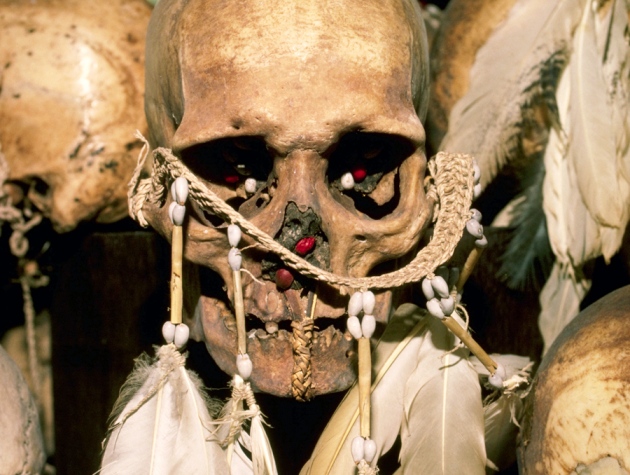
Could brain-eating cannibals provide the key to treating Creutzfeldt Jacob disease?

NHS: “Eating brains helped Papua New Guinea tribe become disease resistant,” The Daily Telegraph reports. Some of the Fore people, who used to eat the brains of dead relatives as a mark of respect, may have developed resistance to prion diseases such as Creutzfeldt Jacob disease (CJD). Prion diseases occur in humans and animals, and are caused by a build-up of abnormally folded proteins in the brain. Prion diseases can be passed on by eating infected tissue, such as beef that has been exposed to prions. This is known as bovine spongiform encephalopathy (BSE, or “mad cow disease”). There is currently no cure for prion diseases.

Genetic mutation blocks prion disease

Nature: Scientists who study a rare brain disease that once devastated entire communities in Papua New Guinea have described a genetic variant that appears to stop misfolded proteins known as prions from propagating in the brain1. Kuru was first observed in the mid-twentieth century among the Fore people of Papua New Guinea. At its peak in the late 1950s, the disease killed up to 2% of the group's population each year. Scientists later traced the illness to ritual cannibalism2, in which tribe members ate the brains and nervous systems of their dead. The outbreak probably began when a Fore person consumed body parts from someone who had sporadic Creutzfeldt-Jakob disease (CJD), a prion disease that spontaneously strikes about one person in a million each year.

Friday, January 16, 2015

Creutzfeldt-Jakob's disease

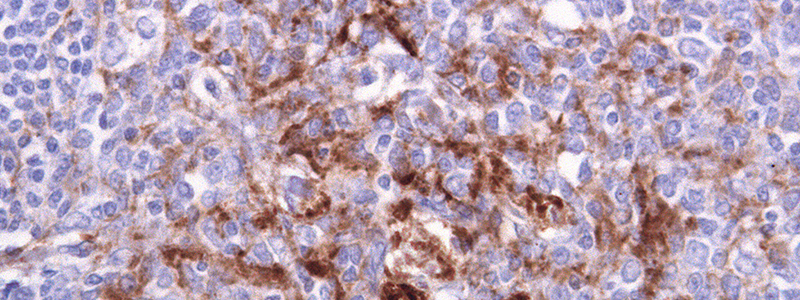
Orphanet: Creutzfeldt-Jakob's disease (CJD) is the most common form of human transmissible spongiform encephalopathy (TSE). The frequency is 0.6 - 1.5 / 1,000,000. About 85% of cases are sporadic, 10% are genetic, while 5% are iatrogenic. Incubation periods are long and totally silent, and the disorder is always fatal. CJD causes degeneration of the nervous system without eliciting immune or inflammatory reaction, and is associated with accumulated amounts of an abnormal isoform of the prion protein (PrP).