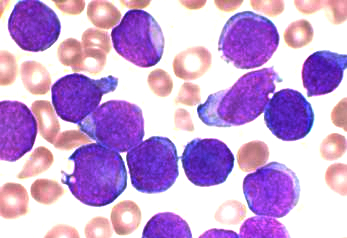
Mainz: In leukemia cells it is often the case that genes are reactivated that,
in physiological terms, mediate the self-renewal of blood stem cells. In
a common subtype of acute myeloid leukemia, this abnormal activation of
such self-renewing genes is apparently caused by structural
modifications of the DNA packaging. In turn, these modifications are
caused by two specific proteins of the so-called chromatin regulator
group, on which leukemia cells are dependent. These discoveries were
made by oncologist Dr. Michael Kühn from the Department of Internal
Medicine III, which is a part of the University Center for Tumor
Diseases (UCT) at the Mainz University Medical Center, in a
collaborative effort with researchers from the Memorial Sloan-Kettering
Cancer Center in New York and Harvard University in Boston.
Only good, independent and reliable information about health from experts.
Showing posts with label leukaemia. Show all posts
Sunday, November 13, 2016
Sunday, November 6, 2016
New types of blood cancer discovered in children
Lund University: Through
a detailed study of leukaemia cells from more than 200 children, a
research group at Lund University in Sweden has discovered two new types
of childhood leukaemia. Using next-generation sequencing technology
(NGS), the researchers were able to study the genome of cancer cells,
which is how they discovered the new types of cancer. Acute
lymphoblastic leukaemia is a rare disease, but the most common form of
cancer in children. Today the treatment is very successful, but requires
heavy interventions at the risk of causing many side effects. There is
therefore a need to distinguish between different types of acute
lymphoblastic leukaemia, in order to adapt the treatment according to
the severity of each case, and to detect possible relapse.
Thursday, November 3, 2016
Leukaemia study reveals therapy clues
Edinburgh: Genes that act as brakes to stop the development of an aggressive form of leukaemia have been identified by researchers. Scientists have found that two molecules - Hif-1alpha and Hif-2alpha -
work together to stop the formation of leukemic stem cells in an
aggressive type of blood cancer called Acute Myeloid Leukaemia (AML). The cancer occurs when production of new blood cells by the bone
marrow goes awry. This leads to the formation of leukemic stem cells,
which fuel the disease and provide a constant flow of abnormal leukaemia
cells.
Wednesday, June 17, 2015
Could avocados hold the key to treating leukaemia?
NHS: "Avocados could hold the key to helping beat rare form of leukaemia," The Independent reports; specifically acute myeloid leukaemia, which is an uncommon and aggressive cancer of the white blood cells. The headline may give readers the impression that eating avocados may
help fight leukaemia, which is not the case. Researchers were actually
looking at a compound found in avocado seeds that is not eaten, called
avocatin B, which appears to be effective against leukaemia cells in the
laboratory. The researchers tested 800 compounds against human leukaemia cells.
Avocatin B was the most effective compound to cause the leukaemia cells
to die. It did not have an effect on normal blood cells.
Subscribe to:
Comments (Atom)


