
Showing posts with label nanotechnology. Show all posts
Showing posts with label nanotechnology. Show all posts
Wednesday, January 18, 2017
Engineering nanomaterials to deliver treatments for heart disease
Thursday, June 25, 2015
Carbon nanoparticles you can make at home

Wednesday, June 24, 2015
Researchers design placenta-on-a-chip to better understand pregnancy

Tuesday, June 23, 2015
Nanoparticles in drug delivery

Wednesday, June 17, 2015
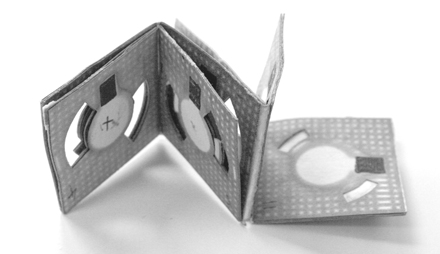
Paper biosensor with nano-battery based upon microbial respiration
Monday, June 15, 2015
Marrying Microfluidics and Barcoding Technology Allows Efficient Probing Of The Single-Cell Variability
It has long been the dream of biologists to map gene expression at the
single-cell level. With such data one might track heterogeneous cell
sub-populations, and infer regulatory relationships between genes and
pathways. Recently, RNA sequencing has achieved single-cell resolution.
What is limiting is an effective way to routinely isolate and process
large numbers of individual cells for quantitative in-depth sequencing.
We have developed a high-throughput droplet-microfluidic approach for
barcoding the RNA from thousands of individual cells for subsequent
analysis by next-generation sequencing. The method shows a surprisingly
low noise profile and is readily adaptable to other sequencing-based
assays. We analyzed mouse embryonic stem cells, revealing in detail the
population structure and the heterogeneous onset of differentiation
after leukemia inhibitory factor (LIF) withdrawal. The reproducibility
of these high-throughput single-cell data allowed us to deconstruct cell
populations and infer gene expression relationships.
What are the social implications of nanomedicine?

Wednesday, June 10, 2015
DNA nanotechnology: new adventures for an old warhorse
 Curr Opin Chem Biol: As the blueprint of life, the natural exploits of DNA are admirable.
However, DNA should not only be viewed within a biological context. It
is an elegantly simple yet functionally complex chemical polymer with
properties that make it an ideal platform for engineering new
nanotechnologies. Rapidly advancing synthesis and sequencing
technologies are enabling novel unnatural applications for DNA beyond
the realm of genetics. Here we explore the chemical biology of DNA nanotechnology
for emerging applications in communication and digital data storage.
Early studies of DNA as an alternative to magnetic and optical storage
mediums have not only been promising, but have demonstrated the
potential of DNA to revolutionize the way we interact with digital data
in the future.
Curr Opin Chem Biol: As the blueprint of life, the natural exploits of DNA are admirable.
However, DNA should not only be viewed within a biological context. It
is an elegantly simple yet functionally complex chemical polymer with
properties that make it an ideal platform for engineering new
nanotechnologies. Rapidly advancing synthesis and sequencing
technologies are enabling novel unnatural applications for DNA beyond
the realm of genetics. Here we explore the chemical biology of DNA nanotechnology
for emerging applications in communication and digital data storage.
Early studies of DNA as an alternative to magnetic and optical storage
mediums have not only been promising, but have demonstrated the
potential of DNA to revolutionize the way we interact with digital data
in the future.
Injectable brain implant spies on individual neurons

Tuesday, June 9, 2015
Researchers have developed nano-electronics that can be injected into living tissue and used to monitor its development

Monday, June 8, 2015
Nanotechnology drug delivery approaches for the treatment of glioblastoma
Nanoengineering of vaccines using natural polysaccharides
Revolutionary new probe to study the brain
 Waterloo: Researchers are developing a tiny wire that will speed up the
discovery of new drugs and could one day unlock the mysteries of
illnesses such as Alzheimer’s or Lou Gehrig’s disease. Pr Pawliszyn, a chemistry professor from the University
of Waterloo, along with researchers from Concordia University are teaming up to develop a new
brain probe that can be used on live subjects.
The new probe is expected to reduce the time, costs and risks related
to drug development, as well as help neuroscientists better understand
what causes degenerative brain diseases and how to treat them.
Waterloo: Researchers are developing a tiny wire that will speed up the
discovery of new drugs and could one day unlock the mysteries of
illnesses such as Alzheimer’s or Lou Gehrig’s disease. Pr Pawliszyn, a chemistry professor from the University
of Waterloo, along with researchers from Concordia University are teaming up to develop a new
brain probe that can be used on live subjects.
The new probe is expected to reduce the time, costs and risks related
to drug development, as well as help neuroscientists better understand
what causes degenerative brain diseases and how to treat them.Thursday, June 4, 2015
Nanotherapy effective in mice with multiple myeloma

Tuesday, June 2, 2015
Nanotechnologies are useful in respiratory medicine

New sensing technology could improve our ability to detect diseases, fraudulent art, chemical weapons and more

Saturday, May 30, 2015
Magnetic nanoparticles could stop blood clot-caused strokes
 Houston: By loading magnetic nanoparticles with drugs and dressing them in
biochemical camouflage, Houston Methodist researchers say they can
destroy blood clots 100 to 1,000 times faster than a commonly used
clot-busting technique. The finding,reported in Advanced Functional Materials (early
online), is based on experiments in human blood and mouse clotting
models. If the drug delivery system performs similarly well in planned
human clinical trials, it could mean a major step forward in the
prevention of strokes, heart attacks, pulmonary embolisms, and other
dire circumstances where clots -- if not quickly busted -- can cause
severe tissue damage and death.
Houston: By loading magnetic nanoparticles with drugs and dressing them in
biochemical camouflage, Houston Methodist researchers say they can
destroy blood clots 100 to 1,000 times faster than a commonly used
clot-busting technique. The finding,reported in Advanced Functional Materials (early
online), is based on experiments in human blood and mouse clotting
models. If the drug delivery system performs similarly well in planned
human clinical trials, it could mean a major step forward in the
prevention of strokes, heart attacks, pulmonary embolisms, and other
dire circumstances where clots -- if not quickly busted -- can cause
severe tissue damage and death.
Saturday, May 23, 2015
First Liquid Nanolaser Technology could lead to new way of doing ‘lab on a chip’ medical diagnostics

Wednesday, May 20, 2015
A Nano-transistor Assesses Your Health Via Sweat
 Lausanne: Made from state-of-the-art silicon transistors, an
ultra-low power sensor enables real-time scanning of the contents of
liquids such as perspiration. Compatible with advanced electronics, this
technology boasts exceptional accuracy – enough to manufacture mobile
sensors that monitor health. Imagine that it is possible, through a tiny
adhesive electronic stamp attached to the arm, to know in real time
one's level of hydration, stress or fatigue while jogging. A new sensor
developed at the Nanoelectronic Devices Laboratory (Nanolab) at EPFL is
the first step toward this application.
Lausanne: Made from state-of-the-art silicon transistors, an
ultra-low power sensor enables real-time scanning of the contents of
liquids such as perspiration. Compatible with advanced electronics, this
technology boasts exceptional accuracy – enough to manufacture mobile
sensors that monitor health. Imagine that it is possible, through a tiny
adhesive electronic stamp attached to the arm, to know in real time
one's level of hydration, stress or fatigue while jogging. A new sensor
developed at the Nanoelectronic Devices Laboratory (Nanolab) at EPFL is
the first step toward this application.Monday, May 18, 2015
Hi-tech nanoknife treatment to kill kidney tumour

Subscribe to:
Comments (Atom)