Cochrane: Babies
who are born too early are more likely to become ill or die. If preterm
labour is detected, treatment can start to slow down or stop labour.
This also gives time for treatment to improve the baby’s breathing at
birth. Increased contractions can be a sign of labour starting early. Many women do not recognise these contractions in time for treatment. Pregnant women at risk of giving birth early could use a monitoring device at home. This would send data to the hospital, and help doctors and midwives to detect and treat preterm labour.
Showing posts with label premature birth. Show all posts
Showing posts with label premature birth. Show all posts
Friday, March 3, 2017
Wednesday, February 1, 2017
Bacteria in the Cervix May be Key to Understanding Premature Birth
Pennsylvania: Depending on the specific type, bacteria in a woman’s vagina and
cervix may increase the risk of premature birth or protect against it,
according to new research from the Perelman School of Medicine at the
University of Pennsylvania. Results of the study provide groundbreaking
information that the authors suggest could help physicians learn how to
prevent preterm birth, either by eliminating the “bad” bacteria, or
increasing the “protective” bacteria. The study was presented this week
at the Society for Maternal-Fetal Medicine’s annual meeting in Las Vegas, and received the March of Dimes Award for Best Abstract on Prematurity.
Monday, June 15, 2015
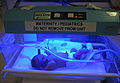
Premature babies – are we doing the right thing?
Wednesday, May 13, 2015
Show us your BabyFace: researchers appeal for help from new parents

Thursday, January 29, 2015
Survival of very premature infants is improving in France: First results of the EPIPAGE 2 study
INSERM France: Since 2011, nearly 7,000 premature infants have been enrolled in the EPIPAGE 2 study. This study is aimed at assessing the survival of infants born between 22 and 34 weeks’ gestation, and their subsequent outcomes. Compared with data from the EPIPAGE 1 cohort in 1997, the proportion of infants born in 2011 from the 25th week of gestation, who survived without severe neonatal disease, showed a definite increase.
Tuesday, January 27, 2015
Vitamin E protects against liver damage in parenterally fed premature pigs
Baylor. US: Adding vitamin E (α-tocopherol) to lipid emulsions used to feed
premature pigs intravenously (parenteral nutrition) prevents liver
damage, said researchers at the USDA/ARS Children Nutrition Research Center at Baylor College of Medicine and Texas Children’s Hospital. Many of the more than 500,000 infants born prematurely in the United
States each year rely on intravenous nutrition support.
Tuesday, January 20, 2015
Inflatable MRI Scanner
King’s College London (UK) has become the first London university to
acquire an inflatable MRI scanner to help children overcome their
anxiety and practice lying still for 30 minutes before they enter a real
MRI scanner.
Subscribe to:
Comments (Atom)