Showing posts with label sleep. Show all posts

Monday, March 15, 2021

Sleep maximizes vaccine effectiveness


Scimex : With the roll out of COVID-19 vaccines now underway, University of South Australia sleep experts are urging people to reprioritise their sleep, as getting regular and sufficient sleep is known to boost your immune system.

In Australia, four in every ten people suffer from a lack of sleep. Globally, around 62 per cent of adults  feel that they don’t sleep well when they go to bed.

Monday, May 7, 2018

Lack of sleep may be linked to risk factor for Alzheimer’s disease

NIH: Losing just one night of sleep led to an immediate increase in beta-amyloid, a protein in the brain associated with Alzheimer’s disease, according to a small, new study by researchers at the National Institutes of Health. In Alzheimer’s disease, beta-amyloid proteins clump together to form amyloid plaques, a hallmark of the disease.While acute sleep deprivation is known to elevate brain beta-amyloid levels in mice, less is known about the impact of sleep deprivation on beta-amyloid accumulation in the human brain. The study is among the first to demonstrate that sleep may play an important role in human beta-amyloid clearance.

Thursday, May 3, 2018

Offbeat brain rhythms during sleep make older adults forget

Berkeley: Like swinging a tennis racket during a ball toss to serve an ace, slow and speedy brainwaves during deep sleep must sync up at exactly the right moment to hit the save button on new memories, according to new UC Berkeley research. While these brain rhythms, occurring hundreds of times a night, move in perfect lockstep in young adults, findings published today in the journal Neuron show that, in old age, slow waves during non-rapid eye movement (NREM) sleep fail to make timely contact with speedy electrical bursts known as “spindles.”

Saturday, April 22, 2017

Sleep Deprivation Impairs Ability to Interpret Facial Expressions

Arizona: After a rough night's sleep, your ability to recognize whether those around you are happy or sad could suffer, according to a study led by a University of Arizona psychologist. The research, published in the journal Neurobiology of Sleep and Circadian Rhythms, found that study participants had a harder time identifying facial expressions of happiness or sadness when they were sleep deprived versus well-rested. The sleepy participants' ability to interpret facial expressions of other emotions — anger, fear, surprise and disgust — was not impaired, however. That's likely because we're wired to recognize those more primitive emotions in order to survive acute dangers, said lead researcher William D.S. Killgore, a UA professor of psychiatry, psychology and medical imaging.

Sunday, March 12, 2017

Sleep May Trim Neural Connections to Restore Learning Ability

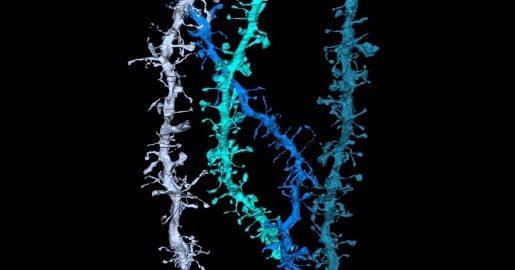
An electron microscope was used to image synapses in the mouse brain.NIH: Why do we sleep? Companion studies in mice by NIMH grantees add to evidence that sleep may be the price we pay for the ability to learn. The results suggest that sleep streamlines neural connections, or synapses, making them more efficient. It likely restores homeostatic balance to energy resources spent by learning during wakefulness, say the researchers. This is accomplished by the downsizing and weakening of unneeded connections –a selective forgetting, so to speak.

Monday, February 27, 2017

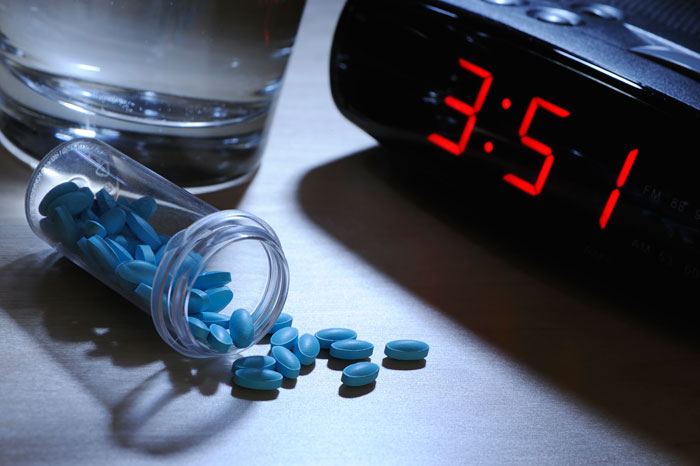
Many physicians choose insomnia meds based on habit

Harvard: Clinical decision-making is a complex process, driven by multiple factors, including social and psychological dynamics, peer pressure and even exposure to drug advertising. Now research from Harvard Medical School shows that when it comes to a physician’s choice of insomnia medication, habit may trump all else. The results suggest that many clinicians choose insomnia drugs somewhat reflexively, based on routine, rather than by taking into account a patient’s symptoms and medical history. Indeed, the analysis showed that a physician’s past prescribing pattern, rather than patient characteristics, was the more potent predictor of what insomnia medication a patient might get. Findings of the research, based on analysis of 1,105 patients’ medical records and the accompanying clinical notes, appear Feb. 9 in Scientific Reports.

Wednesday, February 22, 2017

Tackling sleep problems in epilepsy with cognitive behavioural therapy

Epilepsy Society: Cognitive behavioural therapy is a talking therapy that helps you manage problems by changing the way you think and behave. Cognitive behavioural therapy for insomnia (CBT-i) is about changing the way you think about sleep and then addressing any dysfunctional sleep habits and anxieties. People think that insomnia is not fixable without drugs, that they will never re-establish a healthy sleep/wake balance. But this is almost never the case, even with conditions such as epilepsy. The important thing to remember is that whatever causes insomnia, it is not a barrier to it getting better.

Thursday, February 16, 2017

How Sleep Resets the Brain

NIH: People spend about a third of their lives asleep. When we get too little shut-eye, it takes a toll on attention, learning and memory, not to mention our physical health. Virtually all animals with complex brains seem to have this same need for sleep. But exactly what is it about sleep that’s so essential? Two NIH-funded studies in mice now offer a possible answer. The two research teams used entirely different approaches to reach the same conclusion: the brain’s neural connections grow stronger during waking hours, but scale back during snooze time. This sleep-related phenomenon apparently keeps neural circuits from overloading, ensuring that mice (and, quite likely humans) awaken with brains that are refreshed and ready to tackle new challenges.

Wednesday, February 15, 2017

Study points to a universal immune mechanism as a regulator of sleep

Harvard: Sleep, one of the most basic, yet most mystifying processes of the human body—has confounded physicians, scientists and evolutionary biologists for centuries. Now a study conducted in mice and led by investigators at Harvard Medical School and VA Boston Healthcare System reveals that sleep may be regulated in part by several brain-based immune proteins collectively called inflammasome NLRP3.
The researchers say the inflammasome—which works by unleashing a cascade of immune molecules in response to inflammation and infection—emerges as a central promoter of sleep following such events. A report on the team’s findings was published Jan. 19 in Brain, Behavior and Immunity.

Sunday, January 22, 2017

What Causes Sleepiness When Sickness Strikes

Philadelphia: It’s well known that humans and other animals are fatigued and sleepy when sick, but it’s a microscopic roundworm that’s providing an explanation of how that occurs, according to a study from researchers at the Perelman School of Medicine at the University of Pennsylvania. A study published this week in eLife reveals the mechanism for this sleepiness. Working with a worm’s simple nervous system shows how a single nerve cell named ALA coordinates an organism-wide response to sickness. During sickness, cells are under stress, and organisms experience sleepiness to promote sleep and recover from the cellular stress. In the worm, this sleepiness is caused by release from the ALA neuron of FLP-13 and other neuropeptides, a group of chemicals that send signals between brain neurons.

Wednesday, January 4, 2017

Short-term Sleep Deprivation Affects Heart Function

RNSA: Too little sleep takes a toll on your heart, according to a new study to be presented today at the annual meeting of the Radiological Society of North America (RSNA). People who work in fire and emergency medical services, medical residencies and other high-stress jobs are often called upon to work 24-hour shifts with little opportunity for sleep. While it is known that extreme fatigue can affect many physical, cognitive and emotional processes, this is the first study to examine how working a 24-hour shift specifically affects cardiac function.

Monday, November 28, 2016

Why men wake up with erections

TheConversation: The morning penile erection, or as it is medically known, “nocturnal penile tumescence”, is not only an interesting physiological phenomenon, it can also tell us a lot about a patient’s sexual function. Morning penile erections affect all males, even males in the womb and male children. It also has a female counterpart in the less frequently discussed nocturnal clitoral erection.

Friday, November 18, 2016

Medicines for sleep problems in dementia

Cochrane: People with dementia frequently suffer from sleep disturbances. These can include a reduction in the time spent asleep at night, frequent wakening after falling asleep, wandering at night, waking early, and sleeping excessively during the day. These behaviours cause a lot of stress to carers, and may be associated with earlier admission to institutional care for people with dementia. These behaviours can also be difficult for care-home staff to manage well.

Saturday, November 12, 2016

Effective muscle building by administering protein during sleep

Maastricht: The administration of proteins during sleep is an effective way to promote muscle building. When combined with electrical stimulation, muscle production can be given an extra boost. That is evident from PhD research conducted by Bart Groen at Maastricht UMC+. Groen studied how the body converts consumed proteins to muscle tissue and how this production can be promoted in a clever way.

Sleep training and attachment: Not uncaring...a challenge!

Behavioral Pediatrics: Behavioral sleep training techniques for infants, particularly extinction and graduated extinction strategies based in psychological learning theory, have existed, and been successfully implemented, for many decades. However, despite longstanding evidence that these strategies improve both infant and parent sleep and regulation, several factors result in reluctance of both parents and practitioners. Most immediate, is the stress experienced by parents while first initiating the extinction-based methods. Nothing makes your heart give in more, than your crying infant. More underlying philosophical concerns, are that use of these techniques may lead to undue stress on the infant (as represented by elevated cortisol levels) and irreparable damage to the parent-child attachment relationship.

Friday, November 11, 2016

Skipping breakfast and not enough sleep can make children overweight

Scales London: Mothers smoking in pregnancy, children skipping breakfast and not having a regular bedtime or sufficient sleep all appear to be important factors in predicting whether a child will become overweight or obese, according to new research led by UCL. All three are early life factors which can be modified and the research highlights the possibility that prompt intervention could have an impact in curbing the growth in childhood overweight and obesity.

Experts launch online child-sleep improvement tool for parents

British Columbia: Parents of children who don’t sleep well have a new resource to help them develop better sleep habits and routines for their child. Called Better Nights, Better Days, the online program was created by UBC nursing professor Wendy Hall working with a team of sleep experts from other universities. It includes a module on the elements of healthy sleep, common sleep problems, a sleep diary, and other methods to help children develop better sleeping habits. The whole program takes about a month to complete and can be accessed from any web-enabled device.

Tuesday, November 8, 2016

Genetic cause for shift work fatigue discovered

Helsinki: Some people adapt easily to shift work, but not everyone can handle constant disruptions to their daily rhythm. Finnish researchers have now found that a melatonin receptor gene influences tolerance to shift work. Published in the journal Sleep, the new study is the first time the genetic factors underlying poor tolerance to shift work were systematically examined. Covering the entire genome, the study discovered that a common variation in the melatonin receptor 1A (MTNR1A) gene is linked to the job-related exhaustion experienced by shift workers.

Friday, November 4, 2016

"Why don't babies sleep at night?" and other sleep advice at babysleep.com

Behavioral Pediatrics: The Pediatric Sleep Council, a multidisciplinary, international collective of sleep experts, launched babysleep.com earlier this week. A website providing free, up-to-date, evidence-based information and guidance regarding pediatric sleep.Users that search for advice by age, topic, and category of recommendation. This is also blog about recent sleep news, including an article in The Guardian that answers the question: "Why don't babies sleep at night?"​

Saturday, June 13, 2015

Good sleep may improve breast cancer survival

Hutch: Sleep is the great healer. Get less than the recommended seven hours a night – or mess up your circadian clock through, say, night shift work -- and you put yourself at risk for all kinds of health issues: high blood pressure, heart disease, diabetes, depression, obesity, lowered immunity and yes, even cancer. Now, a new study by public health researchers at Fred Hutchinson Cancer Research Center suggests sleep isn’t just important for overall health – it may also improve your chances of breast cancer survival. Epidemiologist and lead author Dr. Amanda Phipps, who presented her findings Wednesday at SLEEP 2015, the annual meeting of the Associated Professional Sleep Societies, found an association between women who died of breast cancer and poor sleep pre-diagnosis.