Showing posts with label psychology. Show all posts

Friday, March 19, 2021

Stereotypes Can Harm Performance Of Older Adults On Cognitive And Physical Tasks

Georgia State University:  When older adults are viewed as cognitively or physically impaired, they perform below their abilities on tasks, according to a recent review article by Sarah Barber, a psychology and gerontology researcher at Georgia State University. Groups who are stigmatized—whether due to race, socioeconomic status or age—perform more poorly when they are faced with negative stereotypes, Barber said. She found expectations of others can play a powerful role in how well older adults perform on cognitive tasks and motor skills such as driving.

Babies pay attention with down payment from immature brain region

Yale :Anyone who has watched an infant’s eyes follow a dangling trinket dancing in front of them knows that babies are capable of paying attention with laser focus.

But with large areas of their young brains still underdeveloped, how do they manage to do so?

Wednesday, March 17, 2021

Led Study Shows Fear and Anxiety Share Same Bases in Brain

University of Maryland :Anxiety, the most common family of mental illnesses in the U.S., has been pushed to epic new heights by the COVID-19 pandemic, with the Centers for Disease Control and Prevention estimating that nearly 1 in 3 U.S. adults and a staggering 41% of people ages 18-29 experienced clinically significant anxiety symptoms in late August. Now, the findings of a recent UMD-led study indicate that some long-accepted thinking about the basic neuroscience of anxiety is wrong.

Monday, March 15, 2021

Opinions and Attitudes Can Last When They Are Based on Emotion

Psychological Science : Researchers have found that emotionality—the degree to which an attitude is based on feelings and emotions—can create enduring opinions, shedding new light on the factors that make attitudes last.

Depending on the topic, people’s attitudes can change from moment to moment or last a lifetime. The factors that make one opinion long-lasting and another ephemeral, however, are not always clear.

Past studies have demonstrated that opinions based on hard facts and data can remain constant over time, but new research published in the journal Psychological Science reveals that attitudes based on feelings and emotions can also stand the test of time. This research has implications for both predicting whose attitudes are fixed versus fleeting and how to nudge people to form more long-lasting opinions.

Wednesday, February 22, 2017

New research on sensory processing sensitivity and drugs use

Radboud: Judith Homberg aims to find out which social environmental factors determine whether someone with high SPS will turn to drug use. The Europe Research Area Network on Illicit Drugs (ERANID) has awarded her research project with a grant of 0.5 million euros. Approximately twenty percent of Dutch people has sensory processing sensitivity. SPS can be beneficial: individuals with high SPS enjoy being more flexible and creative than others. Yet these people are also much more prone to being overstimulated. Unfortunately, thereby some individuals with SPS turn to drug use to deal with their overstimulation.

Scientists predict chemistry of romance: there's an app for it
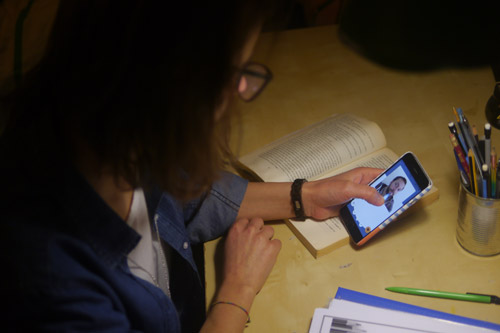
Bristol: Psychologists from the University of Bristol are launching a revolutionary new dating app this Valentine’s Day. Initially only available to students from the University, the creators hope to roll it out the rest of the country very soon. Based on cutting-edge psychological research, ENTWINE is an app designed instantly to predict intuitive attraction between people, before they have even met. The platform has been created by Dr Roland Baddeley and Dr Felix Mercer Moss from the University’s School of Experimental Psychology and asks users to evaluate three different ‘selfies’ of their potential date.

Friday, February 17, 2017

Brain scanners allow scientists to ‘read minds’ – could they now enable a ‘Big Brother’ future?
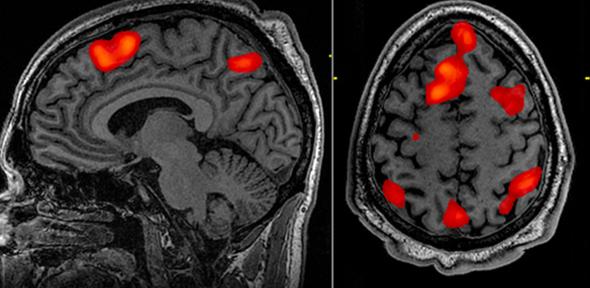
Cambridge: Brain imaging can reveal a great deal about who we are and what is going inside our heads. But how far can – and should – this research take us? Julia Gottwald and Barbara Sahakian, authors of Sex, Lies, and Brain Scans: How fMRI Reveals What Really Goes on in our Minds, investigate for The Conversation. Are you lying? Do you have a racial bias? Is your moral compass intact? To find out what you think or feel, we usually have to take your word for it. But questionnaires and other explicit measures to reveal what’s on your mind are imperfect: you may choose to hide your true beliefs or you may not even be aware of them.

Personality traits linked to differences in brain structure

Cambridge: Our personality may be shaped by how our brain works, but in fact the shape of our brain can itself provide surprising clues about how we behave – and our risk of developing mental health disorders – suggests a study published today. Linking how brain structure is related to basic personality traits is a crucial step to improving our understanding of the link between the brain morphology and particular mood, cognitive, or behavioural disorders Luca Passamonti

Wednesday, December 21, 2016

Internet Use in Class Tied to Lower Test Scores

Psychological Science: College students who surfed the internet in class had lower scores on the final exam than their peers who didn’t go online in class, according to findings forthcoming in Psychological Science, a journal of the Association for Psychological Science. Michigan State University researchers studied laptop use in an introductory psychology course and found that the average time students spent browsing the web for non-class-related purposes was 37 minutes. Students spent the most time on social media, reading email, shopping for items such as clothes, and watching videos. And their academic performance seemed to suffer as a result. Internet use was a significant predictor of students’ final exam score even when their intelligence and motivation were taken into account, said researcher Susan Ravizza, associate professor of psychology and lead author of the study.

Gesturing Can Boost Children’s Creative Thinking
Psychological Science: Encouraging children to use gestures as they think can help them come up with more creative ideas, according to research in Psychological Science, a journal of the Association for Psychological Science. “Our findings show that children naturally gesture when they think of novel ways to use everyday items, and the more they gesture the more ideas they come up with,” say psychological scientist Elizabeth Kirk of the University of York. “When we then asked children to move their hands, children were able to come up with even more creative ideas.”

Friday, December 16, 2016

Health: The "Angelina Jolie" Effect

Harvard: Pop culture icons can influence our fashion choices, dietary habits and brand preferences, but can celebrities also influence our medical decisions? The answer is a resounding yes, according to a new Harvard Medical School study analyzing the rates of genetic testing for breast cancer in the aftermath of Angelina Jolie’s 2013 op-ed piece in The New York Times.The findings, published Dec. 14 in The BMJ, revealed a large spike in genetic tests for a gene known to increase breast cancer risk following Jolie’s op-ed, but no corresponding uptick in mastectomy rates, suggesting the tests did not lead to increased breast cancer diagnoses. The results illustrate that celebrity endorsements can fuel the use of health care services but may not effectively target the populations in greatest need of such services, the researchers said.

Wednesday, November 23, 2016

Men who want power over women likely to have poorer mental health

TheConversation: Men who see themselves as playboys, and as having power over women, are more prone to poor mental health than those who conform less to traditionally masculine norms, according to a new study. The study, published in the Journal of Counseling Psychology, also showed men who conform to masculine norms are less likely to seek help for psychological issues. Researchers from Indiana University conducted a meta-analysis, which combines data from previously published studies to identify consistencies. They analysed around 80 papers with a total of 19,453 participants. The papers focused on the relationship between mental health and conformity to traditional male gender norms.

Thursday, November 17, 2016

Can Video Change Hearts and Minds?

Columbia: In late 2014, Eric Garner died while being arrested by a police officer, Daniel Pantaleo, in Staten Island. A video of the arrest went viral—it showed Garner being held in a choke-hold and very clearly and repeatedly saying “I can’t breathe.” Eventually, a grand jury decided against indicting Officer Pantaleo. Around the country, and on the Mailman School campus, people were left wondering why it happened and how to ensure that justice is done when people die at the hands of police.

Wednesday, November 16, 2016

Kimye, Brangelina and Billary - how your brain consiously couples people

Scimex: Gwyneth Paltrow and Chris Martin may have 'consciously uncoupled' but it seems our brains might override that, 'consciously coupling' people by firing neurons in matching patterns for people we link together. International researchers measured the firing patterns of 49 people who had been implanted with electrodes (for epilepsy treatment) as they looked at a number of pictures. The researchers found that the patterns with which individual neurons fired was able to predict how related two pictures were. This means that when somebody saw a picture of Hillary Clinton, the neurons’ firing pattern was very similar to when they saw a picture of Bill Clinton, but not similar to the firing pattern in response to a picture of Stevie Wonder. The neurons that lit up are known to have a role in learning to associate people, places, and things.

Monday, November 14, 2016

Repeatedly thinking about work-family conflict linked to health problems

Oregon: Thinking over and over again about conflicts between your job and personal life is likely to damage both your mental and physical health, research from Oregon State University suggests.
The study included more than 200 people, with results showing that “repetitive thought” was a pathway between work-family conflict and negative outcomes in six different health categories.
As the term suggests, repetitive thought regarding work-family conflict refers to thinking repeatedly and attentively about the parts of your job and your personal life that clash with each other: for example, that late-afternoon meeting that prevents you from attending your son’s baseball game. It’s a maladaptive coping strategy that impedes daily recovery from stress.

Wednesday, November 9, 2016

Psychedelic Drugs Trigger More Intense Mystical Experiences than Meditation or Prayer

Philadelphia: For millennia, human kind has sought transformative spiritual experiences through prayer, meditation, ritual or by taking psychedelic substances considered sacred. But for many, the use of psychedelic substances is viewed as a shortcut, lacking intensity and integrity. Using a first-of-its-kind, online database of self-reported spiritual experiences, researchers at Thomas Jefferson University and University of Pennsylvania sought to find out what, if anything, makes psychedelic-induced experiences different. The findings published online in the American Psychology Association’s Journal of Humanistic Psychology.

Thursday, July 2, 2015

Intrusiveness of Old Emotional Memories Can Be Reduced by Computer Game Play Procedure

Psychological Science: Unwanted, intrusive visual memories are a core feature of stress- and trauma-related clinical disorders such as posttraumatic stress disorder (PTSD), but they can also crop up in everyday life. New research shows that even once intrusive memories have been laid down, playing a visually-demanding computer game after reactivating the memories may reduce their occurrence over time. The findings are published in Psychological Science, a journal of the Association for Psychological Science.

Racial Bias Extends to the Crosswalk

Psychological Science: Black pedestrians are at far greater risk of being fatally hit by a car than white pedestrians, according to research from the CDC. From 2000 to 2010, the pedestrian fatality rate for black and Hispanic men was twice the rate for white men, even after controlling for factors such as socioeconomic status, location, and alcohol use. The results of a new study reveal one factor that may help explain why – the findings suggest that whether a driver yields to a pedestrian may largely depend on a pedestrian’s race.

For Job Interviews, Earlier in the Day May Be Better

Psychological Science: During a job interview, many applicants worry that their professional fate rests in the first few moments of the interview. After a few minutes—or even seconds—the interviewer has sized them up and arrived at a decision. But new research suggests that there may be a different factor for job candidates to worry about: timing. Data gathered by psychological scientists Rachel Frieder (Old Dominion University), Chad Van Iddekinge (Florida State University), and Patrick Raymark (Clemson University) challenge the common belief that interviewers rely on near-instantaneous snap judgements. Instead, their research suggests that a successful interview may depend on your place in the interview schedule.

Wednesday, July 1, 2015

Getting children to embrace healthy food

Bonn: Researchers at the University of Bonn: Attractive packaging makes identical products taste better. If the packaging has an appealing design, primary school children also reach for healthy foods. This was revealed in a study in cooperation with the Research Institute for Child Nutrition in Dortmund under the direction of scientists from the University of Bonn. The results are being published in advance online in the journal "Frontiers in Psychology". The final version will be published shortly.