Pittsburgh: An in-depth computational analysis of genetic variants implicated in
both schizophrenia and rheumatoid arthritis by researchers at the
University of Pittsburgh points to eight genes that may explain why
susceptibility to one of the disorders could place individuals at lower
risk for the other, according to the results of a study published today
in the journal npj Schizophrenia. “There
is a wealth of genomic data on both schizophrenia and rheumatoid
arthritis. Analyzing it jointly with known protein interaction
information could provide invaluable clues to the relationship between
the diseases and also shed light on their shared roots,” said Madhavi
Ganapathiraju Ph.D., associate professor of biomedical informatics at
the University of Pittsburgh School of Medicine and senior author of the
study.
Showing posts with label rheumatoid arthritis. Show all posts
Showing posts with label rheumatoid arthritis. Show all posts
Monday, February 27, 2017
Friday, November 25, 2016
Rheumatoid Arthritis Patients Who Smoke or Are Overweight See Less Symptom Improvement with Treatment
 New York: A study finds that smoking or being overweight makes it more difficult for patients with rheumatoid arthritis
to achieve optimal control of inflammation and symptoms, despite
standard of care treatment. American and Canadian researchers, who
collected data on more than 1,100 patients at multiple sites, presented
their findings at the American College of Rheumatology/Association of
Rheumatology Health Professionals annual meeting on November 15 in
Washington, DC.
New York: A study finds that smoking or being overweight makes it more difficult for patients with rheumatoid arthritis
to achieve optimal control of inflammation and symptoms, despite
standard of care treatment. American and Canadian researchers, who
collected data on more than 1,100 patients at multiple sites, presented
their findings at the American College of Rheumatology/Association of
Rheumatology Health Professionals annual meeting on November 15 in
Washington, DC.Thursday, November 17, 2016
Mayo Clinic research sheds light on why some rheumatoid arthritis patients respond poorly to biologics

Monday, November 14, 2016
Room to improve rheumatoid arthritis treatment

Such concerns are informed by a range of common myths and misconceptions about the diseasemodifying anti-rheumatic drug. Rheumatologists Associate Professor Mark Arnold (Associate Dean and Head of School, University of Sydney School of rural health) and Professors Inam Haq and Jane Bleasel, (Co-Directors, Sydney University Medical Program) debunked and clarified a range of these myths and misconceptions in the MJA article.
Thursday, June 4, 2015
Early clinical trial success for new rheumatoid arthritis treatment

Thursday, April 30, 2015
Early signs of arthritis can be found in the mouth

Wednesday, April 29, 2015
Gene variants show potential in predicting rheumatoid arthritis disease outcomes
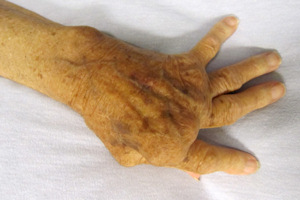 Manchester: Arthritis Research UK-funded scientists at The
University of Manchester have identified a new way in which genotyping
can be used to predict disease outcomes among sufferers of rheumatoid
arthritis. New studies have shown that certain genetic variants
are associated with higher or lower risks of increased disease severity.
Manchester: Arthritis Research UK-funded scientists at The
University of Manchester have identified a new way in which genotyping
can be used to predict disease outcomes among sufferers of rheumatoid
arthritis. New studies have shown that certain genetic variants
are associated with higher or lower risks of increased disease severity.Friday, April 17, 2015
Hand exercises improve function in rheumatoid arthritis patients

Monday, April 13, 2015
Rheumatoid arthritis: is spa-therapy efficient?

Monday, February 9, 2015
Recent gut and urinary tract infections may curb risk of rheumatoid arthritis
BMJ: Recent gut and urinary tract infections may curb risk of
rheumatoid arthritis. Explanation could lie in subsequent changes in gut bacteria,
say researchers.
Wednesday, January 21, 2015
Rituximab for rheumatoid arthritis
Cochrane: We examined research published up to January 2014 on the effect of rituximab (Mabthera, Rituxan) for people with rheumatoid arthritis. From eight studies evaluating 2720 people with rheumatoid arthritis, we found that rituximab probably:
- improved pain, function and other symptoms;
- reduced disease activity;
- reduced joint damage as seen on the x-ray.
- improved pain, function and other symptoms;
- reduced disease activity;
- reduced joint damage as seen on the x-ray.
Friday, April 20, 2012
Rheumatoid Arthritis
Authors: Dr Kenneth H. Fye University of California San Francisco 2008-07-28
Introduction
Rheumatoid arthritis (RA) is a systemic inflammatory disease defined by its (joint) manifestations. The arthritis of RA is an inflammatory, symmetrical, progressive, destructive process that attacks primarily the small proximal joints of the upper and lower extremities, although all joints in the body, except for those of the thoracic and lumbosacral spine, can be affected. The disease afflicts about 1.5% of the North American population, meaning that approximately 4.5 million Americans have RA. Women are affected three times as often as men. The disease usually begins during the childbearing years, but because it is a chronic, incurable disorder, the peak prevalence is seen in the seventh decade of life. Although RA is often considered to be simply a painful, debilitating arthritis, it is, in fact, a systemic disorder that has a significant impact on mortality.
Subscribe to:
Comments (Atom)