Showing posts with label nanotechnologies. Show all posts

Wednesday, April 18, 2018

First-in-Human 'Nanomedicine' Drug Showing Promise in Solid Cancers

Columbus: The Ohio State University Comprehensive Cancer Center – Arthur G. James Cancer Hospital and Richard J. Solove Research Institute (OSUCCC – James) is one of four cancer centers involved in testing a new “nanomedicine” agent – known as BXQ-350 while in testing – in advanced solid tumors, including difficult-to-treat malignant brain tumors. BXQ-350 combines a protein called Saposin C, which is naturally expressed in humans, with nanobubbles of a fat molecule called DOPS. This combination creates a treatment agent that has the ability to selectively target cancerous tumor cells and then kill them, largely sparing the surrounding healthy tissues. These fat nanoparticles can also penetrate the blood brain barrier, which researchers say makes them particularly useful against malignant brain tumors.

Tuesday, April 25, 2017

New technology can detect tiny ovarian tumors

MIT:  Most ovarian cancer is diagnosed at such late stages that patients’ survival rates are poor. However, if the cancer is detected earlier, five-year survival rates can be greater than 90 percent. Now, MIT engineers have developed a far more sensitive way to reveal ovarian tumors: In tests in mice, they were able to detect tumors composed of nodules smaller than 2 millimeters in diameter. In humans, that could translate to tumor detection about five months earlier than is possible with existing blood tests, the researchers say.

Tuesday, April 11, 2017

Nanoparticles found in dozens of products can be inhaled, absorbed through the skin and ingested.

Georgia: Silently helping our clothes resist stains, allowing spray-on sunscreen to more easily protect our skin and enhancing paints, coatings and plastics. Nanoparticles have even made their way into our food, including powdered sugar on pastries, chewing gum and other products. Christa Wright, assistant professor of environmental health in the Georgia State School of Public Health, researches the potential health impacts of nanoparticles, which can also be found in such everyday items as cosmetics, the toner in photocopiers and artificial turf.

Tuesday, March 7, 2017

New Technique Uses Immune Cells to Deliver Anti-Cancer Drugs

Pennsylvania: Many groups are working to discover new, safer ways to deliver drugs that fight cancer to the tumor without damaging healthy cells. Others are finding ways to boost the body’s own immune system to attack cancer cells. For the first time, researchers at Penn State have combined the two approaches by conjugating biodegradable polymer nanoparticles encapsulated with chosen cancer-fighting drugs into immune cells to create a smart, targeted system to attack cancers of specific types.

Nanodiscs deliver personalized cancer therapy to immune system

Ann Arbor: Researchers at the University of Michigan have had initial success in mice using nanodiscs to deliver a customized therapeutic vaccine for the treatment of colon and melanoma cancer tumors. "We are basically educating the immune system with these nanodiscs so that immune cells can attack cancer cells in a personalized manner," said James Moon, the John Gideon Searle assistant professor of pharmaceutical sciences and biomedical engineering.

Monday, February 27, 2017

A nanofiber matrix for healing

Kyoto: A new nanofiber-on-microfiber matrix could help produce more and better quality stem cells for disease treatment and regenerative therapies. A matrix made of gelatin nanofibers on a synthetic polymer microfiber mesh may provide a better way to culture large quantities of healthy human stem cells. Developed by a team of researchers led by Ken-ichiro Kamei of Kyoto University’s Institute for Integrated Cell-Material Sciences (iCeMS), the ‘fiber-on-fiber’ (FF) matrix improves on currently available stem cell culturing techniques.

Thursday, February 16, 2017

Scientists develop ‘lab on a chip’ that costs 1 cent to make

Biochip next to a coinStanford: Researchers at the Stanford University School of Medicine have developed a way to produce a cheap and reusable diagnostic “lab on a chip” with the help of an ordinary inkjet printer. At a production cost of as little as 1 cent per chip, the new technology could usher in a medical diagnostics revolution like the kind brought on by low-cost genome sequencing, said Ron Davis, PhD, professor of biochemistry and of genetics and director of the Stanford Genome Technology Center. A study describing the technology was published online Feb. 6 in the Proceedings of the National Academy of Sciences. Davis is the senior author. The lead author is Rahim Esfandyarpour, PhD, an engineering research associate at the genome center.

Thursday, January 26, 2017

Nanohyperthermia softens tumors to improve treatment
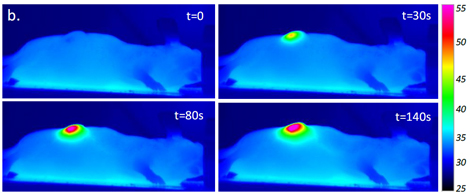
CNRS: The mechanical resistance of tumors and collateral damage of standard treatments often hinder efforts to defeat cancers. However, a team of researchers from the CNRS, the French National Institute of Health and Medical Research (INSERM), Paris Descartes University, and Paris Diderot University has successfully softened malignant tumors by heating them. This method, called nanohyperthermia, makes the tumors more vulnerable to therapeutic agents. First, carbon nanotubes (CNTs) are directly injected into the tumors. Then, laser irradiation activates the nanotubes, while the surrounding healthy tissue remains intact. The team's work was published on January 1 in Theranostics.

Wednesday, January 18, 2017

Engineering nanomaterials to deliver treatments for heart disease

Northwestern: Northwestern Medicine scientists have demonstrated an enhanced approach to using nanomaterials to target inflammatory cells involved in atherosclerosis. The findings, published in the journal ACS Nano, could lead to improved diagnosis and treatment of atherosclerosis, a leading cause of heart disease. Edward Thorp, PhD, assistant professor of Pathology, was a co-author of the paper. The study was led by Evan Scott, PhD, assistant professor of Biomedical Engineering in the McCormick School of Engineering and a member of the Simpson Querrey Institute for BioNanotechnology.

Friday, January 6, 2017

Nanohyperthermia softens tumors to improve treatment

IR images nanohyperthermiaCNRS: The mechanical resistance of tumors and collateral damage of standard treatments often hinder efforts to defeat cancers. However, a team of researchers from the CNRS, the French National Institute of Health and Medical Research (INSERM), Paris Descartes University, and Paris Diderot University has successfully softened malignant tumors by heating them. This method, called nanohyperthermia, makes the tumors more vulnerable to therapeutic agents. First, carbon nanotubes (CNTs) are directly injected into the tumors. Then, laser irradiation activates the nanotubes, while the surrounding healthy tissue remains intact. The team's work was published on January 1 in Theranostics.

Friday, December 23, 2016

Glucose-monitoring contact lens would feature transparent sensor
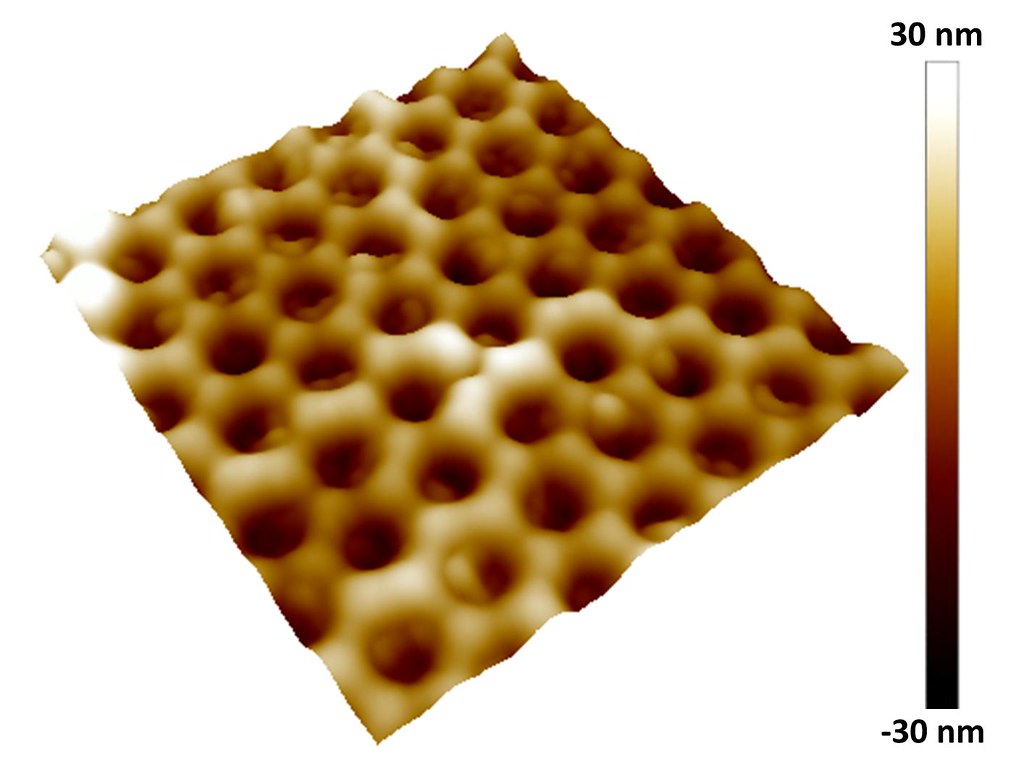
Oregon: Type 1 diabetes patients may one day be able to monitor their blood glucose levels and even control their insulin infusions via a transparent sensor on a contact lens, a new Oregon State University study suggests. The sensor uses a nanostructured transistor – specifically an amorphous indium gallium oxide field effect transistor, or IGZO FET – that can detect subtle glucose changes in physiological buffer solutions, such as the tear fluid in eyes. Type 1 diabetes, formerly known as juvenile diabetes, can lead to serious health complications unless glucose levels are carefully controlled. Problems can include retinopathy, blindness, neuropathy, kidney and cardiac disease.

Friday, November 11, 2016

Understanding a key roadblock behind nanoparticle cancer drug delivery

TorontoTech: The emerging field of nanomedicine holds great promise in the battle against cancer. Tiny particles similar in size to protein molecules can be customized to carry tumour-targeting drugs and destroy cancer cells without harming healthy tissue. But here’s the problem: when nanoparticles are administered into the body, more than 99 per cent of them become trapped in non-targeted organs, such as the liver and spleen. These nanoparticles are not delivered to the site of action to carry out their intended function.

Wednesday, November 9, 2016

Vaccination reinvented with a revolutionary Nanopatch delivery system
Scienceinpublic: Professor Mark Kendall is planning to dispatch the 160-year-old needle and syringe to history. This Queensland rocket scientist has invented a new vaccine technology that’s painless, uses a fraction of the dose, puts the vaccine just under the skin, and doesn’t require a fridge.  Human trials of Mark’s Nanopatch are underway in Australia, and the concept has broad patent coverage. It’s being supported by the Bill and Melinda Gates Foundation, Merck and the WHO. A polio vaccine trial is being planned for Cuba in 2017.    But it’s not been an easy path. Mark has had to push the science and business worlds to see the value of a new approach to vaccine delivery. It took 70 presentations before he secured funding for the UQ spin-out company Vaxxas.

Thursday, November 3, 2016

Multi-functional, modular nanoparticles could help fight cancer

Toronto: Imagine a fighter jet that can fly to its target undetected, attack with two different kinds of weapons and then disappear without a trace. Now imagine that the target is a cancer cell, and that the fighter jet is a particle so small that 60 billion of them could fit on the head of a pin. This is the principle behind a new type of nanomedicine developed by Professor Warren Chan (IBBME) and Vahid Raeesi (MSE PhD 1T6) at U of T Engineering. Their cancer-fighting nanoparticles are modular, meaning they are put together from even smaller pieces, in this case, tiny bits of gold and DNA. Each component plays a role in the multi-part mission to treat cancer more effectively while reducing the side effects relative to current options.

Wednesday, November 2, 2016

Implantable nanochannel device delivers HIV prevention drug
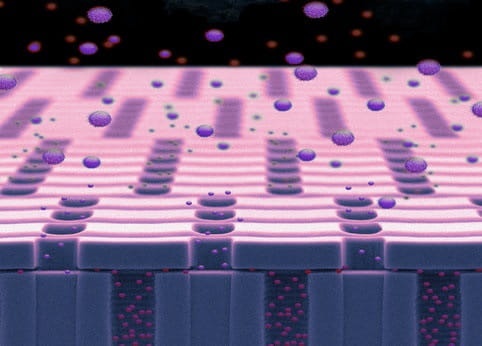
Houston: A Houston Methodist research team received a nearly $4 million grant to test a transcutaneously refillable implant that administers pre-exposure prophylaxis drugs to subjects at risk of HIV-exposure. The National Institute of Allergy and Infectious Diseases (NIAID) awarded Alessandro Grattoni, Ph.D., the multi-million dollar grant over five years to enhance the nanochannel delivery system (nDS), which provides sustained and constant release of drugs without the use of pumps, valves or a power supply.

Monday, February 9, 2015

New Nanoparticle Gene Therapy Strategy Effectively Treats Deadly Brain Cancer in Rats


Johns Hopkins University US: Gene therapy may effectively treat glioma, a deadly form of brain cancer, but getting the right genes to cancer cells in the brain is difficult. For the first time, Johns Hopkins researchers used biodegradable nanoparticles to kill brain cancer cells in animals and lengthen their survival. The nanoparticles are filled with genes for an enzyme that turns a compound into a potent killer of cancer cells.