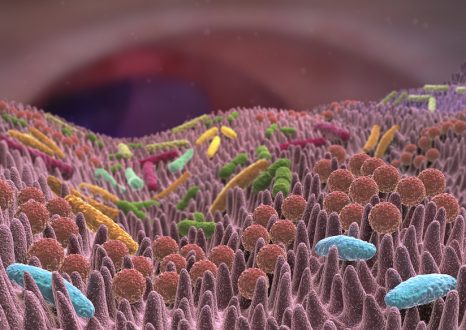
 INSERM: The intestinal microbiota still has surprises in store. The
mode of action of a probiotic bacteria used in the symptomatic treatment
of pain in irritable bowel syndrome has been revealed in a new study
conducted by scientists from Inserm, Université de Toulouse and CHU de
Toulouse [1]
within the Digestive Health Research Institute (Inserm/INRA/Université
Toulouse III – Paul Sabatier, ENVT). The bacteria produces a
neurotransmitter (GABA) which, when bound to a lipid, crosses the
intestinal barrier, acts on the sensory neurons located in the stomach,
and reduces visceral pain. This new class of molecule, combining
lipoprotein and GABA, could be used as a painkiller. This research was published in Nature Communication.
INSERM: The intestinal microbiota still has surprises in store. The
mode of action of a probiotic bacteria used in the symptomatic treatment
of pain in irritable bowel syndrome has been revealed in a new study
conducted by scientists from Inserm, Université de Toulouse and CHU de
Toulouse [1]
within the Digestive Health Research Institute (Inserm/INRA/Université
Toulouse III – Paul Sabatier, ENVT). The bacteria produces a
neurotransmitter (GABA) which, when bound to a lipid, crosses the
intestinal barrier, acts on the sensory neurons located in the stomach,
and reduces visceral pain. This new class of molecule, combining
lipoprotein and GABA, could be used as a painkiller. This research was published in Nature Communication.
Showing posts with label irritable bowel syndrome. Show all posts
Showing posts with label irritable bowel syndrome. Show all posts
Wednesday, May 16, 2018
Probiotic Bacteria Produces Potent Analgesic
INSERM: The intestinal microbiota still has surprises in store. The
mode of action of a probiotic bacteria used in the symptomatic treatment
of pain in irritable bowel syndrome has been revealed in a new study
conducted by scientists from Inserm, Université de Toulouse and CHU de
Toulouse [1]
within the Digestive Health Research Institute (Inserm/INRA/Université
Toulouse III – Paul Sabatier, ENVT). The bacteria produces a
neurotransmitter (GABA) which, when bound to a lipid, crosses the
intestinal barrier, acts on the sensory neurons located in the stomach,
and reduces visceral pain. This new class of molecule, combining
lipoprotein and GABA, could be used as a painkiller. This research was published in Nature Communication.Friday, June 5, 2015
Is Fructose Malabsorption a Cause of Irritable Bowel Syndrome?

Friday, March 13, 2015
High-tech gas sensing capsules for better gut health
Scimex: Researchers have developed high-tech gas sensing capsules that can
send data from inside the gut direct to a mobile phone, opening new
possibilities for diagnosis, treatment and health analysis.
Intestinal gases have been linked to colon cancer, irritable bowel syndrome and inflammatory bowel disease, and could potentially be used as key biomarkers for assessing overall health.
Intestinal gases have been linked to colon cancer, irritable bowel syndrome and inflammatory bowel disease, and could potentially be used as key biomarkers for assessing overall health.
Wednesday, January 25, 2012
Irritable bowel syndrome

2008-08-01
Overview
Irritable bowel syndrome (IBS), which is characterized by abdominal pain associated with altered bowel movements, is the classic “functional” gastrointestinal disorder. Patients with functional disorders experience symptoms, but no abnormality can be found on physical examination or standard medical tests. Functional disorders present challenges and can cause frustration for patients as well as doctors. The lack of a diagnostic test raises the question of how much testing should be done to exclude other conditions that can present with the same symptoms. Patients with IBS may feel discouraged if they receive messages such as “we don’t know what is wrong,” “nothing is wrong,” or “it is all in your head.” If a diagnosis of IBS is made, patients may feel uneasy that another serious disease is being missed, but if a focused medical work-up is done, the likelihood of missing other serious underlying disease is very low. IBS is a chronic condition with symptoms that can wax and wane, and no therapy is universally effective for all IBS patients. Successful management rests on providing education regarding the current understanding of IBS, reassurance of the good long-term prognosis, a supportive doctor-patient relationship, judicious use of behavior modifications and available therapies, and emphasis on leading as normal a life as possible even if symptoms cannot be eliminated completely.
Subscribe to:
Comments (Atom)