SouthWestern: A new
study from UT Southwestern’s Peter O’Donnell Jr. Brain Institute reveals
concussions and other traumatic brain injuries may boost the risk for
Alzheimer’s disease earlier in life.
Munro Cullum, Ph.D.:
There’s a lot that’s still not known about concussion, it’s maximum
treatment and who may be at risk for disorders later in life.
Only good, independent and reliable information about health from experts.
Showing posts with label concussion. Show all posts
Thursday, May 3, 2018
Sunday, March 12, 2017
Biomarker in blood may help predict recovery time for sports concussions
NIH: Researchers at the National Institutes of Health found that the blood
protein tau could be an important new clinical biomarker to better
identify athletes who need more recovery time before safely returning to
play after a sports-related concussion. The study, supported by the
National Institute of Nursing Research (NINR) with additional funding
from the Eunice Kennedy Shriver National Institute of Child Health and
Human Development (NICHD), published online in the Jan. 6, 2017 issue of Neurology (link is external), the medical journal of the American Academy of Neurology.
Friday, February 17, 2017
Evidence of brain damage found in former footballers
London: Evidence of chronic traumatic encephalopathy (CTE), a potential cause of dementia caused by repeated blows to the head, has been found in the brains of former association football (soccer) players examined at the UCL Queen Square Brain Bank.
The study, funded by The Drake Foundation and published in the journal Acta Neuropathologica, looked at 14 retired footballers with dementia who were referred to the Old Age Psychiatry Service in Swansea, Wales, between 1980 and 2010. Permission from their next-of-kin was provided to perform post-mortem examinations, which were carried out in six ex-players. Post-mortem analysis of the brain was carried out by researchers from UCL and the National Hospital for Neurology and Neurosurgery.
Saturday, January 14, 2017
Biomarker in blood may help predict recovery time for sports concussions
NIH: Researchers at the National Institutes of Health found that the blood protein tau could be an important new clinical biomarker to better identify athletes who need more recovery time before safely returning to play after a sports-related concussion. The study, supported by the National Institute of Nursing Research (NINR) with additional funding from the Eunice Kennedy Shriver National Institute of Child Health and Human Development (NICHD), published online in the Jan. 6, 2017 issue of Neurology (link is external), the medical journal of the American Academy of Neurology. Despite the millions of sports-related concussions that occur annually in the United States, there is no reliable blood-based test to predict recovery and an athlete’s readiness to return to play. The new study shows that measuring tau levels could potentially be an unbiased tool to help prevent athletes from returning to action too soon and risking further neurological injury.
Tuesday, January 3, 2017
Brain scan hints at first simple test for concussion
Nature: A test that records the way the brain processes sound might provide a
simple and reliable measure of concussion, a small study suggests. If
the method works, it could help scientists work out how best to treat
the poorly understood brain injury. In a paper published on 22 December in Scientific Reports,
neuroscientist Nina Kraus of Northwestern University in Evanston,
Illinois, and other researchers say that they have found that a
particular signal in neural activity, recorded with electrodes placed on
the head as children listen to 'da' sounds from a speech synthesizer,
can objectively demarcate concussed children from a healthy control
group. The research was done on just 40 people — a tiny group — and will
have to be repeated in larger samples. But other researchers are still
excited by the report, because concussion is hard to diagnose,
particularly in children.
Wednesday, December 21, 2016
Physical Activity in Week after Concussion Associated With Reduced Risk of Persistent Postconcussive Symptoms for Children, Teens
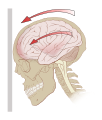
JAMA: Among children and adolescents who experienced a concussion, physical
activity within 7 days of injury compared with no physical activity was
associated with reduced risk of persistent postconcussive symptoms at
28 days, according to a study appearing in the December 20 issue of JAMA. Rest has long been considered the cornerstone of concussion
management, and pediatric guidelines universally recommend an initial
period of physical rest following a concussion until symptoms have
resolved. No clear evidence has determined that avoiding physical
activity expedites recovery. Roger Zemek, M.D., of Children’s Hospital
of Eastern Ontario Research Institute, Ottawa, Canada, and colleagues
conducted a study that included 3,063 children and adolescents with
acute concussion from 9 Pediatric Emergency Research Canada network
emergency departments.
Subscribe to:
Comments (Atom)


