Showing posts with label obesity. Show all posts

Sunday, March 21, 2021

Cells burn more calories after just one bout of moderate aerobic exercise, OSU study finds

Oregon State University : In a recent study testing the effects of exercise on overall metabolism, researchers at Oregon State University found that even a single session of moderate aerobic exercise makes a difference in the cells of otherwise sedentary people.

Mitochondria are the part of the cell responsible for the biological process of respiration, which turns fuels such as sugars and fats into energy, so the researchers focused only on mitochondria function.

Wednesday, March 17, 2021

Tobacco companies hook kids on sugary drinks


Punchy MascotUCSF :Tobacco conglomerates that used colors, flavors and marketing techniques to entice children as future smokers transferred these same strategies to sweetened beverages when they bought food and drinks companies starting in 1963, according to a study by researchers at UC San Francisco.
The study, which draws from a cache of previously secret documents from the tobacco industry that is part of the UCSF Industry Documents Library tracked the acquisition and subsequent marketing campaigns of sweetened drink brands by two leading tobacco companies: R.J. Reynolds and Philip Morris. It found that as tobacco was facing increased scrutiny from health authorities, its executives transferred the same products and tactics to peddle soft drinks. The study was published in the March 2019 issue of BMJ.

Wednesday, June 27, 2018

Bigger ladies may have lower breast cancer risk

Scimex: Women with higher body mass index (BMI), especially in early adulthood, may be at a lower risk of developing breast cancer prior to menopause, according to Australian and international research. The research looked at 19 different studies, including Australian data, covering more than 750,000 women. It found that for women aged 18 to 54, breast cancer risk went down as BMI went up. This link was strongest for women aged 18 to 24. The study authors say that they are not advocating weight gain as a way to reduce breast cancer risk but that understanding this link might help to identify risk factors that might be modified.

Workplace interventions (methods) for reducing time spent sitting at work

Cochrane: Time spent sitting and being physically inactive at work has increased in recent decades. Long periods of sitting may increase the risk of obesity, heart disease, and premature death. It is unclear whether interventions that aim to reduce sitting at workplaces are effective. We wanted to find out the effects of interventions aimed at reducing sitting time at work. We searched the literature in various databases up to 9 August 2017.

Antidepressant use may be linked to increased risk of weight gain

BMJ: Long term use of antidepressants is associated with a sustained increase in risk of weight gain over at least five years, finds a study published in The BMJ today. The findings show that patients prescribed any of the 12 most commonly used antidepressants were more likely to experience weight gain than those not taking the drugs. The risk was greatest during the second and third years of treatment.

Sunday, June 17, 2018

A new oral treatment temporarily coats intestine, reduces blood sugar spikes

Harvard: In a recently published paper in Nature Materials, a team of Harvard Medical School researchers at Brigham and Women's Hospital reported results of a preclinical study in which an oral agent was administered to deliver a substance that could temporarily coat the intestine to prevent nutrient contact with the lining in the proximal bowel and avoid post-meal spikes in blood sugar.  

Thursday, May 31, 2018

How does being overweight affect fertility?

The Conversation: The proportion of Australians who are overweight or obese is at an all-time high. We know excess weight is linked to many adverse health consequences, but there is now growing understanding that it also affects fertility. A fine hormonal balance regulates the menstrual cycle. Overweight and obese women have higher levels of a hormone called leptin, which is produced in fatty tissue. This can disrupt the hormone balance and lead to reduced fertility.

Wednesday, May 23, 2018

Bariatric surgery saves money and prolongs lives

Vienna: There are more than 670 million people worldwide who are obese – with serious consequences for themselves and an enormous cost to the healthcare system. A recent MedUni Vienna study, conducted jointly with the Institute of Pharmaceutical Economic Research (Evelyn Walter) and the Austrian Society of Bariatric Surgery and led by Gerhard Prager (Department of Surgery), shows that bariatric surgery, such as a gastric bypass, for example, not only saves a lot of money but also improves quality-of-life and extends life expectancy. On 26 May 2018, there will be an action day for obesity patients and interested parties in MedUni Vienna's Lecture Center in Vienna General Hospital.

Monday, May 21, 2018

Oxidative stress makes difference between metabolically abnormal and healthy obesities

Osaka: Scientists at Osaka University clarified that deletion of adipose oxidative stress (Fat ROS) decreased lipid accumulation in the liver, clinically improving insulin resistance and inducing metabolically healthy obesity. In fact, Fat ROS suppressed lipid accumulation and increased ectopic lipid accumulation in the liver, worsening insulin resistance. Their research results were published in Diabetes on Wednesday, April 4, 2018.

Wednesday, May 9, 2018

Scientists identify 2 hormones that burn fat faster, prevent and reverse diabetes in mice

UCLA geneticists have created a technique to hunt for hormones that influence how organs and tissues communicate with each other. The method enabled them to find naturally occurring molecules that play major roles in Type 2 diabetes, obesity and cardiovascular disease.
In particular, they discovered:
  • Two hormones called “notum” and “lipocalin-5” that speed up the body’s ability to burn fat.
  • Lipocalin-5 protected mice from developing diabetes — or cured the disease after they developed it.
  • Lipocalin-5 also enhanced muscle tissue’s ability to metabolize and absorb dietary nutrients, reducing the risk of obesity and diabetes.
The findings could deepen scientists’ understanding of the mechanisms behind obesity and common risk factors for heart disease and diabetes.

The discovery of a new function may lead to new treatments for metabolic diseases and obesity

UCLA: Mitochondria, known to most people as the “powerhouses of the cell,” have been recognized for decades as the cellular organelle where sugars and fats are oxidized to generate energy. Now, new research by UCLA scientists has found that not all mitochondria fit this definition. Within each cell a group of specialized mitochondria can be found attached to fat droplets. Rather than burn fat to create energy, these specialized mitochondria are responsible for providing the energy to build and store fat molecules.

Wednesday, May 2, 2018

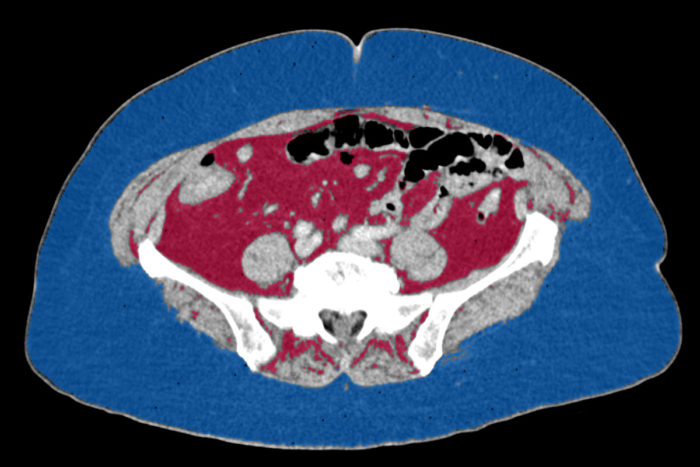
For women with kidney cancer, belly fat matters

Washington University: Belly fat affects the odds of women surviving kidney cancer but not men, according to a new study by researchers at Washington University School of Medicine in St. Louis.
Half of female kidney cancer patients with substantial abdominal fat at the time of diagnosis died within 3 1/2 years, while more than half of women with little belly fat were still alive 10 years later, the researchers found. For men, the amount of abdominal fat appeared to make no difference in how long they survived.

Saturday, April 28, 2018

Fetal exposure to moderate/high caffeine levels linked to excess childhood weight gain

BMJ: Exposure to moderate to high caffeine levels while in the womb is linked to excess weight gain in early childhood, suggests a large observational study published in the online journal BMJ Open.
The findings, which back general advice to limit caffeine intake while pregnant, prompt the researchers to query whether mums-to-be should cut out the world’s most widely consumed central nervous system stimulant altogether.

Wednesday, April 18, 2018

Weight Loss Through Exercise Alone Does Not Protect Knees

    Alexandra Gersing, M.D.
    RNSA: Researchers investigated the association between different regimens of weight loss and the progression of knee cartilage degeneration in 760 overweight and obese patients. Individuals who lost weight through diet alone or diet and exercise slowed the progression of cartilage degeneration in the knee. Individuals who lost the same amount of weight through exercise alone did not slow the progression of cartilage degeneration.Obese people who lose a substantial amount of weight can significantly slow down the degeneration of their knee cartilage, but only if they lose weight through diet and exercise or diet alone, according to a new MRI study presented today at the annual meeting of the Radiological Society of North America (RSNA).

Wednesday, April 26, 2017

The search for obesity drugs targets hunger’s complex chemistry

ACS: Discoveries of hormones related to weight and appetite in the ‘90s helped spur a search for obesity treatments targeting those hormones— with disappointing results. Now scientists are taking a new tack that could finally yield promising treatments, according to a story in Chemical & Engineering News (C&EN) that was produced in collaboration with the American Chemical Society’s open-access journal ACS Central Science. C&EN is the weekly newsmagazine of ACS.

Saturday, April 22, 2017

How can we use technology to support patients after bariatric surgery?

Kaiser Permanente: Bariatric surgery is a potentially life-changing procedure that can help ward off chronic illnesses like diabetes and heart disease. But going through the surgery itself is only part of the journey. Achieving and maintaining a healthy weight after surgery usually depends on adopting healthier eating and physical activity habits in the long term. We all know that’s easier said than done. But with the recent boom in mobile-health technologies such as activity trackers, lifestyle support for patients who’ve had bariatric surgery is moving in a whole new direction.

Wednesday, April 12, 2017

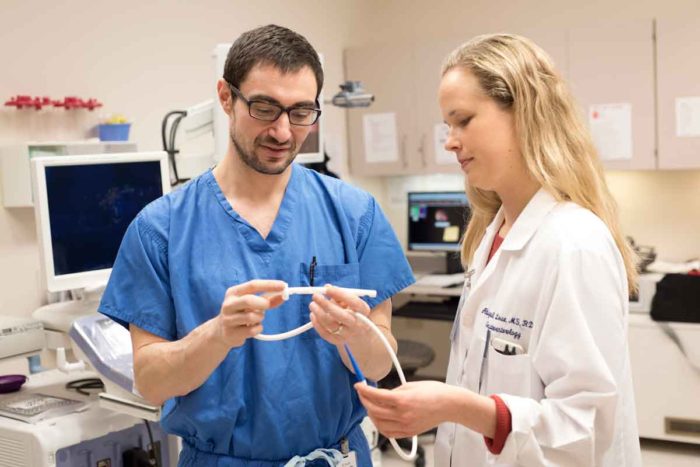
New weight-loss therapy rids body of food before digestion

Washington: A new weight-loss therapy offers significantly overweight people a means to rid their bodies of some of what they eat before excess calories can be absorbed. Called aspiration therapy, the FDA-approved, nonsurgical therapy was developed by researchers at Washington University School of Medicine in St. Louis and is available at Barnes-Jewish West County Hospital. “We were involved in some of the early clinical trials, and we’re following patients who have been in the study for over three years now,” said Vladimir Kushnir, MD, an assistant professor of medicine and director of the Bariatric Endoscopy Program at Washington University and Barnes-Jewish Hospital. “It’s been very successful, with study patients losing an average of 14 percent of their total body weight, almost double the amount seen with other nonsurgical procedures and similar to weight loss seen with some surgical procedures.”

Obesity Influences Specific Genes Linked to Inflammatory Pathways in Breast Cancer

Ohio: Obesity is a known risk factor for breast and other cancers, but knowledge about the underlying biology of how, when and by what mechanism obesity influences cancer risk is limited. New research from The Ohio State University Comprehensive Cancer Center – Arthur G. James Cancer Hospital and Richard J. Solove Research Institute (OSUCCC – James) offers some of the first evidence that obesity alters in genes involved in inflammatory response (32 genes), hereditary disorders (48 genes) and other immunological diseases (42 genes).

Wednesday, March 8, 2017

From mother to baby: ‘Secondhand sugars’ can pass through breast milk

USC: Add breast milk to the list of foods and beverages that contain fructose, a sweetener linked to health issues ranging from obesity to diabetes. A new study by researchers at the Keck School of Medicine of USC indicates that a sugar called fructose is passed from mother to infant through breast milk. The proof-of-concept study involving 25 mothers and infants provides preliminary evidence that even fructose equivalent to the weight of a grain of rice in a full day’s serving of breast milk is associated with increased body weight, muscle and bone mineral content.

Children with asthma are more likely to become obese, USC study finds

USC: New USC research finds that children with asthma are 51 percent more likely to become obese over the next decade compared to kids who did not have respiratory condition.The study, published on Jan. 20 in the American Journal of Respiratory and Critical Care Medicine, also indicated that children who used asthma inhalers when they had an attack were 43 percent less likely to become obese. “Early diagnosis and treatment of asthma may help prevent the childhood obesity epidemic,” said Frank Gilliland, senior author of the study and a professor of preventive medicine at the Keck School of Medicine of USC. “Part of the problem may be a vicious cycle where asthma and obesity negatively affect each other. Our results also suggest that asthma inhalers may help prevent obesity in children. Although this observation warrants further study, it is interesting that the correlation exists irrespective of physical activity and other asthma medication use.”