Showing posts with label eye diseases. Show all posts

Tuesday, June 23, 2015

Researchers identify gene mutation that can cause key-hole shape defect in eye

Manchester: A scientific collaboration, researchers from The University of Manchester at the Manchester Centre for Genomic Medicine (MCGM), and the Telethon Institute of Genetics and Medicine (TIGEM) in Naples,  has pinpointed the genetic cause of a rare form of blindness, which can present itself as a key-hole shaped defect in the eye in newborn babies. The condition is known as inherited retinal dystrophy associated with ocular coloboma. Coloboma is one of a number of developmental genetic disorders that collectively represent important causes of visual disability affecting one in 4000 people in the western world.

Wednesday, June 10, 2015

Enlisting mHealth in the Fight Against River Blindness

NIH: When it comes to devising new ways to provide state-of-the art medical care to people living in remote areas of the world, smartphones truly are helping scientists get smarter. For example, an NIH-supported team working in Central Africa recently turned an iPhone into a low-cost video microscope capable of quickly testing to see if people infected with a parasitic worm called Loa loa can safely receive a drug intended to protect them from a different, potentially blinding parasitic disease.

Thursday, June 4, 2015

Cataract Treatment Customized for Individual’s Lifestyle

Wake Forest: When 77-year-old Winston-Salem resident John Rogers failed his last driver’s license exam, he knew it was finally time to do something about the cataracts clouding his vision. Along with not being able to read small print, Rogers noticed that his depth perception was off and that driving at night had become extremely difficult.

Tuesday, June 2, 2015

Peek eye testing app shown to work as well as charts for visual acuity

London School of Hygiene: An app to test eyesight easily and affordably using a smartphone is as accurate as traditional charts, according to a study published today. Peek (the Portable Eye Examination Kit) is a unique smartphone-based system for comprehensive eye testing anywhere in the world which has been designed and developed by the London School of Hygiene & Tropical Medicine, the University of Strathclyde and the NHS Glasgow Centre for Ophthalmic Research. Globally, 285 million people are visually impaired and 80% have diseases which could be cured or prevented. However, most live in low-income countries and remain in the dark because of limited access to specialist clinics. Peek offers a solution by enabling health workers to test eyes easily and affordably in the community.

Are topical antihistamines and mast cell stabilisers for treating allergic conjunctivitis effective and safe?

Cochrane: Are treatments with eye drops of antihistamines and mast cell stabilisers, alone or in combination, effective and safe in people with seasonal and allergic conjunctivitis? The main outcome measure was eye symptoms reported by participants, including eye itching, irritation (burning sensation), watering eyes (tearing), and photophobia (dislike of light). We found 30 trials. Conjunctivitis refers to inflammation of the conjunctiva, which is the thin tissue that covers the sclera (white part of the eye). Seasonal and perennial allergic conjunctivitis is the most common type of allergic conjunctivitis. Although this condition does not cause sight loss, it can cause intense itching and eye watering. Eye drops with antihistamines or mast cell stabilisers, or both are commonly used.

Friday, May 29, 2015

Lowering risk of Age-related macular degeneration with "Oriental pattern"

USDA: Major U.S. dietary patterns are associated with the risk of developing an age-related eye disease, according to a study funded in part by the U.S. Department of Agriculture’s (USDA) Agricultural Research Service (ARS). Age-related macular degeneration (AMD) is a chronic, progressive eye-disease and is a leading cause of blindness among people aged 65 and older. For the dietary-patterns study, researchers analyzed existing data from a major federal clinical trial known as the age-related eye disease studies (AREDS).

A new perspective on Phantom Eye Syndrome

Liverpool: Researchers from the University of Liverpool have found that approximately half of patients who have an eye removed because of a form of eye cancer experience `phantom eye syndrome.’Patients with the condition experience “seeing” and pain in the eye that is no longer there. Researchers assessed 179 patients whose eye had been removed as a result of a cancer, called intraocular melanoma. They found that more than a third of the patients experienced phantom eye symptoms every day. In most patients, the symptoms ceased spontaneously, but some patients reported that they have to do something to stop the sensation, such as distracting themselves or blinking.

Monday, May 25, 2015

The eye-opening parasite that can get in through your contact lens

TheConversation: A recent eye infection suffered by 18-year-old Nottingham University student Jess Greaney is the kind of story that fills us with horror. Greaney had keratitis, an inflammation of the cornea, caused by Acanthamoeba castellanii, a parasite that was living and feasting on her eye. A. castellanii is a ubiquitous organism, found in many eco-systems worldwide. It is able to survive in harsh environmental circumstances – even in some contact lens solutions – and this is not the first occurrence of A. castellanii appearing in the eye. Acanthamoeba keratitis (AK) is a neglected malady frequently associated with contact lens wear and it is thought Greaney caught the bug after splashing tap water on her contact lenses.

Thursday, May 7, 2015

Man with Restored Sight Provides New Insight into How Vision Develops
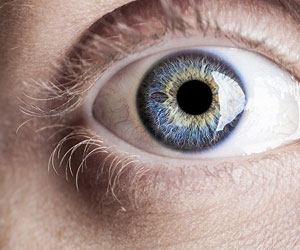
This is a closeup of a human eye.Psychological Science: California man Mike May made international headlines in 2000 when his sight was restored by a pioneering stem cell procedure after 40 years of blindness. A study published three years after the operation found that the then 49-year-old could see colors, motion and some simple two-dimensional shapes, but was incapable of more complex visual processing. Hoping May might eventually regain those visual skills, University of Washington researchers and colleagues retested him a decade later. In an article published in the April 2015 issue of Psychological Science, they report that May — referred to in the study as M.M. — continues to perform significantly worse than sighted control group participants.

Monday, May 4, 2015

Sports-Related Eye Injuries Affect Thousands of People Each Year

Bascom Palmer: As millions take to the playing field this spring, Bascom Palmer Eye Institute reminds coaches, parents and athletes of the importance of wearing eye protection. Of the 100,000 eye injuries resulting from sports each year, an estimated 42,000 people are treated in the emergency room, and 13,500 end up legally blind. Reports show that sporting equipment – including balls, bats, and rackets – are responsible for a majority of cases. In addition to injuries from sporting equipment, many also suffer eye injuries caused by another player’s errant finger or elbow to the eye.

Saturday, May 2, 2015

Photovoltaic retinal implant could restore functional sight

Stanford: A team led by Stanford University researchers has developed a wireless retinal implant that they say could restore vision five times better than existing devices. Results in rat studies suggest it could provide functional vision to patients with retinal degenerative diseases, such as retinitis pigmentosa or macular degeneration.
A paper describing the implant was published online April 27 in Nature Medicine.

Monday, April 27, 2015

Retinal implant could offer best vision yet

Scimex: Stanford University researchers have developed a wireless retinal implant that they say could restore vision five times better than existing devices. Results in rat studies suggest it could provide functional vision to patients with retinal degenerative diseases, such as retinitis pigmentosa or macular degeneration. "The performance we're observing at the moment is very encouraging," said Georges Goetz, a lead author of the paper and graduate student in electrical engineering at Stanford. "Based on our current results, we hope that human recipients of this implant will be able to recognize objects and move about."

Saturday, December 27, 2014

Gene therapy could help with inherited blindness (retinitis pigmentosa)

NHS.UK: "Procedure to restore sight in dogs gives hope for future blindness cure," The Independent reports. Researchers have restored some modest degree of light sensitivity (though not full vision) in animals who have a similar condition to retinitis pigmentosa.
Retinitis pigmentosa is an umbrella term for a group of human inherited eye conditions, affecting around 1 in 4,000 people, in which the normal light-sensing cells contained in the retina become damaged or die.

Retinitis pigmentosa

Orphanet. Retinitis pigmentosa (RP) is an inherited retinal dystrophy leading to progressive loss of the photoreceptors and retinal pigment epithelium and resulting in blindness usually after several decades.

Frequency of RP is reported to be 1/3,000 to 1/5,000. No ethnic specificities have been reported although founder effects are possible.

Monday, February 25, 2013

Age-related macular degeneration (AMD) Overview

Source: Plos Medicine. 2013.

The third leading global cause of blindness (after cataracts and glaucoma) is age-related macular degeneration (AMD).

This group of conditions is characterized by lesions in the macular (central) region of the retina, the tissue at the back of the eye that converts light into electrical messages and sends them to the brain.

AMD, which affects older people, destroys the sharp central vision that is needed for reading or driving, leaving only dim, blurred images or a black hole at the center of vision.

AMD can be diagnosed by examining digital photographs of the retina or by examining the retina directly using a special magnifying lens (slit lamp biomicroscopy).

There is no cure for AMD, although injections into the eye of certain drugs, such as bevacizumab, that block the activity of vascular endothelial growth factor can slow the rate of vision loss caused by some forms of AMD.