
Showing posts with label ALS. Show all posts
Showing posts with label ALS. Show all posts
Wednesday, May 16, 2018
Identification of Early Markers of Neurodegenerative Diseases in At-risk People
Monday, April 24, 2017
Mercury in Fish, Seafood May Be Linked to Increased ALS Risk

Monday, November 7, 2016
Fruits and Vegetables May Slow ALS
Columbia: A diet rich in antioxidants and carotenoids is linked with better
outcomes for patients with amyotrophic lateral sclerosis. New research at Columbia University’s Mailman School of Public Health reveals
that foods like fruits and vegetables that are high in antioxidant
nutrients and carotenoids are associated with better function in
amyotrophic lateral sclerosis (ALS) patients around the time of
diagnosis. This is among the first studies to evaluate diet in
association with ALS function and the first to show that healthy
nutrients and antioxidants are associated with better ALS functioning.
The findings are published online in JAMA Neurology.
Thursday, June 11, 2015
New treatment hope for Amyotrophic Lateral Sclerosis

Tuesday, June 2, 2015
Is Diabetes Protective Against Amyotrophic Lateral Sclerosis?

Thursday, May 21, 2015
Scientists create mice with a major genetic cause of ALS and FTD
 NIH: Scientists at Mayo Clinic, Jacksonville, Florida created a novel
mouse that exhibits the symptoms and neurodegeneration associated with
the most common genetic forms of frontotemporal dementia (FTD) and
amyotrophic lateral sclerosis (ALS, Lou Gehrig’s disease), both of
which are caused by a mutation in the a gene called C9ORF72. The study
was partially funded by the National Institutes of Health and published
in the journal Science.
NIH: Scientists at Mayo Clinic, Jacksonville, Florida created a novel
mouse that exhibits the symptoms and neurodegeneration associated with
the most common genetic forms of frontotemporal dementia (FTD) and
amyotrophic lateral sclerosis (ALS, Lou Gehrig’s disease), both of
which are caused by a mutation in the a gene called C9ORF72. The study
was partially funded by the National Institutes of Health and published
in the journal Science. Monday, April 13, 2015
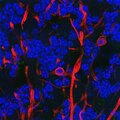
A New Tool for Understanding ALS: Patients’ Brain Cells
Tuesday, April 7, 2015
No evidence that overhead power lines accelerate development of Alzheimer's disease and ALS

Friday, February 20, 2015
New Insights Into Causes of amyotrophic lateral sclerosis
Utah University. US: In the wake of the ALS ice bucket challenge, scientists have made
important progress on discovering causes of ALS, amyotrophic lateral
sclerosis also known as Lou Gehrig’s disease. Patients with the
progressive neurodegenerative disease lose muscle movement, many become
totally paralyzed, and all die of the disease, typically within three
years following the onset of symptoms. Because little is known about how
the disease arises, there are no targeted therapies that slow or halt
the disease.
Wednesday, February 18, 2015
Scripps Florida Scientists' 'Mad Cow' Discovery Points to Possible Neuron Killing Mechanism Behind Alzheimer’s and Parkinson’s Diseases
Scripps Institute. US: Scientists from the Florida campus of The Scripps Research Institute
(TSRI) have for the first time discovered a killing mechanism that could
underpin a range of the most intractable neurodegenerative diseases
such as Alzheimer’s, Parkinson’s and ALS.
Wednesday, July 23, 2014
Amyotrophic lateral sclerosis
Amyotrophic lateral sclerosis (ALS) is a neurodegenerative disease characterised by progressive muscular paralysis reflecting degeneration of motor neurones. The mean age of onset is about 60. ALS usually present with dysarthria and dysphagia for solid or liquids (bulbar onset), and limb symptoms (muscle weakness and spasticity). Paralysis is progressive and leads to death due to respiratory failure within 2–3 years for bulbar onset cases and 3–5 years for limb onset ALS cases.
More about amyotrophic lateral sclerosis
More about amyotrophic lateral sclerosis
Saturday, July 12, 2014
Amyotrophic lateral sclerosis (in short)

- Amyotrophic lateral sclerosis (ALS) is a neurodegenerative disease characterised by progressive muscular paralysis reflecting degeneration of motor neurones in the primary motor cortex, corticospinal tracts, brainstem and spinal cord.
- Incidence (average 1.89 per 100,000/year) and prevalence (average 5.2 per100,000) are relatively uniform in Western countries, although foci of higher frequency occur in the Western Pacific.
- The mean age of onset for sporadic ALS is about 60 years.
- Overall, there is a slight male prevalence (M:F ratio~1.5:1).
- Approximately two thirds of patients with typical ALS have a spinal form of the disease (limb onset) and present with symptoms related to focal muscle weakness and wasting, where the symptoms may start either distally or proximally in the upper and lower limbs.
- Gradually, spasticity may develop in the weakened atrophic limbs, affecting manual dexterity and gait.
- Patients with bulbar onset ALS usually present with dysarthria and dysphagia for solid or liquids, and limbs symptoms can develop almost simultaneously with bulbar symptoms, and in the vast majority of cases will occur within 1–2 years.
- Paralysis is progressive and leads to death due to respiratory failure within 2–3 years for bulbar onset cases and 3–5 years for limb onset ALS cases.
- Most ALS cases are sporadic but 5–10% of cases are familial, and of these 20% have a mutation of the SOD1 gene and about 2–5% have mutations of the TARDBP (TDP-43) gene. Two percent of apparently sporadic patients have SOD1 mutations, and TARDBP mutations also occur in sporadic cases.
- The diagnosis is based on clinical history, examination, electromyography, and exclusion of 'ALS-mimics' (e.g. cervical spondylotic myelopathies, multifocal motor neuropathy, Kennedy's disease) by appropriate investigations.
- The pathological hallmarks comprise loss of motor neurones with intraneuronal ubiquitin-immunoreactive inclusions in upper motor neurones and TDP-43 immunoreactive inclusions in degenerating lower motor neurones.
- Signs of upper motor neurone and lower motor neurone damage not explained by any other disease process are suggestive of ALS.
- The management of ALS is supportive, palliative, and multidisciplinary. Non-invasive ventilation prolongs survival and improves quality of life.
- Riluzole (Rilutek, Riluzole Zentiva) is the only drug that has been shown to extend survival.
Source: Lokesh C Wijesekera and P Nigel Leigh. Orphanet Journal of Rare Diseases
Amyotrophic lateral sclerosis

Source: Lokesh C Wijesekera and P Nigel Leigh. Orphanet Journal of Rare Diseases
Disease names
Amyotrophic lateral sclerosis (ALS), Motor neurone disease (MND), Charcot's disease,
Lou Gehrig's disease
Included diseases
Amyotrophic lateral sclerosis (ALS) is a term used to cover the spectrum of neurodegenerative
syndromes characterised by progressive degeneration of motor neurones. However, it
is also the term used in modern clinical practice to indicate the commonest form of
the disease, Classical (Charcot's) ALS.
Subscribe to:
Posts (Atom)