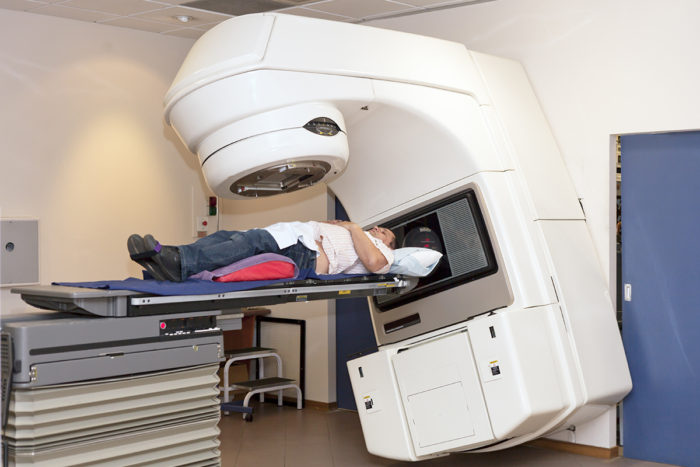
Showing posts with label prostate cancer. Show all posts

Wednesday, May 2, 2018

Higher doses of radiation don’t improve survival in prostate cancer

Washington University: A new study shows that higher doses of radiation do not improve survival for many patients with prostate cancer, compared with the standard radiation treatment. The analysis, which included 104 radiation therapy oncology groups across North America, was led by researchers at Washington University School of Medicine in St. Louis. Past studies have shown that gradually escalating the radiation dose resulted in improved cancer control, such as slower tumor growth and lower levels of prostate-specific antigen (PSA), an indicator of cancer growth. The new study, published March 15 in JAMA Oncology, is the first that is large enough to examine whether these improved measurements translate into longer survival for patients.

Wednesday, April 12, 2017

Clinical Trial Shows Benefit of Yoga for Side Effects of Prostate Cancer Treatment

Pennsylvania: Men who attended a structured yoga class twice a week during prostate cancer radiation treatment reported less fatigue and better sexual and urinary function than those who didn’t, according to a clinical trial led by the Perelman School of Medicine at the University of Pennsylvania. It is the first randomized trial to look at the effect of twice-weekly yoga on the side-effects and quality of life issues caused by prostate cancer treatment. The results published this week in the International Journal of Radiation Oncology, Biology, and Physics.

Tuesday, January 17, 2017

For men with prostate cancer, emotional distress may lead to more aggressive treatment

Buffalo: The anxiety many men experience after being diagnosed with prostate cancer may lead them to choose potentially unnecessary treatment options, researchers from the University at Buffalo and Roswell Park Cancer Institute report in a new study. “Emotional distress may motivate men with low-risk prostate cancer to choose more aggressive treatment, such as choosing surgery over active surveillance,” said UB’s Heather Orom, the lead author on the study, published in the February issue of the Journal of Urology.
“It underscores what we have been pushing a long time for, which is, ‘Let’s make this decision as informed and supported as possible.’ If distress early on is influencing treatment choice, then maybe we help men by providing clearer information about prognosis and strategies for dealing with anxiety. We hope this will help improve the treatment decision making process and ultimately, the patient’s quality of life,” added Orom, PhD, associate professor of community health and health behavior in UB’s School of Public Health and Health Professions.

Tuesday, November 15, 2016

The more you drink, the greater your risk of prostate cancer

Scimex: A collaborative study published today provides new evidence of a significant link between alcohol consumption and the risk of prostate cancer. The article, Is alcohol consumption a risk factor for prostate cancer? A systematic review and meta–analysis, appears in BMC Cancer, a peer-reviewed, online journal. Conducted by researchers at the National Drug Research Institute (NDRI) at Curtin University in Perth and the Centre for Addictions Research of BC (CARBC) at the University of Victoria (UVic) in Canada, the study shows that even low volume drinking can increase the risk of prostate cancer.

Sunday, October 30, 2016

Common prostate cancer treatment linked to later dementia, researcher says

Stanford: A new retrospective study of patient medical records suggests that men with prostate cancer who are treated with testosterone-lowering drugs are twice as likely to develop dementia within five years as prostate cancer patients whose testosterone levels are not tampered with. The study, by researchers at the Stanford University School of Medicine and the University of Pennsylvania Perelman School of Medicine, also demonstrates emerging techniques for extracting biomedical data from ordinary patient medical records.

Wednesday, July 1, 2015

Award-winning agent developed for prostate cancer diagnosis and treatment

DKFZ: Scientists at the German Cancer Research Center (DKFZ) have developed an agent called PSMA-617, which is capable of attaching specifically to prostate cancer cells. This agent can be labeled with various radioactive substances. When chemically bound to a weakly radioactive diagnostic radionuclide, it can detect prostate tumors and their metastases in PET scans. If labeled with a strongly radioactive therapeutic radionuclide, PSMA-617 can specifically destroy cancer cells. A first clinical application of this radiopharmaceutical at Heidelberg University Hospital has now delivered promising results.

Tuesday, June 23, 2015

First clear evidence of a link between smoking and prostate cancer

Vienna: Smoking is a known risk factor for the development of various forms of cancer. However, when it comes to the link between smoking and prostate cancer, the findings of previous studies have been contradictory. Now, for the first time, an international study led by MedUni Vienna and Basle University Hospital, has provided evidence of a clear link. The study, which was recently published in "European Urology", the world's leading journal in the field of urology and nephrology, shows that, following removal of the prostate gland due to prostate cancer, smokers and ex-smokers have a much higher risk (specifically twice the risk) of recurrence of prostate cancer (biochemical recurrence; BCR).

Thursday, June 11, 2015

Outsmarting advanced prostate cancer

Adelaide: International research involving the University of Adelaide has helped explain how tumour cells become resistant to common therapies used in the treatment of prostate cancer. The findings, published in the prestigious journal Nucleic Acids Research, may lead to better patient management and new drugs for men with advanced prostate cancer. Speaking in the lead up to Men’s Health Week (15-21 June), University of Adelaide prostate cancer researcher Professor Wayne Tilley says until now, it was unclear how prostate cancer cells evade common hormone therapy treatments. “In this study with the Masonic Cancer Centre at the University of Minnesota, we have shown that a variant of a protein present in most tumours is an important driver of resistance to hormone therapy in advanced prostate cancer,” says Professor Tilley, Director of the University’s Dame Roma Mitchell Cancer Research Laboratories (DRMCRL).

Sunday, May 31, 2015

Rosetta Stone for Prostate Cancer Deciphered

Clinicalomics: Based on the most current data, approximately 14% of men will be diagnosed with prostate cancer at some point during their lifetime. If detected early, long term clinical prognosis is very good, however in many cases, prostate cancer can become metastatic and drug resistant tumor rates are on the rise. Now, a new study led by scientists at The Institute of Cancer Research (ICR) in London created a comprehensive map of genetic mutations within lethal forms of metastatic prostate cancer. What’s being hailed as the diseases’ Rosetta Stone, found that nearly 90% of men with advanced prostate cancer carry genetic mutations that can be targeted by either existing or new cancer drugs.

Saturday, May 23, 2015

After Prostate Cancer, Start Walking

NorthWestern: Walking routine improves health-related quality of life in prostate cancer survivors. Walking at an easy pace for about three hours every week may be just enough physical activity to help prostate cancer survivors reduce damaging side effects of their treatment, according to a new Northwestern Medicine study. “Non-vigorous walking for three hours per week seems to improve the fatigue, depression and body weight issues that affect many men post-treatment,” said Siobhan Phillips, lead author of the study. “If you walk even more briskly, for only 90 minutes a week, you could also see similar benefits in these areas.” The paper was published online April 16, 2015 in the Journal of Cancer Survivorship: Research and Practice.

Friday, May 22, 2015

Prostate cancer study focuses on role of protein

Glasgow: The role of a specific protein in the development of prostate cancer is being investigated by scientists at the University of Glasgow. Prof Baillie, of the Institute of Cardiovascular & Medical Sciences, said: “We know that the amount of a protein called PDE4D7 significantly differs between hormone responsive and hormone unresponsive prostate cancers. This protein binds to a number of other proteins. “We want to investigate these links and see if we can use this information to develop a new strategy to halt the growth of the cancer cells. This will identify potential targets for new treatments for advanced prostate cancer, and funding provided by Prostate Cancer UK and Movember will allow us to take one step closer to this goal.”

Thursday, May 21, 2015

Links between hay fever, asthma and prostate cancer inconclusive

NHS: "Men with hay fever are more likely to have prostate cancer – but those with asthma are more likely to survive it," the Daily Mirror reports. Those were the puzzling and largely inconclusive findings of a new study looking at these three conditions. Researchers looked at data involving around 50,000 middle-aged men and followed them up for 25 years, looking at whether asthma or hay fever at study start were associated with diagnoses of prostate cancer or fatal prostate cancer during follow-up. The findings weren't as conclusive as the headline suggests.

Monday, May 4, 2015

New combination therapy effective even for larger prostate cancers

Vienna: Chemotherapy is generally very effective for smaller prostate cancers. However, with larger tumors, more B-cells are produced and these suppress the body's immune response, thereby helping the cancer to grow, despite treatment. An international team of researchers including scientists from MedUni Vienna has now successfully demonstrated that even larger prostate cancers can be effectively combated with a new type of combination therapy – if the immunosuppressive cells are first of all blocked or removed. In a mouse model, advanced prostate cancer was almost completely cured using this "chemo-immunotherapy".

Solving the prostate predicament with an MRI

Scimex: The ongoing debate around prostate-specific antigen (PSA) testing for prostate cancer could potentially be resolved by using multiparametric magnetic resonance imaging (mpMRI), says Australian researchers. PSA testing is often discouraged due to overdiagnosis or unnecessary treatment of benign tumours, but the researchers say an mpMRI would be more reliable in detecting significant prostate cancers while excluding tumours that didn't need treatment.

Friday, May 1, 2015

New prostate cancer treatment has promising results in mice

NHS: "Prostate cancer resistant to conventional treatment could be all but wiped out by a therapy that boosts the immune system," the Daily Mail reports. The therapy, as yet only used in mice, enabled chemotherapy to destroy cancer cells in mice with previously treatment-resistant prostate cancer. Abnormal body cells will usually be recognised by the immune system and destroyed. However, the fact the cancers develop and progress, and can be resistant to treatment, shows that something is preventing these cells from being destroyed.

Friday, April 17, 2015

Obesity Associated with Prostate Cancer Risk in African American Men

JAMA: Obesity was associated with an increased risk for prostate cancer in African American men and that risk grew by nearly four times as body-mass index (BMI) increased, according to an article published online by JAMA Oncology. African American men have the highest incidence of prostate cancer of any racial or ethnic group in the United States, as well as the highest rates of aggressive disease and prostate cancer death. These elevated risks likely arise from both social and biologic factors. The associations of obesity with prostate cancer risk are complex.

Tuesday, April 14, 2015

How dogs could sniff out prostate cancer

NHS: "Dogs trained to detect prostate cancer with more than 90% accuracy," The Guardian reports. Two trained bomb-sniffing dogs also proved remarkably successful in detecting compounds associated with prostate cancer in urine samples. This headline is based on research that trained two explosive-detection sniffer dogs to identify the urine samples of men with prostate cancer. They then tested the dogs on urine samples from 332 men with the condition and 540 controls without the condition, most of whom were men. One dog correctly identified all the samples from men with prostate cancer, and the other dog identified 98.6% of them. The dogs incorrectly identified between one and four percent of the control samples as being from men with prostate cancer ("false positives").

Monday, April 13, 2015

Low temperature plasmas to treat prostate cancer

Plasma (credit: Adam Hirst)York: Scientists at the University of York have discovered a potential new treatment for prostate cancer using low temperature plasmas (LTPs). Published in the British Journal of Cancer (BJC), the study is the first time LTPs have been applied on cells grown directly from patient tissue samples. It is the result of a unique collaboration between the York Plasma Institute in the Department of Physics and the Cancer Research Unit (CRU) in York’s Department of Biology. Taking both healthy prostate cells and prostate cancer tissue cells from a single patient, the study allowed for direct comparison of the effectiveness of the treatment. Scientists discovered that LTPs may be a potential option for treatment of patients with organ confined prostate cancer, and a viable, more cost-effective alternative to current radiotherapy and photodynamic therapy (PDT) treatments.

Tuesday, March 31, 2015

Study reveals high-cholesterol diet increases spread of prostate cancer

University of Queensland research has shown that a high-cholesterol diet increases the spread of prostate cancer tumours to lymph nodes, lungs and bones. Study leader Dr Michelle Hill said the research highlighted why it is important for patients with prostate cancer to choose a low-cholesterol diet.
“High cholesterol doesn’t change the size of the original prostate cancer tumour, but the effect on cancer spreading was shown to be significant,” Dr Hill said.

Monday, March 23, 2015

Sipuleucel-T in prostate cancer: indication of added benefit

Iqwig: Sipuleucel-T (trade name Provenge) has been approved since September 2014 for men with metastatic prostate cancer who have few or no symptoms and do not yet require chemotherapy. In the dossier assessment no added benefit could be derived for sipuleucel-T. According to the findings, there is an indication of added benefit; however, the extent is non-quantifiable.