
Showing posts with label heart failure. Show all posts
Showing posts with label heart failure. Show all posts
Wednesday, May 23, 2018
Chronic heart failure: patients show individual therapy response to ACE inhibitor treatment
Monday, February 20, 2017
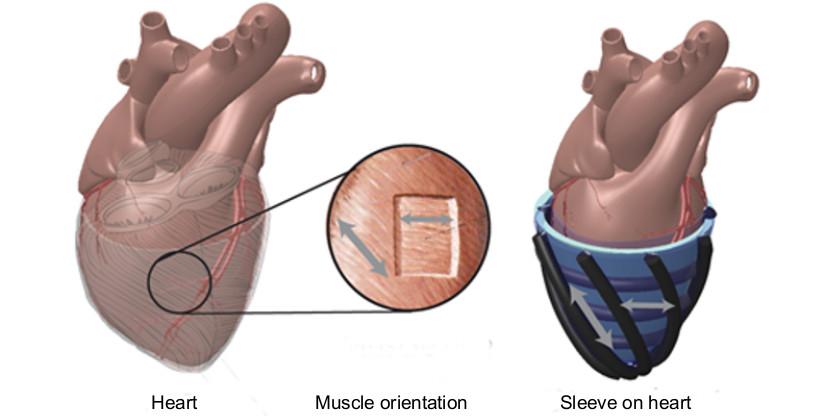
A prototype robotic sleeve to help the heart keep beating
Monday, February 1, 2016
Exercise and Diet Improves Ability to Exercise for Patients with Common Type of Heart Failure

Wednesday, June 24, 2015
‘High-Normal’ Blood Pressure in Young Adults Spells Risk of Heart Failure in Later Life

Heart failure patients are less likely to receive end of life care

Monday, June 8, 2015
New wire can test for heart failure

Monday, June 1, 2015
Start-up to develop new treatment for heart failure

Maastricht: Mirabilis Therapeutics BV, known as Mirabilis, is a
new spin-off by Maastricht University and the Maastricht University
Medical Centre (UM/MUMC+). Mirabilis focuses on developing new
medications to treat cardiovascular and metabolic diseases such as heart
failure and obesity. The company was founded in response to promising
research by Professor de Windt and Dr Da Costa Martins. Based on
previous research, they expect Mirabilis to develop new medications that
can slow the pathological growth of the heart muscle, improve energy
metabolism in heart failure patients, restore the heart's regenerative
potential after a heart attack or combat obesity. The new candidate
medications have shown promising effects in previous studies.
Wednesday, May 27, 2015
Towards a new treatment for cardiac remodeling ?
Friday, May 22, 2015
Drug developed in 1950 for the treatment of Lupus to treat heart rhythm disease

Tuesday, May 5, 2015
Heart failure drug digoxin linked to premature death

Monday, May 4, 2015
Preeclampsia is an important predictor of heart failure

Maastricht: Women who have had preeclampsia are 2 to 8 times
more likely to develop cardiovascular problems in the future. Doctoral
research carried out by Chahinda Ghossein, research physician at the
Maastricht UMC+ Department of Gynaecology, has shown there is a link
between preeclampsia and heart failure. This will help provide
guidelines for research into the early detection of and preventative
measures for preeclampsia. Preeclampsia
usually occurs after the 20th week of pregnancy, with women experiencing
vascular problems in the form of high blood pressure combined with
proteinuria (protein loss in the urine). This is often accompanied by
restricted growth in the unborn child.
Saturday, March 7, 2015
Researchers Discover Protein’s Pivotal Role in Heart Failure
UCSD: Researchers at the University of California, San Diego School of
Medicine have identified a key piece in the complex molecular puzzle
underlying heart failure – a serious and sometimes life-threatening
disorder affecting more than 5 million Americans.
Thursday, February 5, 2015
Too many heart failure patients are treated with IV fluids, study finds
Yale University. US: Many patients hospitalized with severe heart failure are receiving potentially harmful treatment with intravenous fluids, a Yale-led study has found. The observational study, published in the Journal of the American College of Cardiology (JACC): Heart Failure, is the first to examine use of common IV fluids in hospitalized heart failure patients.
Thursday, January 22, 2015
Long-term use of ventricular assist devices induces heart muscle regeneration, study finds
UTSW. US: Prolonged use of a left ventricular assist device (LVAD)
by patients with heart failure may induce regeneration of heart muscle
by preventing oxidative damage to a cell-regulator mechanism,
UT Southwestern Medical Center investigators have found.
New Valve Procedure Offers Hope to Older Heart Disease Patients
Wake Forest center. US: What a difference a year makes. Patricia
Lytton recalls how much better her health is today compared to a year ago
thanks to a new valve procedure offered at Wake Forest Baptist Medical Center.
Lytton just wanted to be home in time to celebrate her 77th birthday with her family. But when she first went into the hospital two months earlier for congestive heart failure she wasn’t sure she would ever reach that milestone.
Lytton just wanted to be home in time to celebrate her 77th birthday with her family. But when she first went into the hospital two months earlier for congestive heart failure she wasn’t sure she would ever reach that milestone.
Tuesday, January 20, 2015
Does moderate boozing reduce heart failure risk?
NHS. UK: "Seven alcoholic drinks a week can help to prevent heart disease,"
the Daily Mirror reports. A US study suggests alcohol consumption up to
this level may have a protective effect against heart failure.
Monday, January 19, 2015
The patient who received a CARMAT artificial heart in France on August 5, 2014 has been discharged home
CARMAT. France: , the designer and developer of the world's most advanced total artificial heart project, aiming to provide a therapeutic alternative for people suffering from end-stage heart failure, announces that the patient implanted at the Nantes University Hospital ( France) last August has been discharged from the hospital and has returned home.
Thursday, January 15, 2015
When used effectively, discharge summaries reduce hospital readmissions
Yale. US: For heart failure patients making the transition from hospital to
home, a discharge summary that gets to their primary doctors quickly and
contains detailed and useful information can mean the difference
between recovering quickly or returning to the hospital, according to
new research from Yale School of Medicine researchers.
Monday, January 12, 2015
Patient leaves University of Michigan hospital without a human heart
University of Michigan: Freedom Driver, a backpack-sized power supply, allows patient to recover at home while waiting for a heart transplan. The University of Michigan Frankel Cardiovascular Center has sent home a patient with a total artificial heart, a first in heart care in Michigan.
ACE inhibitors

Subscribe to:
Posts (Atom)