
Showing posts with label 3D printing. Show all posts
Showing posts with label 3D printing. Show all posts
Wednesday, January 4, 2017
Scientists Prove Feasibility of “Printing” Replacement Tissue
Monday, June 22, 2015

Monday, June 8, 2015
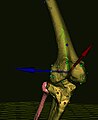
Application of 3D printing in orthopedics
Friday, June 5, 2015
Biogel structures produced by 3-D printing could be used in tissue engineering.

Saturday, May 30, 2015
First successful 3D-printed biologic tracheal graft in an animal model
Mount Sinai: A team of researchers from Icahn School of Medicine have combined 3D
printing technology with human stem cells to create the first successful
3D-printed biologic tracheal graft in an animal model. Using a
biocompatible polymer, researchers created a customized 3D-printed
tracheal graft seeded with stem cells. The graft was then used to repair
a defect in an animal. The Mount Sinai team continues to work toward
creating a customized tracheal graft that could be used to repair
complex airway defects in humans.
Monday, May 4, 2015
3D printing improves cartilage healing

The
researchers used materials called hydrogels, which are networks of
polymers that can absorb large quantities of fluid. Some examples of
hydrogels include winegums, pudding and soft contact lenses. In
regenerative medicine, hydrogels can serve as carriers for cells to
restore joint cartilage. Using 3D printing techniques, the scientists
were able to ‘print’ a network of thin fibres, with which they then
reinforced the gel. The new composite material displayed properties
similar to joint cartilage.
Saturday, May 2, 2015
How babies’ lives were saved by 3D printing
Michigan: Researchers report promising results from first-ever cases of severe tracheobronchomalacia treated by custom-designed airway splints at U-M. Kaiba was just a newborn when he turned blue because his little lungs
weren’t getting the oxygen they needed. Garrett spent the first year of
his life in hospital beds tethered to a ventilator, being fed through
his veins because his body was too sick to absorb food. Baby Ian’s heart
stopped before he was even six months old. Three babies all had the same life-threatening condition: a terminal
form of tracheobronchomalacia, which causes the windpipe to periodically
collapse and prevents normal breathing. There was no cure and
life-expectancies were grim. The three boys became the first in the world to benefit from
groundbreaking 3D printed devices that helped keep their airways open,
restored their breathing and saved their lives at the University of
Michigan’s C.S. Mott Children’s Hospital. Researchers have closely
followed their cases to see how well the bioresorbable splints implanted
in all three patients have worked, publishing the promising results in
today’s issue of Science Translational Medicine.
Monday, March 23, 2015
3-D Printing to make medicine easier

Scimex: The machinery used by scientists and
medical doctors is sophisticated and expensive, making it difficult for
developing countries to establish functioning education and science
system. Now international researchers have presented a DIY way to create
these items, which includes using 3-D printing, making it much easier
to create these tools in areas when they would otherwise be unavailable.
Tuesday, February 24, 2015
3D-printed guides can help restore function in damaged nerves
Sheffield University. UK: Scientists at the University of Sheffield have succeeded in
using a 3D printed guide to help nerves damaged in traumatic incidents
repair themselves. The
team used the device to repair nerve damage in animal models and say
the method could help treat many types of traumatic injury.
Subscribe to:
Posts (Atom)