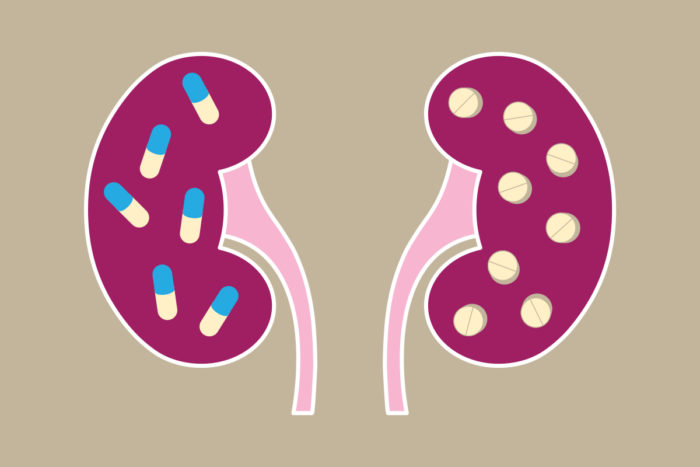
Washington: Taking popular heartburn drugs for prolonged periods has been linked
to serious kidney problems, including kidney failure. The sudden onset
of kidney problems often serves as a red flag for doctors to discontinue
their patients’ use of so-called proton pump inhibitors (PPIs), which
are sold under the brand names Prevacid, Prilosec, Nexium and Protonix,
among others. But a new study evaluating the use of PPIs in 125,000 patients
indicates that more than half of patients who develop chronic kidney
damage while taking the drugs don’t experience acute kidney problems
beforehand, meaning patients may not be aware of a decline in kidney
function, according to researchers at Washington University School of
Medicine in St. Louis and the Veterans Affairs St. Louis Health Care
System. Therefore, people who take PPIs, and their doctors, should be
more vigilant in monitoring use of these medications.
Only good, independent and reliable information about health from experts.
Showing posts with label chronic kidney disease. Show all posts
Wednesday, April 12, 2017
Monday, June 8, 2015
Sixth kidney transplantation for a woman in France with help of a new drug
A woman received a sixth kidney transplant, a "surgical prowess" and a first in France, conducted at the Necker Children's Hospital, said the Paris Hospital Group AP-HP. This new procedure, which lasted five hours, was made possible by the arrival of a new drug that neutralizes the rare disease afflicting the patient, preventing the destruction of the transplanted organ. Followed since the age of five, the age of five, the patient alternated throughout his life periods of dialysis and kidney transplants, some lost very rapidly because of a recurrence of his illness.
Friday, May 22, 2015
Best treatment for blood pressure in diabetic kidney disease
Scimex: An international study, including New Zealand and Australian scientists,
has compiled the first definitive summary of the best and safest
treatments for kidney disease and diabetes patients, finding blood
pressure lowering drugs do not improve life expectancy among adults with
the conditions. The paper compares all drug options, including
combinations of commonly used drugs, and acts as an evidence-based guide
on which drugs are safe and effective.
Wednesday, April 8, 2015
Study Suggests Acute Injured Kidneys can be considered for Transplant
Mayo Clinic: The shortage of kidneys needed for organ transplantation in the U.S. can be alleviated in part by using select kidneys with Acute Kidney Injury (AKI), resulting in safe and positive outcomes, according to research conducted at Mayo Clinic in Arizona. Results of the single-site study, led by Raymond Heilman, M.D.,
Chair of the Division of Nephrology, suggest that acutely injured
kidneys from deceased donors can be considered for transplantation —
reconsidering previous thinking that such kidneys should be discarded.
Kidneys can result in acute injury when the organ ceases to function, generally caused by heavy blood loss, severe infection, extreme dehydration and some medications. At the same time, according to Dr. Heilman, “The kidney has a remarkable ability to regenerate parts of the organ that weren’t working.”
Thursday, March 26, 2015
A genetic test for inherited kidney diseases
Washington: Many kidney disorders are difficult to diagnose. To address this
problem, scientists and clinicians have developed a diagnostic test that
identifies genetic changes linked to inherited kidney disorders. This
testing is now available nationwide through Genomic Pathology Services
(GPS) at Washington University School of Medicine in St. Louis.
Monday, March 16, 2015
New hope for kidney disease
Monash: Researchers have made a discovery that could see patients with kidney
disease no longer having to resort to dialysis or kidney transplants.
Friday, March 13, 2015
Even injured kidneys can be used for transplants
Yale: Kidneys from deceased donors that have acute injuries are frequently
discarded instead of being used for transplant. However, a Yale-led
study finds that such kidneys may be more viable than previously
thought, and should be considered to meet the growing demand for organ
transplants.
Wednesday, March 4, 2015
Sickle Cell Trait Among African Americans Associated With Increased Risk of Chronic Kidney Disease
JAMA: In a study that included nearly 16,000 African Americans, those with
sickle cell trait had an associated increased risk of chronic kidney
disease and measures linked to poorer kidney function, according to a
study appearing in JAMA. Sickle cell trait is a condition in which a
person has only one copy of the gene for sickle cell but does not have
sickle cell disease (which requires two copies of this gene). The study
is being released to coincide with its presentation at the American
Society of Nephrology’s annual Kidney Week meeting.
Thursday, February 19, 2015
Altered dietary salt intake for people with chronic kidney disease
Cochrane: People with CKD are at increased risk
of heart disease and deteriorating kidney health which can lead to need
for dialysis or kidney transplantation to survive. Reducing risk of heart disease and preserving kidney function are important treatment goals.
Thursday, January 22, 2015
Added benefit of sucroferric oxyhydroxide is not proven
IQWIG. Germany: Sucroferric oxyhydroxide (trade name Velphoro) has been approved since August 2014 for adults with chronic kidney disease on haemodialysis or peritoneal dialysis. The German Institute for Quality and Efficiency in Health Care (IQWiG) examined in a dossier assessment whether in these cases the drug offers patients an added benefit over the appropriate comparator therapies. According to the findings, an added benefit is not proven because no suitable data were available.
Subscribe to:
Posts (Atom)
