Showing posts with label stroke. Show all posts

Monday, March 29, 2021

Study reveals frequency and characteristics of stroke in COVID-19 patients

University of Missouri :A study conducted by researchers from the University of Missouri School of Medicine and MU Health Care shows coronavirus patients with stroke face increased need for long-term care.

A review of nearly 28,000 emergency department records shows less than 2% of patients diagnosed with COVID-19 suffered an ischemic stroke but those who did had an increased risk of requiring long-term care after hospital discharge. Those are the findings from a study conducted by researchers from the University of Missouri School of Medicine and MU Health Care.

In a COVID-19 World, Speech Disturbance May Be the Most Important Stroke Sign to Look Out For


University of Pennsylvania :With an increase in remote work, virtual meetings, and video chats, many of us may not realize we are now on the front lines of stroke detection via the speakers on our computers, phones and other devices.

Across the world, fewer people are going to the hospital to be treated for stroke, but that’s not because fewer people are having them. In July, Renyu Liu, MD, a professor of Anesthesiology and Critical Care in the Perelman School of Medicine at the University of Pennsylvania published a study in CNS Neuroscience & Therapeutics that found that since the start of the COVID-19 pandemic the global average for stroke hospitalizations decreased by about 42 percent, statistics spurred by people afraid to seek emergency medical care for fear of catching COVID-19. In a recently published editorial in the same journal, Liu suggests that that the pandemic, with its social distancing and mask wearing, may be also be contributing to a decline in people recognizing the common warning signs of stroke.

Wednesday, June 27, 2018

Synthetic cannabis (‘spice’, ‘k2’) use may boost stroke risk in young users

BMJ: 25 year old prison inmate was left with permanent disability in absence of other traditional risk factors. Synthetic cannabis, also popularly known as ‘spice’ or ‘k2,’ may boost the risk of a stroke in young users, warn US doctors writing in the journal BMJ Case Reports. The warning follows their treatment of a 25 year old prison inmate who had no family history of heart disease or traditional cardiovascular risk factors, and who was left with a permanent disability.

Severe eczema in adults linked to increased risk of cardiovascular problems

BMJ: Severe eczema in adults is associated with a moderately increased risk of cardiovascular problems (conditions affecting the heart and blood vessels) including heart attacks, stroke, and irregular heart rate, finds a UK study published by The BMJ today. This is the largest study to date to assess the association between atopic eczema and major cardiovascular events, and the researchers say their findings support the consideration of targeted screening and focus on prevention strategies among these patients.

Monday, May 21, 2018

New hope for stroke patients using human amniotic cells

Stroke Foundation: Stroke is one of Australia’s biggest killers and a leading cause of disability. Stroke is treatable, however treatments are time critical and currently only a limited number of Australians have access. Some of the most recent advancements in ischemic stroke treatment – strokes caused by a clot – can only be delivered within the first few hours of a stroke. The seven-year research project led by La Trobe’s Professor Chris Sobey and with researchers from Monash University and Monash Health found that when human amnion epithelial cells – the cells lining the human amniotic sac during pregnancy and discarded after birth – were injected after stroke, impact was less severe and recovery was significantly improved.

Tuesday, March 7, 2017

A new predictive computer model could help optimize the recovery of stroke patients

NIH: After a stroke, patients typically have trouble walking and few are able to regain the gait they had before suffering a stroke. Researchers funded by the National Institute of Biomedical Imaging and Bioengineering (NIBIB) have developed a computational walking model that could help guide patients to their best possible recovery after a stroke. Computational modeling uses computers to simulate and study the behavior of complex systems using mathematics, physics, and computer science. In this case, researchers are developing a computational modeling program that can construct a model of the patient from the patient’s walking data collected on a treadmill and then predict how the patient will walk after different planned rehabilitation treatments. They hope that one day the model will be able to predict the best gait a patient can achieve after completing rehabilitation, as well as recommend the best rehabilitation approach to help the patient achieve an optimal recovery.

Friday, February 24, 2017

A simple one-off vaccination could protect against heart attack and stroke

Melbourne: Melburnians are taking part in a world first trial led by Monash University that could see a simple one-off vaccination protect against heart attack and stroke. The trial, which started late last year, aims to determine whether the pneumococcal vaccine can reduce the risk of heart attacks and stroke by up to 20 per cent. Observational studies indicate the injection can lead to a 17 per cent protection against cardiovascular disease, but this is the first large scale study to be conducted.

Wednesday, February 15, 2017

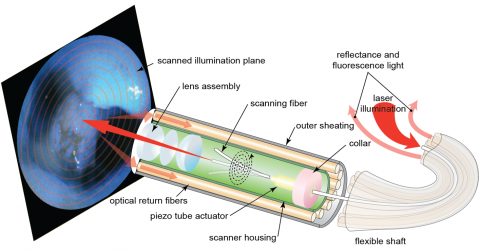
Laser-based camera improves view of the carotid artery

A unique application of a medical camera could one day help physicians know who is at risk for a cardiovascular event by providing a better view of potential problem areas.Ann Arbor: Michigan Medicine researchers employ novel technology to monitor vulnerabilities for cardiovascular events, aid in diagnosis and treatment.. Strokes and heart attacks often strike without warning. But, a unique application of a medical camera could one day help physicians know who is at risk for a cardiovascular event by providing a better view of potential problem areas.A new paper in Nature Biomedical Engineering (link is external) reports proof-of-concept results for this new imaging platform for atherosclerosis.

Wednesday, January 25, 2017

Transplanted neurons incorporated into a stroke-injured rat brain

Lund: Today, a stroke usually leads to permanent disability – but in the future, the stroke-injured brain could be reparable by replacing dead cells with new, healthy neurons, using transplantation. Researchers at Lund University in Sweden have taken a step in that direction by showing that some neurons transplanted into the brains of stroke-injured rats were incorporated and responded correctly when the rat’s muzzle and paws were touched. The study, published in the prestigious journal Brain, used human skin cells. These cells were re-programmed to the stem cell stage and then matured into the type of neurons normally found in the cerebral cortex.

Wednesday, December 21, 2016

Marital History Linked to Survival After Stroke

MedicalResearch: 
Interview with Matthew E. Dupre, Ph.D. Duke University
What is the background for this study? What are the main findings?
Response: There have been a handful of recent studies showing how divorce and widowhood increase one’s risk of suffering a serious health event such as a heart attack or stroke. Our research is the first to show that an individual’s marital history can have significant consequences for their prognosis after having a stroke. We found that people who never married and those with a history of marital loss were significantly more likely to die after suffering a stroke than those who were stably married. We also found that adults who experienced more than one divorce or widowhood in their lifetime were about 50% more likely to die after having a stroke than those in a long-term stable marriage. We were also somewhat surprised to find that remarriage did not seem to reduce the risks from past marital losses.

Wednesday, December 14, 2016

Wii gives the gift of restored movement and fitness to people after a stroke

Scimex: Wii is the gift that keeps on giving to people after they have had a stroke, according to two studies from Neuroscience Research Australia (NeuRA). New research, led by Dr Penelope McNulty, shows that Wii-based Movement Therapy (WMT) not only restores upper limb mobility, but also improves lower limb movement and cardiovascular health in participants. Both studies compared WMT with modified Constraint-induced Movement Therapy (mCMIT) and found that WMT boasts additional benefits. While CMIT is currently considered best-practice in stroke rehabilitation, results from these studies indicate that WMT is equally as effective, with better lifestyle outcomes at six months.

Thursday, November 17, 2016

How to recognise a stroke and what you should know about their treatment

TheConversation: One in every six people will experience a stroke during their lifetime. And by the time you have read this article, it’s likely that someone in Australia will have experienced one. Stroke kills more women than breast cancer and more men than prostate cancer yet you’re unlikely to read much about it. There are lots of common misconceptions in the community of what a stroke actually is, how to recognise if someone is having one, and the treatments that improve stroke survivors’ outcomes.
There are new treatments available for stroke; however these are time dependant. So it’s important for the person having a stroke to get to hospital quickly. These time critical therapies often heavily rely on people recognising stroke quickly, and acting quickly to get emergency medical care.

A mini stroke is a warning! A stroke may follow

TheConversation: A mini stroke is also called a Transient Ischaemic Attack or TIA. It is a brief episode of dysfunction in the brain. Like a stroke, TIA’s onset is sudden, over a few seconds or minutes. People having a mini stroke can experience a variety of symptoms. The most important are weakness on one side affecting the face, arm or leg – or all three – or speech disturbance, which can be slurring or decreased speech fluency or comprehension. These are the typical symptoms, but sometimes people can experience visual loss, dizziness or vertigo.

Wednesday, November 16, 2016

New hope for recovery of hand movement for stroke patients

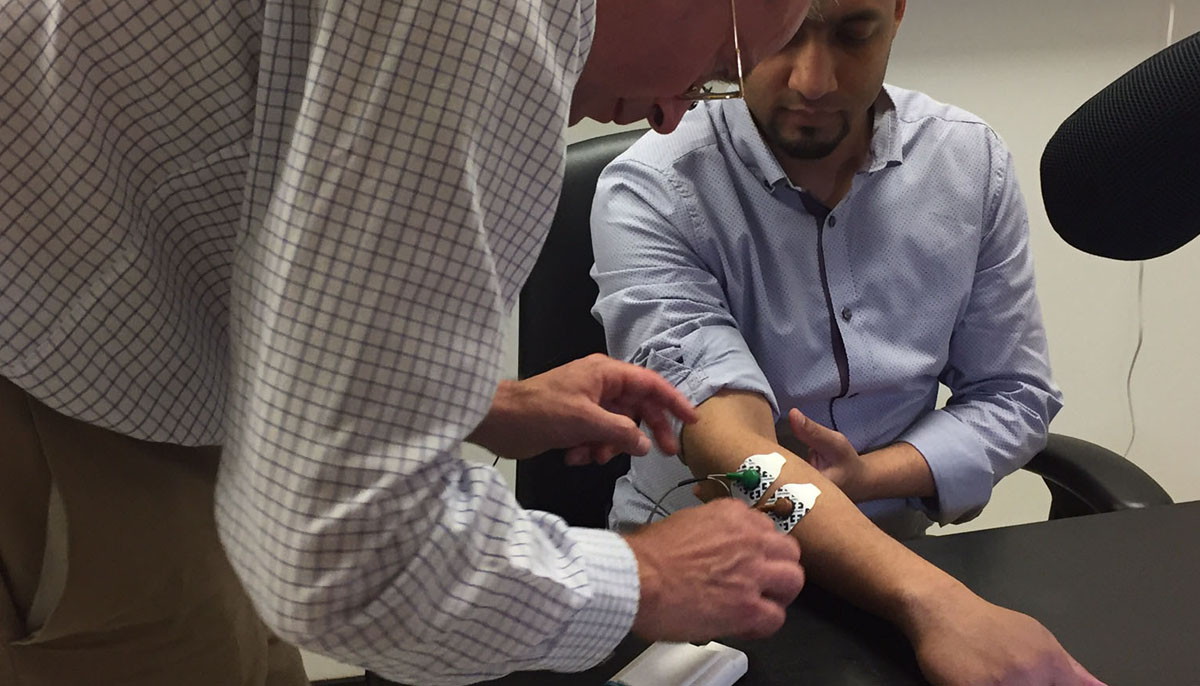
Newcastle: Neuroscientists at Newcastle University have developed the device, the size of a mobile phone, which delivers a series of small electrical shocks followed by an audible click to strengthen brain and spinal connections. The experts believe this could revolutionise treatment for patients, providing a wearable solution to the effects of stroke. Following successful work in primates and healthy human subjects, the Newcastle University team are now working with colleagues at the prestigious Institute of Neurosciences, Kolkata, India, to start the clinical trial. Involving 150 stroke patients, the aim of the study is to see whether it leads to improved hand and arm control.

Sunday, November 13, 2016

Short Episodes of Atrial Fibrillation Don’t Increase Stroke Risk

Northwestern: Patients with pacemakers or defibrillators who experience only short episodes of atrial fibrillation are not at an increased risk for stroke over a two-year follow-up, according to a Northwestern Medicine study published in Circulation. The findings suggest that treating this population with anticoagulants may not be necessary. Atrial fibrillation (AF) is a common heart rhythm disorder and is associated with an increase in the risk of embolic stroke. As such, anticoagulants are often prescribed to patients with AF. But while the therapy is often effective, it also carries a risk of bleeding.

Sunday, November 6, 2016

Genes responsible for risk of heart attack, stroke, and related cardiometabolic diseases identified

Karolinska Institute: Thousands of genes and their interactions across tissues mediating cardiometabolic diseases have been identified. The research, published in Science , is a result of a joint collaboration between the Icahn School of Medicine at Mount Sinai, Tartu University Hospital in Estonia, Karolinska Institutet and Science for Life Laboratory (SciLifeLab) in Sweden, and AstraZeneca.The identified level of complexity and interaction among these genes also includes processes that lead to heart attack and stroke.

Saturday, November 5, 2016

FDA approves new device for prevention of recurrent strokes in certain patients

FDA: The U.S. Food and Drug Administration today approved the Amplatzer PFO Occluder device. The PFO Occluder reduces the risk of a stroke in patients who previously had a stroke believed to be caused by a blood clot that passed through a small hole in the heart, called a patent foramen ovale (PFO), and then traveled to the brain. “The Amplatzer PFO Occluder provides a non-surgical method for doctors to close a PFO,” said Bram Zuckerman, M.D., director of the Division of Cardiovascular Devices in the FDA’s Center for Devices and Radiological Health. “But as the device labeling clearly states, patients need to be evaluated carefully by a neurologist and cardiologist to rule out other known causes of stroke and help ensure that PFO closure with the device is likely to assist in reducing the risk of a recurrent stroke.”

Thursday, November 3, 2016

Eating one egg a day may lower risk of stroke

NHS: "An egg a day can cut chances of suffering a fatal stroke," The Times reports. A new review of existing data covering around 300,000 people suggests eating up to one egg a day may lower stroke risk; but not the risk of heart disease. The health effects of eggs have been debated for years. Eggs, which contain cholesterol, were thought to increase risk of heart disease by raising cholesterol levels.
But more recent studies show that cholesterol in food has little impact on the levels of cholesterol in your blood – most cholesterol in the blood is made by the liver.

Monday, October 31, 2016

FDA approves new device for prevention of recurrent strokes in certain patients

FDA: The U.S. Food and Drug Administration today approved the Amplatzer PFO Occluder device. The PFO Occluder reduces the risk of a stroke in patients who previously had a stroke believed to be caused by a blood clot that passed through a small hole in the heart, called a patent foramen ovale (PFO), and then traveled to the brain.

Sunday, October 30, 2016

Researchers Use Video Gamelike Test to Study Learning and Recovery in Stroke Patients

Johns Hopkins: A robotic arm and a virtual game were essential tools in a new study from researchers at Johns Hopkins Medicine. The study results suggest that while training doesn’t change neurological repair in chronic stroke patients, it can indeed help such patients learn new motor skills and achieve more independence in their daily lives.