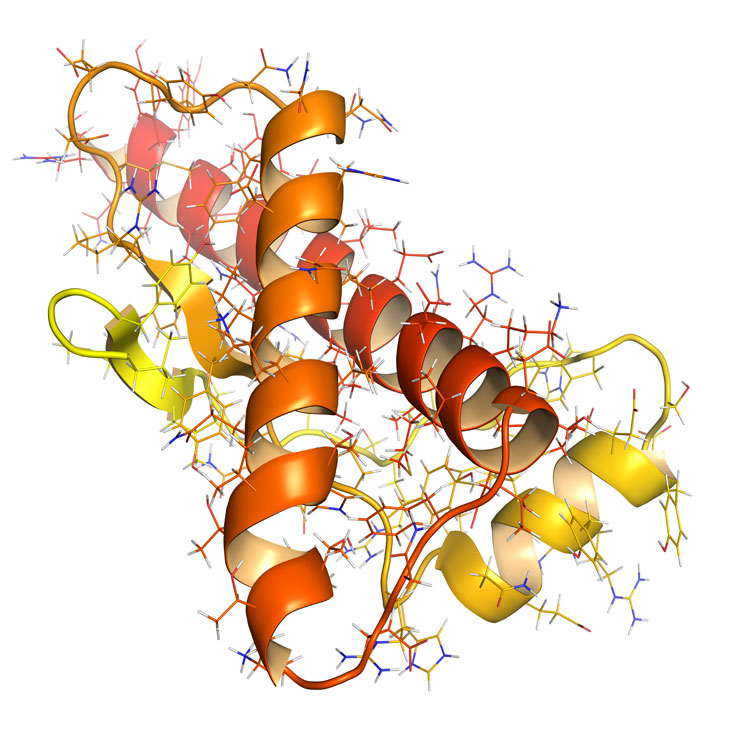
Harvard: Nerve-damaging protein particles called prions have long been known to exist in mammals. Now, in a surprising discovery, investigators from Harvard Medical School report they have found evidence that bacteria can also make prions. Prions—self-propagating clumps of misfolded protein—have been identified as the cause of several rare but universally fatal neurodegenerative conditions, including bovine spongiform encephalopathy, popularly known as mad cow disease. While the most common cause of prion diseases in humans is consuming infected meat, some can be inherited or occur spontaneously.
Only good, independent and reliable information about health from experts.
Showing posts with label prion. Show all posts
Saturday, January 14, 2017
Thursday, June 11, 2015
Genetic mutation blocks prion disease
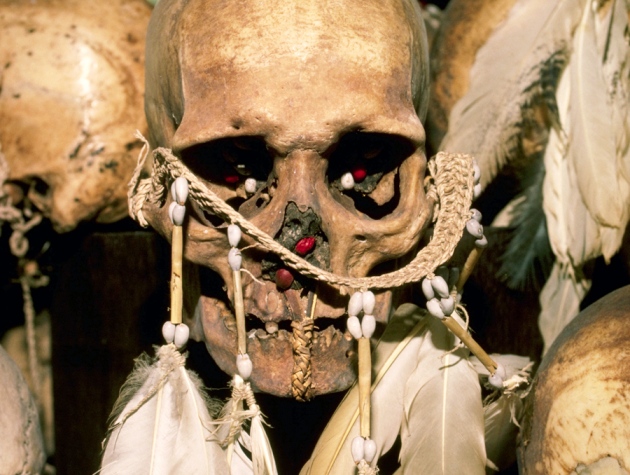
Nature: Scientists who study a rare brain disease that once devastated entire communities in Papua New Guinea have described a genetic variant that appears to stop misfolded proteins known as prions from propagating in the brain1. Kuru was first observed in the mid-twentieth century among the Fore people of Papua New Guinea. At its peak in the late 1950s, the disease killed up to 2% of the group's population each year. Scientists later traced the illness to ritual cannibalism2, in which tribe members ate the brains and nervous systems of their dead. The outbreak probably began when a Fore person consumed body parts from someone who had sporadic Creutzfeldt-Jakob disease (CJD), a prion disease that spontaneously strikes about one person in a million each year.
Tuesday, February 24, 2015
Small Loop in Human Prion Protein Prevents Chronic Wasting Disease
UCSD. US: Chronic wasting disease (CWD) an infectious disease caused by
prions affects North American elk and deer, but has not been observed
in humans. Using a mouse model that expresses an altered form of the
normal human prion protein, researchers at University of California, San
Diego School of Medicine have determined why the human proteins aren’t
corrupted when exposed to the elk prions. Their study, published Feb. 23
in the Journal of Clinical Investigation, identifies a small loop in the human prion protein that confers resistance to chronic wasting disease.
Subscribe to:
Posts (Atom)

