
Showing posts with label parasitology. Show all posts
Showing posts with label parasitology. Show all posts
Wednesday, June 17, 2015
Tropical skin disease survey reveals global hotspots
Monday, June 15, 2015
what bugs can you catch from your pets?

Household pets can host a number of organisms that cause parasitic, bacterial, fungal and viral diseases in humans. These animal-to-human diseases are known as zoonoses. Bites and scratches from pets can lead to diseases such as pasterurellosis and cat-scratch disease; while psittacosis or parrot fever is contracted when humans breathe in aerosolised droplets containing secretions from infected birds. But the most common zoonotic diseases come from parasites and bacteria that are transmitted through the gastrointestinal route – by touching the pet or litter tray and then your mouth. Don’t worry, the risk of catching these diseases can usually be mitigated by washing your hands.
Wednesday, June 10, 2015
Efficacy of Handwashing with Soap and Nail Clipping on Intestinal Parasitic Infections in School-Aged Children

Enlisting mHealth in the Fight Against River Blindness

Monday, May 25, 2015
What is Chagas disease?

Monday, May 11, 2015
Smartphone app used to scan blood for parasites

Wednesday, April 29, 2015
Understanding the body’s response to worms and allergies
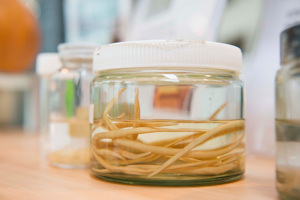 Manchester: Research from The University of Manchester is
bringing scientists a step closer to developing new therapies for
controlling the body’s response to allergies and parasitic worm
infections. In a paper published in Nature Communications, Pr Andrew
MacDonald discovered a new way that immune cells control
inflammation during worm infection or an allergic response like asthma.
It’s important to understand how this type of inflammation is controlled
as it can be very damaging and in some cases lead to long term
conditions.
Manchester: Research from The University of Manchester is
bringing scientists a step closer to developing new therapies for
controlling the body’s response to allergies and parasitic worm
infections. In a paper published in Nature Communications, Pr Andrew
MacDonald discovered a new way that immune cells control
inflammation during worm infection or an allergic response like asthma.
It’s important to understand how this type of inflammation is controlled
as it can be very damaging and in some cases lead to long term
conditions.Wednesday, February 18, 2015
Possible strategy identified to combat leishmaniasis, a major parasitic tropical disease
St. Jude Children’s Research Hospital (US) scientists report results that suggest neutralizing a single protein may aid fight against a parasitic tropical disease that annually sickens more than 1.3 million people worldwide.
Corticosteroids for the treatment of parasitic eosinophilic meningitis
Cochrane: Do corticosteroids reduce inflammation in the membrane of the brain caused by parasites? Eosinophilic meningitis is an inflammation of the membrane covering
the brain, the causes of which can be broadly categorised into
infectious and non-infectious. Among the infectious aetiologies, Angiostrongylus cantonensis,
a rat lung worm, is the major cause of eosinophilic meningitis.
Monday, February 9, 2015
Genetic code cracked for worldwide dog and human parasite
This
parasite causes toxocariasis, a disease that mainly affects young
children and is of worldwide socioeconomic importance as hundreds of
millions of humans across the world are potentially exposed to the
roundworm T. canis. It can also be fatal to young puppies,
especially if untreated, when hundreds of worms up to 15 centimeters in
length can pack out the entire small intestines.
Thursday, January 22, 2015
How Malaria-Spreading Mosquitoes Can Tell You’re Home
UC Riverside (US) research shows house-dwelling mosquitoes require minute changes in concentrations of exhaled carbon dioxide to trigger landing on human skin.
Tuesday, January 20, 2015
Bed nets and vaccines: Some combinations may worsen malaria
University of Michigan. US: Combining insecticide-treated bed nets with vaccines and other
control measures may provide the best chance at eliminating malaria,
which killed nearly 600,000 people worldwide in 2013, most of them
African children.
Genetics underpinning antimalarial drug resistance revealed
Sanger Institute. UK: Largest genome-wide study of parasite provides clearest picture yet of genetic changes driving artemisinin resistance. The largest genome-wide association study to date of the malaria parasite Plasmodium falciparum unveils a complex genetic architecture that enables the parasite to develop resistance to our most effective antimalarial drug, artemisinin. The results could help to improve early detection of emerging artemisinin resistance.
Scientists Identify Important Mechanism Involved in Production of Mosquito Eggs
UC Riverside (US) research on mosquitoes could lead to innovative strategies for controlling mosquito populations. Diseases transmitted by mosquitoes have contributed to the death and
suffering of millions throughout human history, earning the mosquito the
title as the world’s most dangerous animal.
Friday, January 16, 2015
Century-Old Drug Reverses Autism-like Symptoms in Fragile X Mouse Model
UCSD. US: Autism spectrum disorders (ASD) affect 1 to 2 percent of children in
the United States. Hundreds of genetic and environmental factors have
been shown to increase the risk of ASD. Researchers at UC San Diego
School of Medicine previously reported that a drug used for almost a
century to treat trypanosomiasis, or sleeping sickness, reversed
environmental autism-like symptoms in mice.
Trypanosomiasis

The tsetse fly bite erupts into a red sore and within a few weeks the person can experience fever, swollen lymph glands, aching muscles and joints, headaches and irritability.
In advanced stages, the disease attacks the central nervous system, causing changes in personality, alteration of the biological clock (the circadian rhythm), confusion, slurred speech, seizures, and difficulty walking and talking. These problems can develop over many years in the Gambiense form and some months in the Rhodesiense form; if not treated, the person will die.
Control of sleeping sickness is based on reduction of the reservoirs of infection by early diagnosis and control of tsetse flies.
Tuesday, January 13, 2015
New strains of parasites identified
McGill. Canada: Research on whipworms has implications for human health and animal conservation. About 600 million people around the world live with whipworms. Most are
children in the developing world, whose physical and mental development
is stunted by these gastrointestinal parasites.
Monday, January 12, 2015
Veterinary medications should not be used for treating head lice in children
ANSES. France: Following a recent report of the use of veterinary
medications to treat head lice in children, ANSES wishes to emphasise
that antiparasitic, insecticide and acaracide treatments intended for
pets should never be used on humans, especially children.
Head lice

Head lice infestation, or pediculosis, is spread most commonly by close person-to-person contact. Dogs, cats, and other pets do not play a role in the transmission of human lice.
Both over-the-counter and prescription medications are available for treatment of head lice infestations.
Friday, January 9, 2015
Study Links Common Human Protein to Adverse Parasitic Worm Infections
UC Riverside-led research could lead to new
therapies for parasitic worm infections currently afflicting an
estimated two billion people worldwide.
Subscribe to:
Posts (Atom)