Showing posts with label virtual reality. Show all posts

Tuesday, February 28, 2017

Virtual-reality system for the elderly wins health care prize

MIT: Virtual reality is quickly gaining steam in the gaming industry. But an MIT startup is now aiming the technology at a different demographic, putting it to use as a health care tool for the elderly. At last night’s MIT Sloan Healthcare Innovations Prize pitch competition, Rendever earned the $25,000 grand prize for creating a virtual-reality platform that gives residents in assisted-living facilities the chance to explore the world virtually. The platform also provides cognitive therapy and tracks movement data to aid in early diagnosis of dementia.

Tuesday, February 21, 2017

New treatment helps children with autism overcome fears
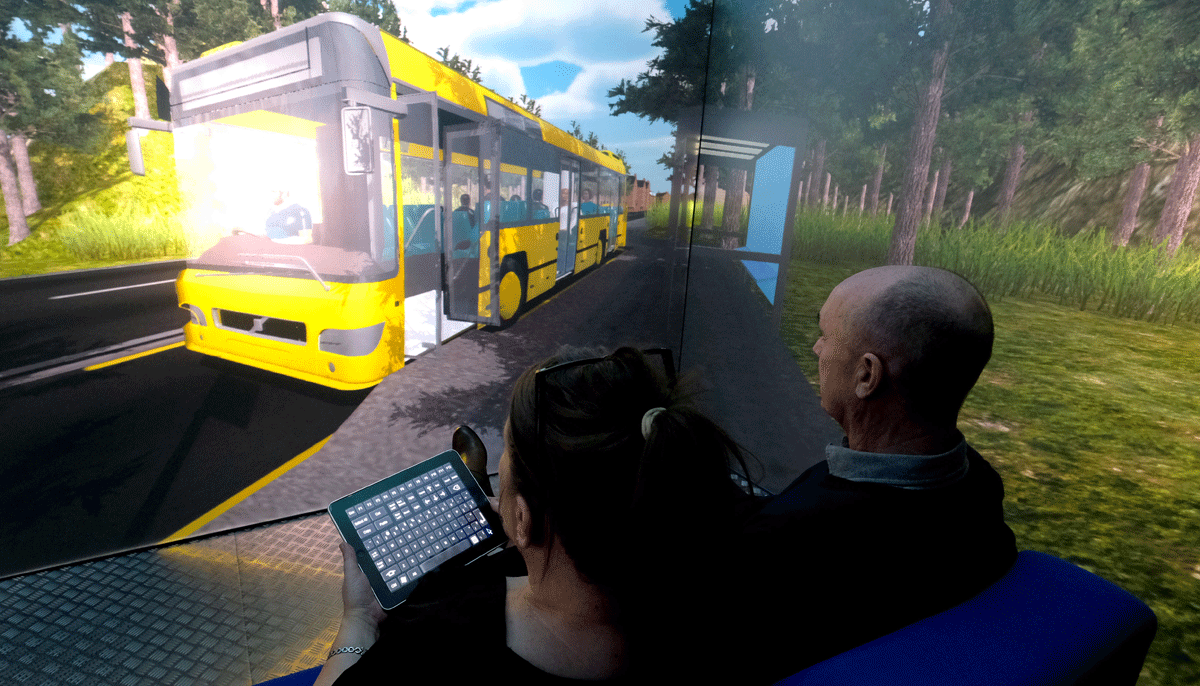
Newcastle: The Blue Room, a unique immersive virtual reality which helps children with autism overcome their fears and phobias is being offered on the NHS. Following research showing that the Blue Room can help, the first patients have been referred for treatment. In 2014, the Newcastle University team reported in PLOS ONE, how eight out of nine children treated in the Blue Room were able to tackle the situation they feared and some were found to have completely overcome their phobias, even a year later. Now the immersive reality treatment is available as a NHS service, where there is funding by the children’s Clinical Commissioning Group, and each child referred will receive four sessions at the facility in County Durham.

Sunday, January 22, 2017

Medical Students Use Virtual Reality To View Tissue
Yale: Virtual reality can take you to Mars, the North Pole, even back in time. But how about inside the kidney of a mouse? Students in Medical Device Design & Innovation (MENG/BENG 404) have developed a virtual reality platform that allows for a closer examination of 3D images from kidney biopsies. The project became a part of the course when co-teachers Dr. Joseph Zinter and Dr. Alyssa Siefert spoke with Dr. Richard Torres, part of a team of researchers who developed a 3D-imaging technique that allowed them to get a better look at the tissue of patients with kidney disease. The technique, known as multiphoton microscopy, produces high-resolution 3D images into the kidney and provides a deep view of the organ’s internal structures. Conventional methods provided only superficial images of the organ.

Wednesday, January 4, 2017

2016's Biggest Medical Science Revolutions

VRPennsylvania: In the grand scheme of things, it can seem like progress in science and medicine moves pretty slow. For example, we still aren’t sure what causes premature birth, or why racial disparities exist in certain conditions. And, for all intents and purposes, Alzheimer’s is still a big black box. But in reality, when you put science and medicine under the microscope, you find that a single year can bring big, meaningful gains and exciting advances. So, as we welcome a brand new year, let’s pause to reflect on some of Penn Medicine’s biggest newsmakers from the last 12 months.

Tuesday, November 15, 2016

Why virtual reality won’t replace cadavers in medical school

TheConversation: Virtual reality has been described as a game changer for medical education. Some even predict it will see an end to using cadavers to teach anatomy. It’s a big call but it doesn’t reflect the actual reality of medicine and medical training for a number of reasons. Remember, we have overestimated the role of new technologies in the past. It seems hard to believe now, but in the 1990s we thought Microsoft’s PowerPoint was cutting edge. The fact is no technology or tool can compensate for bad instruction. It is why virtual reality, by itself, is not a game changer for teaching medicine, but it can be a very useful tool if we understand how to use it effectively.

Tuesday, June 9, 2015

Virtual reality, real emotions: a novel analogue for the assessment of risk factors of post-traumatic stress disorder

Frontiers in psychology: Most people are exposed to a violent or life-threatening situation during their lives, but only a minority develops post-traumatic stress disorder (PTSD). Experimental studies are necessary to assess risk factors, such as imagery ability, for the development of PTSD. Up to now the trauma film paradigm (TFP) has functioned as an analogue for PTSD. This paradigm is known to induce involuntary intrusions, a core symptom of PTSD.

Virtual reality helps stroke patients get moving again

Scimex: The Rehabilitation Gaming System (RGS), which uses Microsoft's Kinect camera to generate a virtual body onscreen that reflects the movements of stroke patients, can help them regain full movement of impaired arms, say Spanish researchers. Virtual reality could assist arm rehabilitation in some stroke patients, according to a clinical pilot study published in the open access Journal of NeuroEngineering and Rehabilitation. The researchers found that using virtual reality to increase a patient's confidence in using their paralyzed arm may be critical for recovery.

Monday, May 4, 2015

Virtual supermarket can measure food purchase behaviour

Auckland: A unique new three-dimensional virtual supermarket software tool to measure food purchase behaviour will be able to test the effectiveness of food-related policy changes. The virtual supermarket is designed to enable experimental studies in a supermarket setting without the complexity or costs normally associated with undertaking such research, says it’s creator, Dr Wilma Waterlander from the University of Auckland’s National Institute for Health Innovation. “For example, researchers can use it to test the effect of public health interventions such as a soft drink tax or food labelling, by exposing only part of a study population to increased soft drink prices,” she says.

Thursday, March 26, 2015

Virtual nose may reduce simulator sickness in video games

Purdue: Virtual reality games often cause simulator sickness – inducing vertigo and sometimes nausea - but new research findings point to a potential strategy to ease the affliction. Various physiological systems govern the onset of simulator sickness: a person's overall sense of touch and position, or the somatosensory system; liquid-filled tubes in the ear called the vestibular system; and the oculumotor system, or muscles that control eye movements.

Friday, March 20, 2015

Neck pain sufferers urged to "Come fly with me"

Queensland: Fun virtual-reality goggles that allow patients to fly a digitised plane are being used to combat neck pain. Dr Julia Treleaven said the trial of physiotherapist Dr Hilla Bahat’s device for assessing and treating neck movement control was both novel and exciting.

Thursday, March 12, 2015

Virtual reality riders can rely only on their brain

Nottingham: Thrill seekers brave enough to test drive a new mixed-reality ride will only have themselves to blame if they find it a little too wild for their taste. For the new attraction uses research from The University of Nottingham to adapt the experience to the rider’s own brain activity. The new ride — Neurosis — has been developed by technology-inspired performance artist Professor Brendan Walker, a principal research fellow in the University’s School of Computer Science, dubbed the ‘world’s only Thrill Engineer’.