Showing posts with label genetics. Show all posts
Showing posts with label genetics. Show all posts
Friday, March 19, 2021
Strategies to accelerate diagnosis and treatment of rare cardiovascular diseases
Sunday, March 14, 2021
Age of father affects offspring through an epigenetic mechanism

Saturday, June 30, 2018
Extreme stress in childhood is toxic to your DNA
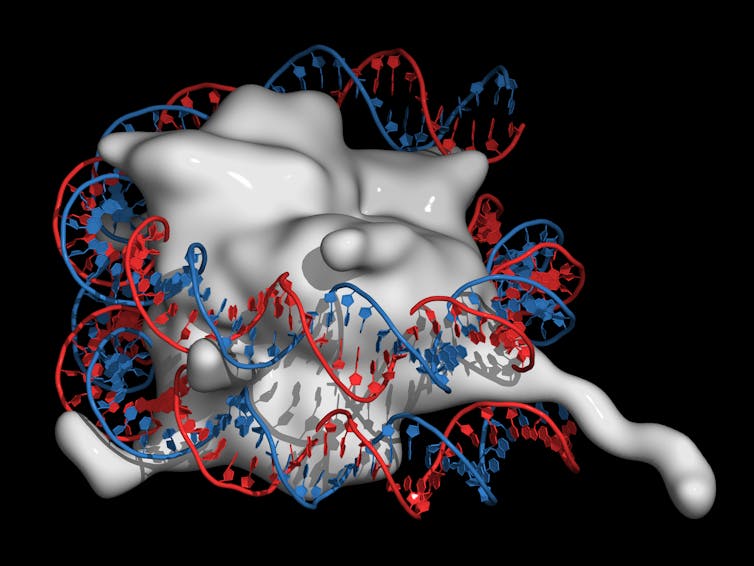 TheConversation: The real danger of separating children from parents is not the
psychological stress – it’s the biological time bomb. The screaming and
crying, the anguish and desolation is gut-wrenching. But the fallout
pales in comparison to the less visible long-term effects that are more
sinister and dangerous. Separating children from their parents, in a strange land, among
strangers, causes the most extreme life stress a child can experience.
And it causes profound and irreversible changes in how their DNA is
packaged and which genes are turned on and off in the cells of the body,
in organs like the pancreas, the lungs, heart and brain – leading to
lifelong changes in its structure and function.
TheConversation: The real danger of separating children from parents is not the
psychological stress – it’s the biological time bomb. The screaming and
crying, the anguish and desolation is gut-wrenching. But the fallout
pales in comparison to the less visible long-term effects that are more
sinister and dangerous. Separating children from their parents, in a strange land, among
strangers, causes the most extreme life stress a child can experience.
And it causes profound and irreversible changes in how their DNA is
packaged and which genes are turned on and off in the cells of the body,
in organs like the pancreas, the lungs, heart and brain – leading to
lifelong changes in its structure and function.
Wednesday, June 27, 2018
Hundreds of smart genes found

Sunday, May 13, 2018
Genetic analysis can improve depression therapy
.jpg/1024px-Depressed_(4649749639).jpg) Karolinska Institute: The failure of drugs such as SSRIs, used to treat
depression, can be a result of genetic variations in patients.
Variations within the gene that encodes the CYP2C19 enzyme results in
extreme differences in the levels of escitalopram achieved in patients,
according to a new study published in The American Journal of Psychiatry.
Prescribing the dose of escitalopram based on a patient’s specific
genetic constitution would greatly improve therapeutic outcomes. The
study was conducted at Karolinska Institutet in Sweden in association
with researchers at Diakonhjemmet Hospital in Oslo, Norway.
Karolinska Institute: The failure of drugs such as SSRIs, used to treat
depression, can be a result of genetic variations in patients.
Variations within the gene that encodes the CYP2C19 enzyme results in
extreme differences in the levels of escitalopram achieved in patients,
according to a new study published in The American Journal of Psychiatry.
Prescribing the dose of escitalopram based on a patient’s specific
genetic constitution would greatly improve therapeutic outcomes. The
study was conducted at Karolinska Institutet in Sweden in association
with researchers at Diakonhjemmet Hospital in Oslo, Norway.Saturday, April 28, 2018
The genetics behind being Not Like Daddy
EMBO: A common strategy to create high-yielding plants is hybrid breeding –
crossing two different inbred lines to obtain characteristics superior
to each parent. However, getting the inbred lines in the first place can
be a hassle. Inbred lines consist of genetically uniform individuals
and are created through numerous generations of self-crossing. In maize,
the use of so-called “haploid inducers” provides a short cut to this
cumbersome procedure, allowing to produce inbred lines in just one
generation. A study by Laurine Gilles and colleagues, published today in
The EMBO Journal, sheds light on the genetics behind haploid
induction. “Knowing the molecular identity of haploid induction
represents an important breakthrough to fully understand the
fertilization process in plants, and hopefully will allow to translate
this breeding tool to other species,” said the study’s senior author Dr.
Thomas Widiez, an INRA (Institut National de la Recherche Agronomique)
researcher at the École Normale Supérieure in Lyon, France.
Wednesday, April 18, 2018
Hitting the Genetic Jackpot. Exceptional aging is a rarity.

Wednesday, March 14, 2018
How genes get messed up in disease
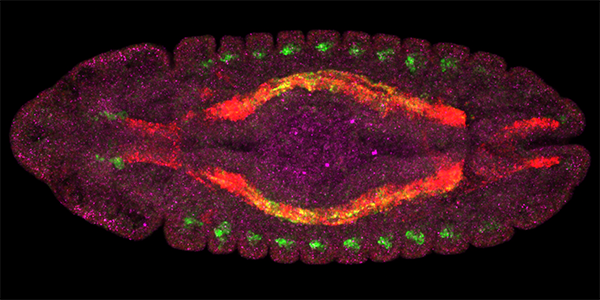
Adelman’s interest, however, lies in how otherwise normal genes are expressed—turned on or off—in the wrong amounts, at the wrong times or in the wrong tissues.
Tuesday, April 25, 2017
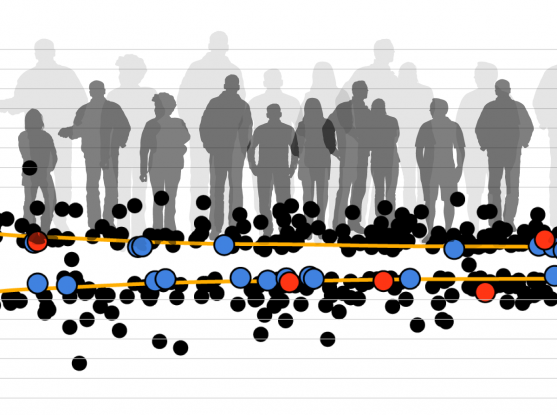
GIANT study finds rare, but influential, genetic changes related to height
Tuesday, March 7, 2017
The National Institutes of Health plans to expand its Encyclopedia of DNA Elements

Thursday, February 16, 2017
The Mysterious 98%: Scientists Look to Shine Light on Our Dark Genome
Super-resolution system reveals mechanics of tiny ‘DNA walker’
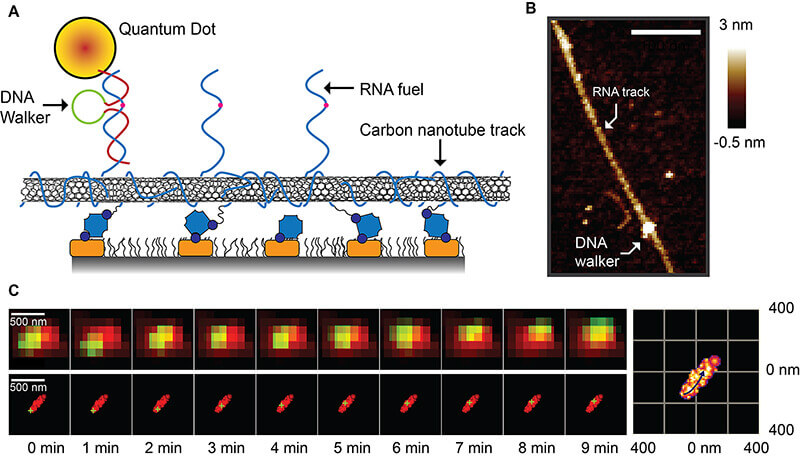 Purdue: Researchers have introduced a new type of
“super-resolution” microscopy and used it to discover the precise
walking mechanism behind tiny structures made of DNA that could find
biomedical and industrial applications. The researchers also demonstrated how the “DNA
walker” is able to release an anticancer drug, representing a potential
new biomedical technology, said Jong Hyun Choi, an associate professor of mechanical engineering at Purdue University.
Purdue: Researchers have introduced a new type of
“super-resolution” microscopy and used it to discover the precise
walking mechanism behind tiny structures made of DNA that could find
biomedical and industrial applications. The researchers also demonstrated how the “DNA
walker” is able to release an anticancer drug, representing a potential
new biomedical technology, said Jong Hyun Choi, an associate professor of mechanical engineering at Purdue University.Wednesday, February 15, 2017
Diabetes in your DNA? Scientists zero in on the genetic signature of risk
Sunday, January 22, 2017
Genomic profiling can guide treatment of pediatric brain tumors

Wednesday, January 4, 2017
2016's Biggest Medical Science Revolutions
 Pennsylvania: In the grand scheme of things, it can seem like progress in science
and medicine moves pretty slow. For example, we still aren’t sure what
causes premature birth, or why racial disparities exist in certain
conditions. And, for all intents and purposes, Alzheimer’s is still a
big black box. But in reality, when you put science and medicine under
the microscope, you find that a single year can bring big, meaningful
gains and exciting advances. So, as we welcome a brand new year, let’s pause to reflect on some of
Penn Medicine’s biggest newsmakers from the last 12 months.
Pennsylvania: In the grand scheme of things, it can seem like progress in science
and medicine moves pretty slow. For example, we still aren’t sure what
causes premature birth, or why racial disparities exist in certain
conditions. And, for all intents and purposes, Alzheimer’s is still a
big black box. But in reality, when you put science and medicine under
the microscope, you find that a single year can bring big, meaningful
gains and exciting advances. So, as we welcome a brand new year, let’s pause to reflect on some of
Penn Medicine’s biggest newsmakers from the last 12 months.Yale team discovers way to pinpoint ‘words’ in genetic book of life

Tuesday, January 3, 2017
Genes that make mice youthful

The authors link the rejuvenation to epigenetic remodelling — changes in the chemical marks on DNA that do not alter its sequence but influence gene expression.
Friday, December 23, 2016
Many Early Onset Colon Cancers are Caused by Genetic Mutations Passed Through Families

Can a cancer drug treat a rare cardiac disease?
 Yale: About 1 in 2,500 babies born in the United States each year have
Noonan syndrome (NS), a genetic disorder that results in severe heart
defects, among other symptoms. A mutation in a gene called PTPN11 which
encodes for the tyrosine phosphatase Shp2, causes the condition. To
identify a potential target for therapy, a team of Yale researchers
studied mouse models of the disease.
Yale: About 1 in 2,500 babies born in the United States each year have
Noonan syndrome (NS), a genetic disorder that results in severe heart
defects, among other symptoms. A mutation in a gene called PTPN11 which
encodes for the tyrosine phosphatase Shp2, causes the condition. To
identify a potential target for therapy, a team of Yale researchers
studied mouse models of the disease.Friday, December 16, 2016
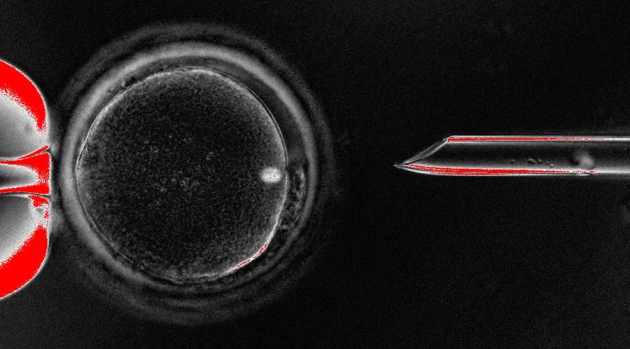
Historic decision allows UK researchers to trial ‘three person’ babies
Subscribe to:
Posts (Atom)