
INSERM: An international study led by scientists from Inserm and
Paris Diderot University (France), the University of Chicago (USA), the
National Heart and Lung Institute (UK) and the University of Colorado Anschutz Medical Campus (USA)
together with researchers of the Trans-National Asthma Genetics
Consortium (TAGC) has discovered five new regions of the genome that
increase the risk of asthma. This study is published online in Nature
Genetics on 22 December 2017.
Only good, independent and reliable information about health from experts.
Showing posts with label asthma. Show all posts
Wednesday, May 16, 2018
A new therapeutic target in allergic asthma
INSERM: Vincent Sauzeau, Inserm researcher and his team located at the Nantes Thorax Institute
(Inserm, CNRS, University of Nantes, Nantes University Hospital) have
recently discovered the major role played by the Rac1 protein in the
development of bronchial hyperresponsiveness associated with allergic
asthma. Researchers will use this new therapeutic target to reduce
bronchoconstriction and pulmonary inflammation in patients. This article
has been published in The Journal of Allergy and Clinical Immunology.
Monday, May 14, 2018
How allergens trigger asthma attacks
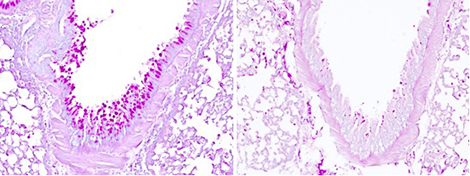
CNRS: A team of Inserm and CNRS researchers from the
Institute of Pharmacology and Structural Biology—or IPBS (CNRS /
Université Toulouse III—Paul Sabatier)—have identified a protein that
acts like a sensor detecting various allergens in the respiratory tract
responsible for asthma attacks. Their study, codirected by Corinne
Cayrol and Jean-Philippe Girard, is published in Nature Immunology on 19 March 2018. These scientists' work offers hope for breakthroughs in the treatment of allergic diseases. What do mold, pollen, and cockroaches have in common? Though
they correspond to three different kingdoms of life, they can all cause
asthma attacks in people sensitive to them. And all of them, despite
their very different compositions, contain enzymes called proteases. Saturday, May 12, 2018
Having a Cat Can Benefit New-borns
Copenhagen: The gene types that normally double the risk of
asthma are neutralised when families with new-borns have a cat. This is
the result of a study from the Danish Pediatric Asthma Center conducted
by researchers at the University of Copenhagen, Herlev-Gentofte Hospital
and Næstved Hospital. The study has been published in the Journal of
Allergy and Clinical Immunology.
Wednesday, March 8, 2017
Children with asthma are more likely to become obese, USC study finds
USC: New USC research finds that children with asthma are 51 percent more
likely to become obese over the next decade compared to kids who did not
have respiratory condition.The study, published on Jan. 20 in the American Journal of Respiratory and Critical Care Medicine, also indicated that children who used asthma inhalers when they had an attack were 43 percent less likely to become obese. “Early diagnosis and treatment of asthma may help prevent the childhood obesity epidemic,” said Frank Gilliland,
senior author of the study and a professor of preventive medicine at
the Keck School of Medicine of USC. “Part of the problem may be a
vicious cycle where asthma and obesity negatively affect each other. Our
results also suggest that asthma inhalers may help prevent obesity in
children. Although this observation warrants further study, it is
interesting that the correlation exists irrespective of physical
activity and other asthma medication use.”
Wednesday, January 25, 2017
Fish oil during pregnancy reduces risk of child asthma
Copenhagen: Supplementing your diet with fish oil during pregnancy may benefit your
unborn child. A new study from the University of Copenhagen shows that
children whose mothers consumed fish oil during the last trimester of
pregnancy have a significantly reduced risk of developing asthma. Children are at much lower risk of developing asthma if their mothers
consumed fish oil during pregnancy. This is the finding of a new study
conducted by Copenhagen Prospective Studies on Asthma in Childhood
(COPSAC) under the Faculty of Health and Medical Sciences at the
University of Copenhagen. The researchers have followed a group of
pregnant women and their children since 2010, and the results are
unequivocal: The number of children suffering from asthma was reduced by
one-third among those whose mothers consumed fish oil during the last
trimester, says Clinical Professor and Head of COPSAC, Hans Bisgaard.
Wednesday, December 21, 2016
Processed meats may make asthma worse
Scimex: A high dietary intake of cured and processed meats, such as ham and
salami, is linked to worsening asthma symptoms, reveals research
published online in the journal Thorax. Four or more weekly servings seem to have the greatest impact on symptoms, the findings suggest. Cured and processed meat is rich in nitrites, which may have a role in airway inflammation—a typical feature of asthma.
Tuesday, June 30, 2015
Sport can help with your asthma if you learn how to listen to your body
TheConversation: It’s Wimbledon season again and many will be wondering whether champions Petra Kvitova and Novak Djokovic will repeat their 2014 winning performances; it’s worth remembering that both are asthmatic. There are more than 230m people in the world with asthma and attacks result in a hospitalisation every seven minutes. Sport can be a double-edged sword for people with asthma and even in the best of weather exercise can act as a stimulus, narrowing the airways and making it difficult to breathe.
Wednesday, June 24, 2015
Mouse mum's high-fibre diet may keep her pups asthma-free
Scimex: An Australian-led study has discovered the mechanism behind why a
high-fibre diet helps to protect a mouse mother's pups against asthma.
The researchers found that the compounds that come from digested fibre
can actually suppress certain genes involved in immune responses - which
are linked to human asthma - in her offspring, making them less
susceptible to immune-related airway problems. A mechanism by which a high-fibre diet during pregnancy in mice can
increase the chances of offspring growing up asthma-free is reported in
Nature Communications this week. The study shows a relationship between
fibre metabolites from the female mouse's diet and the epigenetic
suppression of certain allergic immune responses in her offspring.
Thursday, June 11, 2015
Asthmatic? Aerobic exercise can help!
Scimex: Adding a twice weekly aerobic exercise program to an asthmatic's existing treatment has been shown to improve their quality of life and decrease the severity of symptoms, say Brazilian scientists. The results were most noticeable in those with poor symptom control, and the exercise program significantly increased the number of symptom free days. It should be routinely added to drug treatment of moderate to severe asthma, suggest researchers. Aerobic exercise seems to curb the severity of asthma symptoms and improves quality of life, finds a small study published online in the journal Thorax. It should be routinely added to the drug treatment of moderate to severe asthma, suggest the researchers, who point out that people with asthma often avoid exercise for fear of triggering symptoms.
Monday, June 1, 2015
Disease management programmes for adults with asthma improve outcomes
Cochrane: Encouraging evidence indicates that programmes can improve quality of life and severity of asthma, and lung function. Asthma
is a chronic airway disease affecting about 300 million people
worldwide. People with asthma have many symptoms, such as wheezing,
coughing, and shortness of breath. The aim of a chronic disease
management programme for asthma is to go beyond simple patient
education; they encompass a variety of interventions that centre on
patients' needs, focus on helping the patients to manage their illness
themselves, and provide them with information to understand their
illness. Programmes also encourage the better co-ordination of health
service professionals such as doctors and nurses.
Wednesday, May 27, 2015
Soy Isoflavone Supplement Does Not Improve Symptoms for Patients with Poorly Controlled Asthma
JAMA: Although some data have suggested that supplementation with soy
isoflavone may be an effective treatment for patients with poor asthma
control, a randomized trial that included nearly 400 children and adults
found that use of the supplement did not result in improved lung
function or clinical outcomes, including asthma symptoms and episodes of
poor asthma control, according to a study in the May 26 issue of JAMA. Soy isoflavones are plant (soybean) derived chemicals that have anti-oxidant effects.
Thursday, May 21, 2015
Links between hay fever, asthma and prostate cancer inconclusive
NHS: "Men with hay fever are more likely to have prostate cancer – but
those with asthma are more likely to survive it," the Daily Mirror
reports. Those were the puzzling and largely inconclusive findings of a
new study looking at these three conditions. Researchers looked at data involving around 50,000 middle-aged men and followed them up for 25 years, looking at whether asthma or hay fever at study start were associated with diagnoses of prostate cancer or fatal prostate cancer during follow-up. The findings weren't as conclusive as the headline suggests.
Wednesday, May 20, 2015
Diet linked to asthma severity in pregnancy
Adelaide: A University of Adelaide study has found asthmatic women who eat a
high-fat, high-sugar diet are more likely to have uncontrolled asthma
while pregnant. Dr Jessica Grieger from the University’s Robinson Research Institute says diet is important for all women planning to start a family but it’s even more essential for women with asthma. “Asthma
is a common chronic condition, affecting 8-13% of the population, but
many people don’t realise that asthma during pregnancy can be very
dangerous for both the mother and the baby – even more so if the asthma
is poorly managed,” says Dr Grieger.
Monday, May 18, 2015
Wednesday, May 13, 2015
Asthma patients pay nearly twice as much more per year for inhalers.

Harvard: In 2008 the FDA banned a class of asthma inhalers that contained
ozone-depleting propellants. These banned inhalers were available in
both generic and branded versions, and the ban left people with
asthma-only branded inhalers only one option: inhalers utilizing a
recently-developed propellant technology.
A new study has found that the out of pocket costs of the average asthma patient with private insurance in the country nearly doubled following the FDA ban. The research, led by Anupam Jena, measures the financial and health impact of the ban, which critics said would have a minimal environmental benefit. The findings were published online today in JAMA Internal Medicine.
Monday, May 4, 2015
Progress towards a new asthma treatment
University of Queensland researchers are developing a new asthma
treatment that targets the underlying cause of asthma, rather than just
the symptoms. Asthma affects one in 10 Australians and is the most common chronic respiratory disease in the developed world.
About 10 per cent of asthma sufferers do not respond to conventional medications due to the severity of their condition. UQ Pr Mark Smythe said the research team was developing a new drug designed to offer patients a safer and more effective treatment.
Friday, May 1, 2015
New asthma treatment within five years?
NHS: "Asthma cure could be in reach," The Independent reports. Researchers
have discovered that protein molecules called calcium-sensing receptors
play a pivotal role in asthma. Drugs known to block these proteins already exist. In asthma, the immune system mistakes harmless substances, such as
pollen, as a threat. White blood cells and inflammatory proteins then
collect in the airways. The inflammation causes the airways to
constrict, leading to the breathing difficulties associated with asthma. This study found these proteins stimulate calcium-sensing receptors, which leads to further inflammation of the airways.
Saturday, February 28, 2015
Interventions for preventing or reducing respiratory tract infections and asthma symptoms in mould-damaged buildings
Cochrane: Our
aim was to find out if repairing buildings damaged by dampness and
mould reduces or prevents respiratory symptoms and asthma.
Tuesday, February 24, 2015
Investigational drug can reduce asthma flareups
Washington University. US: An investigational drug appears to cut the risk of severe asthma attacks
in half for patients who have difficulty controlling the disorder with
standard medications, according to results from two multicenter clinical
trials.
Subscribe to:
Posts (Atom)


