
Showing posts with label antibiotic resistance. Show all posts
Showing posts with label antibiotic resistance. Show all posts
Wednesday, April 26, 2017
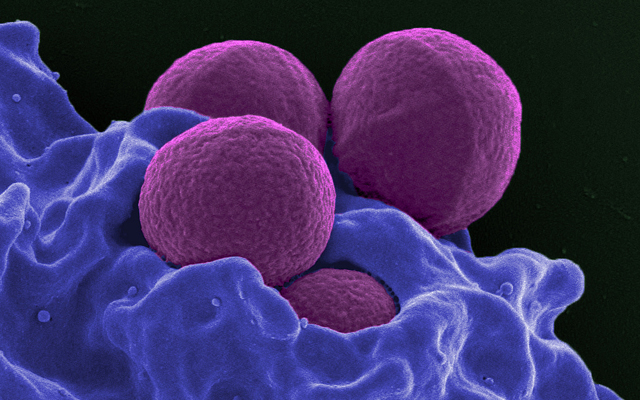
Fighting MRSA with new membrane-busting compound
Wednesday, March 1, 2017
Antibiotic Effective Against Drug-Resistant Bacteria in Pediatric Skin Infections
Wednesday, February 22, 2017
Woman dies from infection resistant to all antibiotics available in the US
London: A woman from the USA has died of infection from a strain of Klebsiella pneumonia that was resistant to all 26 available antibiotics in the United States, as reported by the US Centers for Disease Control and Prevention (CDC).
The woman returned to the state of Nevada in August with an infection in her hip, following an extended period in India. It is believed she picked up the multi-resistant strain through a wound infecting her bone and hip, whilst in India where she was previously hospitalised for a broken leg. Typically found in the gut, K. pneumoniae does not usually cause harm, but in this case the bone infection caused severe inflammation, which ultimately caused the woman to die from septic shock.
Doctors found that none of the 26 antibiotics available in the US were able to treat the infection, including carbapenems and colistin, often referred to as the ‘drugs of last resort.’
Thursday, November 10, 2016
Research on new, rapid screening test identifies potential therapies against drug-resistant bacteria
Researchers at the National Institutes of Health’s National Center
for Advancing Translational Sciences (NCATS), Clinical Center and
National Institute of Allergy and Infectious Diseases (NIAID) have
created a new way to identify drugs and drug combinations that may
potentially be useful in combating infections that are resistant to many
different antibiotics. They developed an assay (test) to rapidly screen
thousands of drugs to determine how effective they were against a
variety of types of resistant bacteria.
The screening method provides a potential new approach to repurpose known drugs and compounds to potentially help deal with powerful, hospital-borne infections, as well as emerging infectious diseases.
NCATS scientist Wei Zheng, Ph.D., and NIH colleagues Peter Williamson, M.D., Ph.D., of NIAID, and Karen Frank, M.D., Ph.D. of the Clinical Center, used the test to screen approximately 4,000 approved drugs and other biologically active compounds, identifying 25 that suppressed the growth of two drug-resistant strains of Klebsiella pneumoniae that have become resistant to most major types of antibiotics. Drug-resistant Klebsiella has been a source of fatal infections in many hospitals across the country.
The researchers also used the screening test to gauge the effectiveness of combinations of drugs against antibiotic-resistant bacteria in this study. They found three different three-drug combinations that were effective against 10 common strains of multi-drug-resistant bacteria.
The results were published Nov. 9, 2016, in the journal Emerging Microbes & Infections (link is external).
 NIH: The new screening test applies high-throughput screening technology
to examine thousands of drugs and compounds that inhibit bacterial
growth. The 25 newly identified drugs and compounds consisted of 11 U.S.
Food and Drug Administration-approved drugs, and 14 drugs still under
investigation. They include antibiotics, antifungals, antiseptics, and
an antiviral, antimalarial and anticancer drug/compound. “The results are very promising, and we think that the test can
eventually help repurpose approved drugs and other compounds and find
clinically relevant drug combinations that can be approved for to use in
different ways that we have never used before,” Zheng said. “We’re
hoping this approach will lead to approvable, effective ways to combat
dangerous infections by drug-resistant bacteria.”
The screening method provides a potential new approach to repurpose known drugs and compounds to potentially help deal with powerful, hospital-borne infections, as well as emerging infectious diseases.
NCATS scientist Wei Zheng, Ph.D., and NIH colleagues Peter Williamson, M.D., Ph.D., of NIAID, and Karen Frank, M.D., Ph.D. of the Clinical Center, used the test to screen approximately 4,000 approved drugs and other biologically active compounds, identifying 25 that suppressed the growth of two drug-resistant strains of Klebsiella pneumoniae that have become resistant to most major types of antibiotics. Drug-resistant Klebsiella has been a source of fatal infections in many hospitals across the country.
The researchers also used the screening test to gauge the effectiveness of combinations of drugs against antibiotic-resistant bacteria in this study. They found three different three-drug combinations that were effective against 10 common strains of multi-drug-resistant bacteria.
The results were published Nov. 9, 2016, in the journal Emerging Microbes & Infections (link is external).
Monday, June 29, 2015
Restricting antibiotics could help superbugs

Thursday, June 25, 2015
Researchers develop a new means of killing harmful bacteria

Tuesday, June 23, 2015
Scientists map superbug genome paving way for new treatments and prevention
The study is the largest ever genetically-decoded collection of this
bacterial pathogen and gives scientists access to valuable data to stay
ahead of KP evolution, as fears grow about the emergence of strains
that are both highly infectious and antibiotic-resistant.

Wednesday, June 17, 2015
What is KPC and should I be worried about these superbugs?

Tuesday, June 16, 2015
Common Antibiotic Azithromycin May Be the Answer to Many Multidrug-Resistant Bacterial Infections
 UCSD: Long ignored as a treatment
option for certain serious bacterial infections, azithromycin proves
strikingly effective in new lab and animal tests.Contrary to current medical dogma, researchers at University of
California, San Diego School of Medicine and Skaggs School of Pharmacy
and Pharmaceutical Sciences report that the common antibiotic
azithromycin kills many multidrug-resistant bacteria very effectively —
when tested under conditions that closely resemble the human body and
its natural antimicrobial factors. The researchers believe the finding,
published June 10 by EBioMedicine, could prompt an immediate review of the current standard of care for patients with certain so-called “superbug” infections.
Thursday, June 11, 2015
New system to detect patients’ antibiotic resistance to take just 30 mins
 London: A new device being developed by medical experts will
transform the time it takes to detect antibiotic resistance in patients
from several days to just half an hour. The development will allow doctors to effectively treat patients with
infections known to have high levels of antibiotic drug resistance,
which has been described as one of the greatest health threats to human
health.
Antibiotic resistance is a huge challenge to current medical
practices, which rely heavily on the use of antibiotics. Bacteria can
become resistant to antibiotics in a number of ways through mutations of
their own genes or by “ingesting” new resistant genes.
Friday, June 5, 2015
Finding new ways to save lives by killing antibiotic-resistant bacteria

Monday, June 1, 2015
New chip makes testing for antibiotic-resistant bacteria faster, easier

Tuesday, May 19, 2015
Virus vs. superbug! FIGHT!

Tuesday, April 14, 2015
Deadly superbugs cross borders
Friday, April 10, 2015
Multidrug-resistant Shigellosis Spreading in the United States

Wednesday, March 25, 2015
Herbicides can cause bacteria to become resistant

Wednesday, March 4, 2015
European collaboration to tackle antibiotic resistance
Liverpool University. UK: The University of Liverpool and the Royal Liverpool University
Hospital are part of a large European and pharmaceutical partnership to
develop new antibiotic treatments. The Combatting Bacterial Resistance in Europe – Molecules Against
Gram-Negative Infections (COMBACTE-MAGNET), project is part of the
Innovative Medicines Initiative (IMI), bringing together 33 European
academic partners and five pharmaceuticals in research activities to
prevent and treat infections that have become resistant to antibiotics.
Tuesday, March 3, 2015
New insight into antibiotic resistance strengthens call for increased focus on research
Birmingham University. UK: A team of scientists led by the University of Birmingham have
identified a new mechanism of antibiotic resistance in bacterial cells
which could help us in understanding, and developing solutions to, the
growing problem of antibiotic resistance.
Subscribe to:
Posts (Atom)