
Showing posts with label bacteria. Show all posts

Wednesday, June 27, 2018

Can you catch germs from a public toilet seat?

TheConversation: We’ve all been there, you’re desperate for the loo, and frantically hunting for a toilet, only to find when you get there, that the seat is covered with “droplets” from the previous user. So what should you do – carry on regardless, or try and squat while you do your business? The world is in many ways a microbial planet and, as its inhabitants, we carry within us our own microscopic rain forests – which we exchange with the environment and each other all the time. Microbes are abundant throughout the human body, including the skin, mouth, eyes, urinary and genital organs and gastrointestinal tracts. Most people carry up to a kilogram of microorganisms. These are largely within the gut and comprise bacteria, fungi, yeast, viruses and sometimes parasites.

Friday, March 3, 2017

The drug-resistant bacteria that pose the greatest health threats
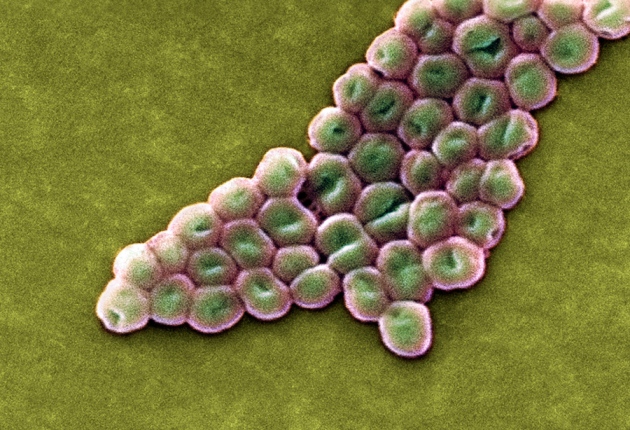
Nature: The World Health Organization (WHO) has for the first time released a list of drug-resistant bacteria that pose the greatest threat to human health — and for which new antibiotics are desperately needed. The agency's aim in listing these 'priority pathogens' is to steer funds towards development of the most crucial antimicrobials. Researchers say the list is a useful reminder of the danger of bacteria that are becoming resistant to antibiotics. The list ranks 12 bacteria or bacterial families and is topped by carbapenem-resistant Acinetobacter baumannii. This obscure bacterium causes a severe infection for which almost no treatments exist, and mainly affects people who are already critically ill. (It is resistant to carbapenem antibiotics, a ‘last resort’ antibiotic used only when all other treatments have failed.) The ranking also includes well-known bacteria, such as those that cause pneumonia and gonorrhoea (see 'Threat list').

Wednesday, March 1, 2017

Transplanting Good Bacteria to Kill Staph
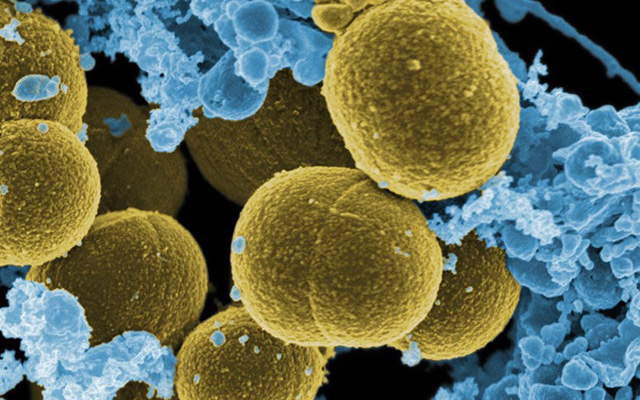
UCSD: Healthy human skin is alive with bacteria. In fact, there are more microorganisms living in and on the human body than there are human cells. Most can live on the human skin without harming the host, but in some people bacteria can negatively alter their health, maybe even become life-threatening. University of California San Diego School of Medicine researchers screened 10,000 colonies of bacteria found on the epidermis to determine how many had antimicrobial properties and at what rate these are found on healthy and non-healthy skin. In a paper published February 22 in Science Translational Medicine, the team reports isolating and growing good bacteria that produce antimicrobial peptides and successfully transplanting it to treat patients with the most common type of eczema, known as atopic dermatitis.

Antibiotic Effective Against Drug-Resistant Bacteria in Pediatric Skin Infections
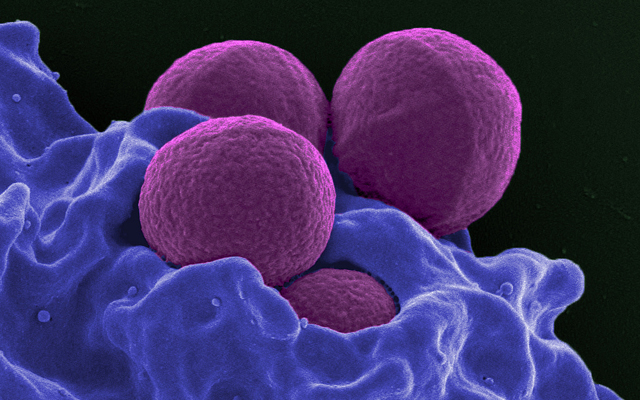
UCSD: Methicillin-resistant Staphylococcus aureus (MRSA) is a bacterial scourge. As its name suggests, MRSA is resistant to most common antibiotics and thus difficult to treat, particularly in children where it commonly causes complicated skin and skin structure infections. In a randomized, controlled clinical trial — the first of its kind — a multi-institution research team reports that daptomycin, part of a new class of antibiotics currently approved only for use in adults, is effective and well-tolerated in children. The findings are published in the March 2017 issue of Pediatrics.

Wednesday, November 16, 2016

Sepsis breakthrough as new drug may prevent disease from becoming life-threatening

Dublin: A potential new treatment option for sepsis has been identified by researchers at the RCSI (Royal College of Surgeons in Ireland)'s Irish Centre for Vascular Biology which has the potential to prevent sepsis from progressing through the body and becoming a life-threatening condition. Cases of sepsis are more common than heart attacks, claims more lives than cancer every year and affects an estimated 30 million people every year worldwide*. With World Sepsis Day taking place today (Tuesday 13th September), this is a major breakthrough in sepsis research and is one that shows promise in battling this global healthcare issue.

Sunday, November 13, 2016

Skin bacteria could protect against disease

Lund: There are more and more examples of the ways in which we can benefit from our bacteria. According to researcher Rolf Lood from Lund University in Sweden, this is true for the skin as well. He has shown that the most common bacteria on human skin secrete a protein which protects us from the reactive oxygen species thought to contribute to several skin diseases. The protein has an equally strong effect on dangerous oxygen species as known antioxidants such as vitamin C and vitamin E.
The skin bacterium is called Propionibacterium acnes.

Friday, April 17, 2015

Western lifestyle may be diminishing our gut diversity

Scimex: An analysis has found that a western lifestyle diminishes the variety in our gut microbiome by limiting the transmission of bacteria between humans. The findings could help develop strategies to tackle the impact of westernisation, and possibly help reintroduce microbes that have been eradicated. Bacteria that naturally reside in the gut are important for health, but recent studies consistently show that a modern lifestyle depletes the gut's collection of microbes. How lifestyle affects the diversity of this gut "microbiome" is unclear, but an analysis of the gut microbiomes of Papua New Guinean and US residents in Cell Reports now suggests that western lifestyle may diminish the variety of bacteria in the gastrointestinal tract by limiting their ability to be transmitted among humans.

Monday, January 5, 2015

Microbiome

American Academy of Microbiology: If you think back to your high school biology class, you probably remember learning about cells. You learned that the human body is made up of many different kinds of cells — skin cells, muscle cells, neurons, and blood cells, for example. You might even remember learning that each of these different kinds of cells develops and functions in accordance with the directions encoded by a single set of genes shared by all human cells and that the full set of these human genes is called the human genome.

Thursday, November 28, 2013

Intestinal microbiota

Escherichia coli

The intestinal microbiota is made up of 100,000 billion bacteria. It is a genuine organ, since the bacterial species that comprise it carry out functions crucial to our health, such as the elimination of substances that are foreign to the body (and potentially toxic), or keeping the pathogens that contaminate us at bay. They also ensure the degradation of ingested food, for better intestinal absorption and optimal metabolism. These millions of bacteria colonise the intestine from birth, and play a key role in the maturation of the immune defences. However, the bacterial species that make up the intestinal microbiota vary from one individual to another, and the presence or absence of one or another bacterial species seems to influence the occurrence of some diseases, or, conversely, may protect us.
Source: INSERM
2013/11/28