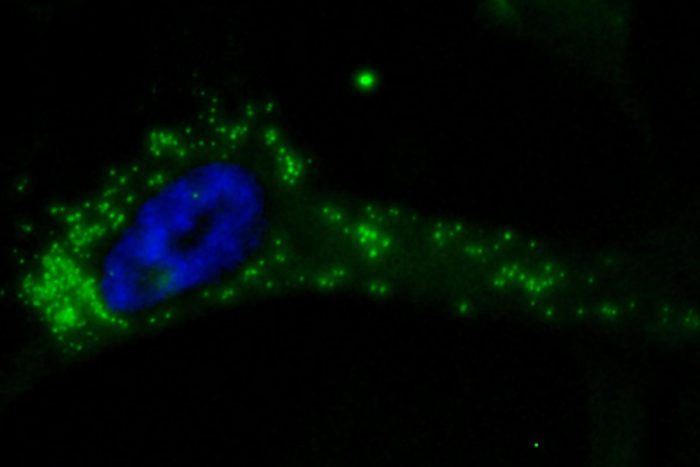
Saint-Louis: Unlike a
healthy cell, a sarcoma cell (above) relies on environmental sources of
arginine, an important protein building block. Remove environmental
arginine and the cell must begin a process called autophagy, or
"self-eating," to survive. A second hit to its survival pathways then
kills the cell, according to a new study at Washington University School
of Medicine in St. Louis. Areas of autophagy are shown in green and the
cell nucleus in blue. For decades, scientists have tried to halt cancer by blocking
nutrients from reaching tumor cells, in essence starving tumor cells of
the fuel needed to grow and proliferate. Such attempts often have
disappointed because cancer cells are nimble, relying on numerous backup
routes to continue growing.