Showing posts with label psoriasis. Show all posts
Showing posts with label psoriasis. Show all posts
Saturday, June 30, 2018
Link between autoimmune disorders and psychosis confirmed in new study
Thursday, March 2, 2017
Autoimmune disease may be linked to heightened dementia risk
BMJ: Autoimmune disease may be linked to a heightened risk of dementia, indicates a large long term study, published in the Journal of Epidemiology & Community Health. Although significant, the extent of the association found was small,
caution the researchers. But the findings are consistent with the theory
that Alzheimer’s disease may have an autoimmune component, they point
out. It has been suggested that autoimmune and inflammatory activity may have a role in the development of dementia.
In a bid to try and quantify this further, the researchers drew on
hospital admissions data, including day cases, from 1998 to 2012 for
England.
Thursday, February 23, 2017
FDA approves new psoriasis drug
FDA: The U.S. Food and Drug Administration today approved Siliq
(brodalumab) to treat adults with moderate-to-severe plaque psoriasis.
Siliq is administered as an injection. Siliq is intended for
patients who are candidates for systemic therapy (treatment using
substances that travel through the bloodstream, after being taken by
mouth or injected) or phototherapy (ultraviolet light treatment) and
have failed to respond, or have stopped responding to other systemic
therapies.
Thursday, June 11, 2015
New drug can clear all psoriasis symptoms

Thursday, January 22, 2015
FDA approves new psoriasis drug Cosentyx
Saturday, April 21, 2012
Psoriasis
Author: Dr Jack Resneck Jr University of California San Francisco 2009-10-16
Psoriasis: A Common, Chronic Skin Disease with Many Distinctive Clinical Forms
Introduction
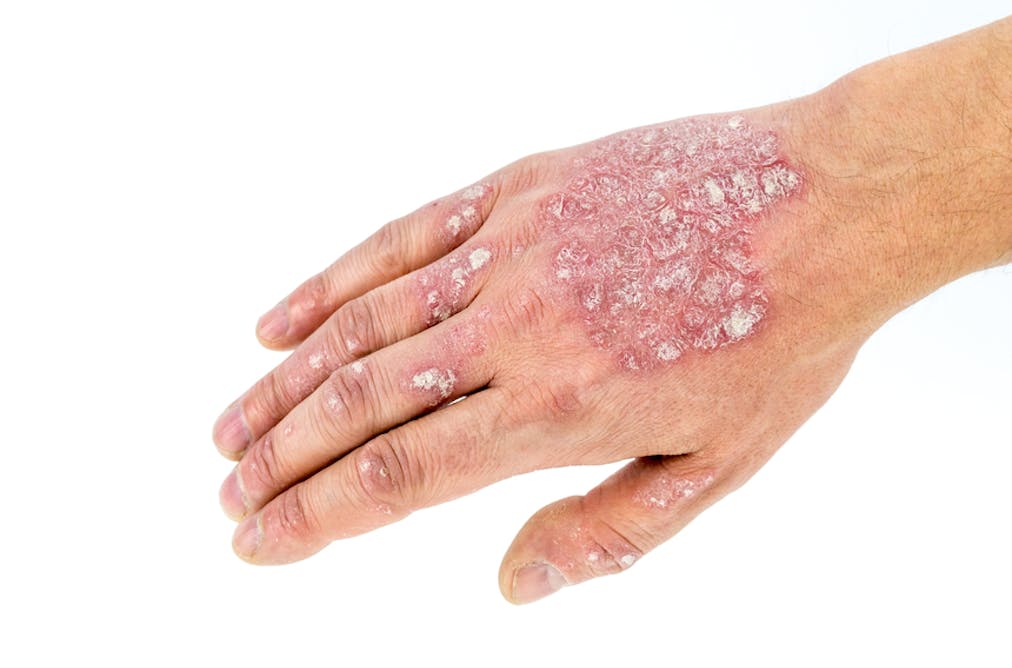
Psoriasis is a common, chronic skin disorder present in about 2-3% of the world’s population. The most typical form is characterized by round, red skin lesions covered by silvery white scales, most commonly occurring on the knees, elbows, and scalp. There are many distinctive clinical forms of psoriasis, and the severity of the disease varies greatly from patient to patient. The course is usually chronic, with intermittent remissions. Descriptions of patients with psoriasis date back over 2,400 years, at which time the disease was confused with leprosy. Psoriasis is rarely life-threatening, but can profoundly impair the quality of life of affected patients.
Psoriasis: A Common, Chronic Skin Disease with Many Distinctive Clinical Forms
Introduction
Psoriasis is a common, chronic skin disorder present in about 2-3% of the world’s population. The most typical form is characterized by round, red skin lesions covered by silvery white scales, most commonly occurring on the knees, elbows, and scalp. There are many distinctive clinical forms of psoriasis, and the severity of the disease varies greatly from patient to patient. The course is usually chronic, with intermittent remissions. Descriptions of patients with psoriasis date back over 2,400 years, at which time the disease was confused with leprosy. Psoriasis is rarely life-threatening, but can profoundly impair the quality of life of affected patients.
Subscribe to:
Posts (Atom)