
Showing posts with label weight loss. Show all posts
Showing posts with label weight loss. Show all posts
Wednesday, November 9, 2016
Weight loss condition provides insight into failure of cancer immunotherapies
Tuesday, November 1, 2016
Study testing the impact of weight loss on breast cancer recurrence
 Dana Farber: Researchers from Dana-Farber Cancer Institute and
partnering oncology practices across the United States and Canada are
testing whether weight loss prevents women with breast cancer from a
recurrence. Nestlé Health Science is donating OPTIFAST® nutritionally complete, low calorie meal replacements to help women in the newly launched Breast Cancer Weight Loss (BWEL) study
realize their weight loss goals. Women in the trial will be followed to
determine if weight loss should be part of the standard of treatment
for breast cancer.
Saturday, May 2, 2015
Are protein-based fitness products worth the money?

Thursday, January 29, 2015
Both weight loss and weight gain linked with increased fracture risk
BMJ. UK: Both weight gain and weight loss in older (postmenopausal) women are associated with increased incidence of fracture, but at different anatomical sites, finds a study published in The BMJ this week.
The findings also challenge the traditional view that weight gain protects against fractures.
The findings also challenge the traditional view that weight gain protects against fractures.
Thursday, January 8, 2015
Could meal-in-a-pill 'trick' body into losing weight?
NHS. UK: “Weight loss drug fools body into reacting as if it has just eaten,” The Guardian reports. The drug, fexaramine (or Fex), stimulates a protein involved in metabolism that is usually activated when the body begins eating, though it has only been tested in mice.
Researchers found that obese mice given Fex stayed the same weight despite continuing to eat the same amount of a high-fat diet. However, unlike some media claims, they did not actually lose any weight. It had no effect on mice of normal weight.
Thursday, January 1, 2015
Obesity

Obesity is both preventable and treatable. This article, written by the Director of the Weight Management Program at UCSF, presents both an evidence-based review of the scientific literature and numerous "clinical pearls" to help lose weight and successfully keep it off.
Tuesday, December 23, 2014
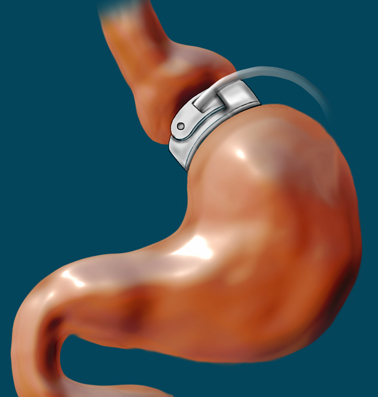
Weight loss surgery 'not a quick fix' for good health
Weight loss surgery, such as fitting a gastric band, usually results in significant weight loss.
But this weight loss doesn't automatically lead to improvements in important markers for metabolic health, such as insulin sensitivity.
A low level of insulin sensitivity is a major risk factor for type 2 diabetes.
In a new study, 128 adults were randomised into two groups. One group received a six-month moderate
 exercise programme, while the other received a six-month health education programme.
After six months, those that followed the exercise programme had better insulin sensitivity than those following the educational programme.
But the picture was not completely clear. Quite a few people dropped out of the study or did not adhere to the six-month exercise programme fully.
This could mean the programme as a whole would not yield any significantly better improvements at a population level.
More on NHS choices
But this weight loss doesn't automatically lead to improvements in important markers for metabolic health, such as insulin sensitivity.
A low level of insulin sensitivity is a major risk factor for type 2 diabetes.
In a new study, 128 adults were randomised into two groups. One group received a six-month moderate
After six months, those that followed the exercise programme had better insulin sensitivity than those following the educational programme.
But the picture was not completely clear. Quite a few people dropped out of the study or did not adhere to the six-month exercise programme fully.
This could mean the programme as a whole would not yield any significantly better improvements at a population level.
More on NHS choices
Subscribe to:
Posts (Atom)