Cochrane: What effects (benefits or harms) does donepezil have on people with dementia due to Alzheimer's disease? Alzheimer's disease is the most common cause of dementia. As the disease progresses, people lose the
ability to remember, communicate, think clearly and perform the
activities of daily living. Their behaviour may also change. In severe Alzheimer's disease people lose the ability to care for themselves.
Showing posts with label Alzheimer. Show all posts
Showing posts with label Alzheimer. Show all posts
Wednesday, June 27, 2018
Researchers discover a molecular link between post-traumatic stress disorder and Alzheimer’s disease
Heidelberg: There is increasing evidence that post-traumatic stress disorder
(PTSD) increases the risk of developing dementia later in life.
Researchers at the University Medical Center Göttingen, Germany, now
shed light on the molecular mechanism that links the two disorders. The
research is published today in The EMBO Journal. PTSD is a brain disorder that can occur after experiencing a
traumatic event. Individuals with PTSD frequently relive the traumatic
event, often triggered by stimuli similar to those that accompanied the
trauma. A number of epidemiological studies have shown that individuals
suffering from PTSD are more prone to acquiring Alzheimer’s disease
later in their lives.
A new blood test useful to detect people at risk of developing Alzheimer’s disease
Heidelberg: There is as yet no cure for Alzheimer’s disease. It is often argued
that progress in drug research has been hampered by the fact that the
disease can only be diagnosed when it is too late for an effective
intervention. Alzheimer’s disease is thought to begin long before
patients show typical symptoms like memory loss. Scientists have now
developed a blood test for Alzheimer’s disease and found that it can
detect early indicators of the disease long before the first symptoms
appear in patients. The blood test would thus offer an opportunity to
identify those at risk and may thereby open the door to new avenues in
drug discovery. The research is published today in EMBO Molecular Medicine.
Tuesday, June 12, 2018
Brain cholesterol associated with increased risk of Alzheimer’s disease
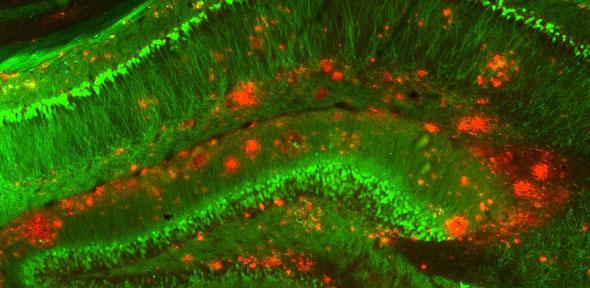 Cambridge: Researchers
have shown how cholesterol – a molecule normally linked with
cardiovascular diseases – may also play an important role in the onset
and progression of Alzheimer’s disease.
Cambridge: Researchers
have shown how cholesterol – a molecule normally linked with
cardiovascular diseases – may also play an important role in the onset
and progression of Alzheimer’s disease.
"The question for us now is not
how to eliminate cholesterol from the brain, but about how to control
cholesterol’s role in Alzheimer’s disease through the regulation of its
interaction with amyloid-beta".
Michele Vendruscolo
"The question for us now is not how to eliminate cholesterol from the brain, but about how to control cholesterol’s role in Alzheimer’s disease through the regulation of its interaction with amyloid-beta". Michele Vendruscolo
Friday, May 18, 2018
Blood test indicates risk of developing Alzheimer’s disease

Monday, May 7, 2018
Lack of sleep may be linked to risk factor for Alzheimer’s disease

Thursday, May 3, 2018
Concussions may increase Alzheimer's risk
SouthWestern: A new
study from UT Southwestern’s Peter O’Donnell Jr. Brain Institute reveals
concussions and other traumatic brain injuries may boost the risk for
Alzheimer’s disease earlier in life.
Munro Cullum, Ph.D.: There’s a lot that’s still not known about concussion, it’s maximum treatment and who may be at risk for disorders later in life.
Munro Cullum, Ph.D.: There’s a lot that’s still not known about concussion, it’s maximum treatment and who may be at risk for disorders later in life.
Wednesday, May 2, 2018
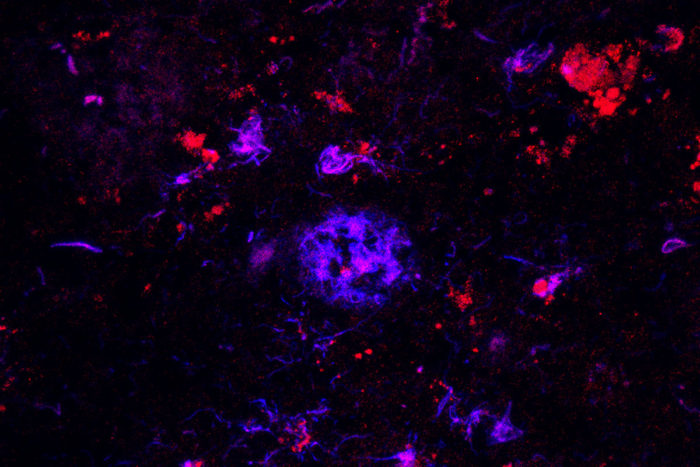
Antibody removes Alzheimer’s plaques, in mice
Saturday, April 28, 2018
Uncovering the molecular mechanism behind a rare genetic risk factor of Alzheimer’s disease points to a new therapeutic target
EMBO: A gene called triggering receptor expressed on myeloid cells 2,
or TREM2, has been associated with numerous neurodegenerative diseases,
such as Alzheimer's disease, Frontotemporal lobar degeneration,
Parkinson's disease, and Nasu-Hakola disease. Recently, a rare mutation
in the gene has been shown to increase the risk for developing
Alzheimer’s disease. Independently from each other, two research groups
have now revealed the molecular mechanism behind this mutation. Their
research, published today in EMBO Molecular Medicine, sheds
light on the role of TREM2 in normal brain function and suggests a new
therapeutic target in Alzheimer's disease treatment.
Researchers discover a molecular link between post-traumatic stress disorder and Alzheimer’s disease
EMBO: There is increasing evidence that post-traumatic stress disorder
(PTSD) increases the risk of developing dementia later in life.
Researchers at the University Medical Center Göttingen, Germany, now
shed light on the molecular mechanism that links the two disorders. The
research is published today in The EMBO Journal.
A new blood test useful to detect people at risk of developing Alzheimer’s disease
EMBO: There is as yet no cure for Alzheimer’s disease. It is often argued
that progress in drug research has been hampered by the fact that the
disease can only be diagnosed when it is too late for an effective
intervention. Alzheimer’s disease is thought to begin long before
patients show typical symptoms like memory loss. Scientists have now
developed a blood test for Alzheimer’s disease and found that it can
detect early indicators of the disease long before the first symptoms
appear in patients. The blood test would thus offer an opportunity to
identify those at risk and may thereby open the door to new avenues in
drug discovery. The research is published today in EMBO Molecular Medicine.
Wednesday, March 8, 2017
Air pollution may lead to dementia in older women

Thursday, March 2, 2017
Autoimmune disease may be linked to heightened dementia risk
BMJ: Autoimmune disease may be linked to a heightened risk of dementia, indicates a large long term study, published in the Journal of Epidemiology & Community Health. Although significant, the extent of the association found was small,
caution the researchers. But the findings are consistent with the theory
that Alzheimer’s disease may have an autoimmune component, they point
out. It has been suggested that autoimmune and inflammatory activity may have a role in the development of dementia.
In a bid to try and quantify this further, the researchers drew on
hospital admissions data, including day cases, from 1998 to 2012 for
England.
Tuesday, February 28, 2017
New ideas on cell recycling may shape treatment of Alzheimer’s disease
SAHMRI: The secret to treating Alzheimer’s diseases may lie within the lysosome, according to researchers from the South Australian Health and Medical Research Institute. The research team, led by Dr Tim Sargeant, is exploring how the lysosomal network interacts with late-onset neurodegenerative conditions, such as Alzheimer’s disease.
Dr Sargeant explained that his team is establishing a program of research that examines lysosomal function, using a range of different models.
“The lysosome is the recycling centre of the cell and is critically important for long-lived, terminally-differentiated neurons (nerve cells).
Sunday, February 19, 2017
Cell disposal faults could contribute to Parkinson's, study finds
Nottingham: A fault with the natural waste disposal
system that helps to keep our brain cell ‘batteries’ healthy may
contribute to neurodegenerative disease, a new study has found. The research, led by academics at The University of Nottingham and published in the journal Cell Death and Disease, centres on problems with mitochondria – the powerhouses which produce energy within a cell. The
results support previous evidence that patients with Parkinson’s
Disease have faults with brain mitochondria which contributes to
dysfunction and death within their neurons.
Saturday, February 18, 2017
Gut bacteria may play a role in Alzheimer’s disease

Lund: New
research from Lund University in Sweden has shown that intestinal
bacteria can accelerate the development of Alzheimer’s disease.
According to the researchers behind the study, the results open up the
door to new opportunities for preventing and treating the disease. Because
our gut bacteria have a major impact on how we feel through the
interaction between the immune system, the intestinal mucosa and our
diet, the composition of the gut microbiota is of great interest to
research on diseases such as Alzheimer’s. Exactly how our gut microbiota
composition is composed depends on which bacteria we receive at birth,
our genes and our diet.
Wednesday, February 15, 2017
Drug compound halts Alzheimer’s-related damage in mice

Thursday, January 26, 2017
Potential of an immunotherapy demonstrated in the treatment of Alzheimer’s disease

Saturday, January 14, 2017
Evidence of Alzheimer's in Patients with Lewy Body Disease Tracks with Course of Dementia

Friday, January 6, 2017
Alzheimer’s disease: deleterious effects from the immune system?
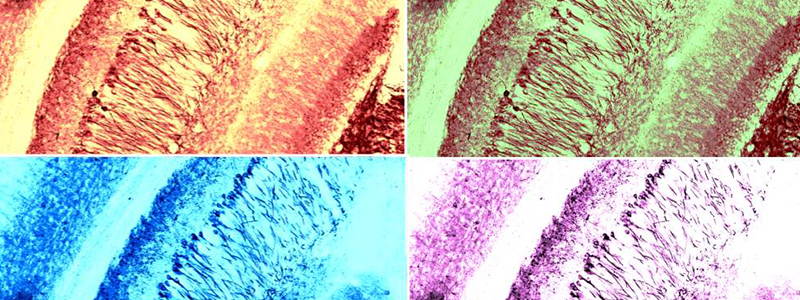
ICM: Alzheimer’s disease is a
neurodegenerative disease characterized by two types of lesions: amyloid
lesions and neurofibrillary tangles linked with the accumulation of
aggregated Tau proteins. As part of a collaborative project between the
Centre de Recherche Jean-Pierre Aubert (Inserm UMR-S 1172, Université de
Lille), the ICM and the Centre de Recherche St Antoine, researchers
looked at the activation of the immune system in a mouse model of
Tauopathy, mimicking the degeneration caused by the Tau protein. They
showed an infiltration of pathogenic T-cells in the animals’ brain, with
deleterious effects on cognitive
functions. Their results, published in Brain, open the way to the
identification of novel therapeutic targets to treat the disease.
Subscribe to:
Posts (Atom)