Showing posts with label ethics. Show all posts

Friday, February 24, 2017

Pharma funding biases results of drug trials

Sidney: There are many ways to influence study outcomes. Industry-sponsored studies are more likely to favour products of pharmaceuticals and medical devices than non-industry funded research, a new study reveals. The new Cochrane Library Review, which adds 27 studies to update a previous Cochrane review, confirms earlier analyses by “providing definitive evidence that pharmaceutical industry funding of drug studies biases the results and conclusions to look favourable towards the drug of the sponsor,” said senior author, Professor Lisa Bero of the University of Sydney’s Charles Perkins Centre.

Wednesday, December 21, 2016

Concern over “unethical practices” by US drug maker Abbott in India

BMJ: A US drug maker encouraged Indian doctors to prescribe a drug unproven for diabetic neuropathy (nerve damage) that until recently lacked central government approval, finds a special report in The BMJ today. Frederik Joelving, a journalist based in Denmark, reports how US drug company Abbott Laboratories advertised free neuropathy tests outside doctors’ offices throughout India for anyone with symptoms of neuropathy, such as tingling or numbness in the feet. He also describes how people who tested positive at the drug maker’s “neuropathy camps” (free events across India where people are tested for the disorder) were prescribed Abbott India’s Surbex Star, a mix of antioxidants, minerals, and B vitamins that the company promotes for the treatment of diabetic neuropathy.

Wednesday, November 23, 2016

Cryonics: hype, hope or hell?

TheConversation: A 14-year-old dying girl has won the right to have her body cryonically preserved immediately after she died, according to a recent UK High Court decision. The girl, known as JS, hoped that sometime in the future, when doctors found a cure for her cancer, she might be brought back to life. She had spent several months researching the science of cryonics and the judge had no doubt that she had sound capacity when making her decision. The judge noted that under the UK’s Human Tissue Act cryonics is not illegal. However, it is unregulated. The closest the act comes to cryonics is regulating the freezing of sperm and embryos, in the form of cryopreservation. The judge did, however, acknowledge the need for new legislation relating to cryonics.

Thursday, July 2, 2015

Forced rehabilitation of drug users in Indonesia not a solution

TheConversation: Earlier this year, Indonesia executed 14 people, including Bali Nine duo Andrew Chan and Myuran Sukumaran, for drug offences. President Joko Widodo portrayed the executions as the ultimate weapon in an expansive “war on drugs” deployed to protect the country’s young generation from an  alleged “national drug emergency”. But his policy is harming the very people he claims he wishes to protect.

Wednesday, July 1, 2015

Brace yourself, genetic testing might give you more than you bargained for

TheConversation: Drink red wine to prevent cancer. But don’t drink too much! Get some exercise. But don’t overdo it. Give up, it’s all genetic anyway – think of Angelina Jolie! We are constantly bombarded with conflicting information about our risk of developing cancer. It is difficult to know who to believe, let alone how to respond. What if you could take a simple test that would reveal your individual risk of developing not only a range of cancers, but hundreds of other diseases? Imagine if it could also tell you which drugs would be most effective for you, if you did develop cancer or other diseases.

Tuesday, June 23, 2015

Will head transplants create an entirely new person?

TheConversation: The world’s first full head transplant could take place as soon as 2017 if the controversial plans by Italian neuroscientist Dr Sergio Canavero come to pass. Wheelchair-bound Valery Spiridonov, who has the muscle-wasting Werdnig Hoffman disease, has volunteered to have his head transplanted onto a healthy body in a day-long operation.

End-of-life care: no, we don’t all want ‘whatever it takes’ to prolong life

TheConversation: We all die eventually, of course, but these days it’s very hard for doctors and loved ones to let patients and relatives die without first doing “whatever it takes” to try to keep them alive. That is, unless they’ve left clear instructions to the contrary. The overwhelming priority for doctors is to save life. In the last few decades, technologies have progressed so far and fast that doctors are able to embark on treatments that until recently did not exist, or were too risky to consider.

Friday, June 19, 2015

Remind me again, how can companies patent breast cancer genes?

TheConversation: This week cancer survivor Yvonne D’Arcy had another day in court in her case against a US company’s patent on cancer genes. Myriad Genetics was granted a patent in 1995 for isolating hereditary mutations to the BRCA1 and BRCA2 genes, which increase the carrier’s risk of developing breast and ovarian cancer. Australia’s Federal Court last year rejected Ms D'Arcy’s appeal and ruled the patent was valid because the method of isolating the genes was an invention.

Thursday, June 18, 2015

Why are patients in permanent comas routinely kept alive?

TheConversation: Aruna Shanbaug died with pneumonia in May 2015 after 42 years in a vegetative state. She was 25 years old when, in 1973, she was raped and strangled, leaving her with severe brain damage. Her survival for so long is testimony to the dedicated care provided for her by generations of nurses at the hospital in Mumbai where she had worked. But should we routinely deliver life-prolonging treatments over years or even decades to people who have no realistic chance of ever regaining consciousness?

Monday, June 15, 2015

Premature babies – are we doing the right thing?
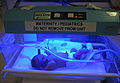
Deakin: A Deakin University law academic has questioned if we are doing the right thing by saving the lives of extremely premature babies. In a new book based on research conducted for her PhD, Deakin Law School academic Dr Neera Bhatia explores the legal and ethical issues surrounding decisions to withdraw or withhold life-sustaining treatment for babies born on the edge of viability (23 weeks) and addresses the controversial question, are some lives too expensive to treat?

Saturday, June 13, 2015

Pride and Prejudice: Reducing LGBT Discrimination at Work

Psychological Science: In 29 states in the US, it’s still legal to fire someone—or not hire them at all—based solely on their sexual orientation. Although mainstream support for LGBT individuals has been steadily growing, workplace discrimination still poses a serious career challenge for many. Research from APS Board Member Michelle “Mikki” Hebl of Rice University and Laura Barron of the US Air Force Management Policy Division indicates that anti-discrimination laws can not only help protect LGBT people from unfair employment practices, these laws can also dramatically improve the way people are treated by their colleagues.

Thursday, June 11, 2015

How black slaves were routinely sold as ‘specimens’ to ambitious white doctors

TheConversation: The history of human experimentation is as old as the practice of medicine and in the modern era has always targeted disadvantaged, marginalised, institutionalised, stigmatised and vulnerable populations: prisoners, the condemned, orphans, the mentally ill, students, the poor, women, the disabled, children, peoples of colour, indigenous peoples and the enslaved. Human subject research is evident wherever physicians, technicians, pharmaceutical companies (and others) are trialling new practices and implementing the latest diagnostic and therapeutic agents and procedures. And the American South in the days of slavery was no different – and for those looking for easy targets, black slave bodies were easy to come by.

Wednesday, June 10, 2015

The health effects of homophobia

Yale: Gay and bisexual men living in European countries with strong attitudes and policies against homosexuality are far less likely to use HIV-prevention services, test for HIV, and discuss their sexuality with health providers, according to research led by Yale School of Public Health (YSPH). The study is published online in the journal AIDS.

Why criminalising homosexuality is a public health hazard

TheConversation: Homosexuality remains illegal in 38 of 55 African nations. Such a stance against homosexuality is concerning from ethical and human rights perspectives. It also poses serious risks from a public health perspective, not least of all because of the significant rates of HIV across Africa. Men who have sex with men account for a substantial minority of those affected by HIV, with their risk of infection more than double that of the general population. Many African countries also harbour homophobic cultures and attitudes. Together, this creates an environment where homosexuality is highly stigmatised, with homosexual people socially isolated and marginalised.

Tuesday, June 9, 2015

Even without written codes, ethical standards for human research existed before World War II

TheConversation: The American Medical Association’s code of ethics did not address research on humans until 1946. The Nuremberg Code, often considered the foundational document of research ethics, dates from the 1947 verdict in the Doctors Trial – the military tribunal for German physicians on their participation in war crimes. Thus, there were no explicit, written codes of ethics for nontherapeutic human research for American civilian researchers prior to World War II (this was not the case for American military researchers). But the lack of a written code or guidelines for civilian researchers does not mean that ethical standards for nontherapuetic research did not exist.

Thursday, June 4, 2015

Are commercial conflict of interests justifiable in medical journals?

BMJ: Are commercial conflict of interests justifiable in medical journals? Experts criticise a leading journal’s backtrack regarding policies on conflict of interest A group of former senior editors, writing in The BMJ today, criticise a “seriously flawed and inflammatory attack” by The New England Journal of Medicine (NEJM) on what that journal believes have become overly stringent policies on conflicts of interest.

In families with same-sex parents, the kids are all right

TheConversation: A central argument made against same-sex marriage is that children born into these marriages will be disadvantaged: they will grow up with inappropriate gender role modelling, be bullied at school and suffer poorer emotional well-being than their peers. Same-sex attracted people may come to parenthood in many ways – though former heterosexual relationships, as a foster parent or a step parent.

Wednesday, June 3, 2015

Don’t blame families for low organ donation rates, fix the system

TheConversation: Despite more than A$250 million of investment into organ donation programs since 2008, transplant rates have not increased as quickly as the government had hoped. A private consulting firm will now review the nation’s organ donation and transplantation program to investigate what else can be done. One issue at play is the claim that 37% of families override their loved ones' wishes in more than one-third of cases, which is much higher than international rates.

Monday, June 1, 2015

Baby Love Motivates Quest for Knowledge

ClinicalOmics: Earlier this year, the Obama Administration launched the Precision Medicine Initiative with a $215 million investment in the President’s 2016 Budget. Heralded as a bold new research effort to revolutionize how we improve health and treat disease, the Precision Medicine Initiative is intended to pioneer a new model of patient-powered research to accelerate biomedical discoveries and provide clinicians with new tools, knowledge, and therapies. Supporting the concept of precision medicine, preconception carrier screening predicts the chances of having a child with specific genetic disorders while diagnostic testing determines the cause of pediatric-onset and other genetic disorders. Families can be started in both traditional and nontraditional ways; preconception carrier screening provides the information needed for prospective parents to figure out their preferred direction before conception. Counsyl provides screening for diseases where advanced knowledge makes a difference in health outcomes, whether it is changing a behavior, pursuing preventive measures, or simply preparing for what lies ahead.

Sunday, May 31, 2015

We all deserve the right to die without pain or fear, but assisted suicide won’t fix that

TheConversation: What connects these two recent news stories? Jeffrey Spector, a 54-year-old businessman with a spinal tumour, travels to Dignitas in Zurich to commit suicide, with support from his family; and the Health Service Ombudsman publishes a report called “Dying without Dignity”, which criticises the end-of-life care provided by the NHS. Campaigners for legal reform argue that Spector’s choice of death shows his search for dignity at the end of life and the desire to retain control: in a word, “autonomy”. But the ombudsman’s report – and a closer reading of the cases which constantly appear in the media – suggest it’s not autonomy. It’s mainly fear.