Washington University: Belly fat affects the odds of women surviving kidney cancer but not
men, according to a new study by researchers at Washington University
School of Medicine in St. Louis.
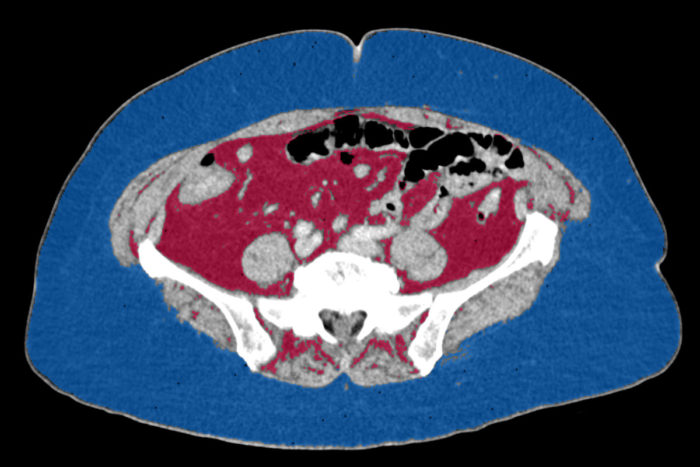
Half of female kidney cancer patients with substantial abdominal fat
at the time of diagnosis died within 3 1/2 years, while more than half
of women with little belly fat were still alive 10 years later, the
researchers found. For men, the amount of abdominal fat appeared to make
no difference in how long they survived.
Only good, independent and reliable information about health from experts.
Showing posts with label kidney cancer. Show all posts
Wednesday, May 2, 2018
Monday, March 23, 2015
Kidney cancer detected early with urine test
Washington: If kidney cancer is diagnosed early — before it spreads — 80 percent
of patients survive. However, finding it early has been among the
disease’s greatest challenges.
Now, researchers at Washington University School of Medicine in St. Louis have developed a noninvasive method to screen for kidney cancer that involves measuring the presence of proteins in the urine.
The findings are reported March 19 in the journal JAMA Oncology.
Now, researchers at Washington University School of Medicine in St. Louis have developed a noninvasive method to screen for kidney cancer that involves measuring the presence of proteins in the urine.
The findings are reported March 19 in the journal JAMA Oncology.
Wednesday, March 18, 2015
Rare African bush may help kidney cancer treatment
University of Leeds research has shown why a bush
that is only found in some African countries could hold a key to killing
renal (kidney) cancer cells. Phyllanthus engleri, also known as spurred phyllanthus, is only found in Tanzania, Zambia, Malawi, Zimbabwe and Mozambique. Previous
studies have shown that the plant contains a chemical, Englerin A,
which kills renal cancer cells – but they have not shown why.
Tuesday, February 24, 2015
Penn Medicine Physician Finds No Preventive Benefits for Widely Used Kidney Cancer Drugs
Pennsylvania University. US: Results of Phase III Clinical Study of Advanced Kidney Cancer Patients after Surgery Revealed No Survival Benefit for Sunitinib, Sorafenib.
Thursday, January 29, 2015
Smoking Associated with Elevated Risk of Developing a Second Smoking-Related Cancer
ASCO. US: An analysis of five large, prospective cohort studies indicates that
lung (stage I), bladder, kidney and head and neck cancer survivors who
smoked 20 or more cigarettes a day prior to their cancer diagnoses have
an up to five-fold higher risk of developing a second smoking-associated
cancer compared to survivors of the same cancers who never smoked.
Thursday, March 29, 2012
Kidney cancer
Author: Dr Brent Yanke Urologist West Orange New Jersey 2008-07-28
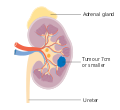
The kidneys (or renal units) are organs responsible for cleansing the blood of waste. Many byproducts of the metabolic processes in the body build up in the blood stream. A microscopic tubular system within the kidney filters the blood and removes these byproducts before they can accumulate to dangerous levels. Kidney tissue is separated into two layers, the outer cortex and the inner medulla. Once the filtered waste passes through these layers, it collects in the renal pelvis which is an open space in the core of the kidney. The urine then drains from the renal pelvis into the ureter and finally into the bladder. Surrounding the kidney are several protective layers. A thin capsule encircles the renal cortex and comprises the outer surface of the kidney. The kidney sits in a pocket of fat that is itself contained in another layer of tissue called Gerota’s fascia.
A renal tumor is an atypical growth of cells that can arise from different segments of the kidney. Benign
renal tumors are non-cancerous and rarely threatening to the patient
while a malignant renal tumor, also known as renal cancer, has a more
aggressive nature. In 2007, there were an estimated 51,190 new cases of kidney cancer and 12,890 deaths due to kidney cancer in the United States.1 This represents 2% of all diagnosed cancers.2
Subscribe to:
Posts (Atom)