TheConversation: The real danger of separating children from parents is not the
psychological stress – it’s the biological time bomb. The screaming and
crying, the anguish and desolation is gut-wrenching. But the fallout
pales in comparison to the less visible long-term effects that are more
sinister and dangerous. Separating children from their parents, in a strange land, among
strangers, causes the most extreme life stress a child can experience.
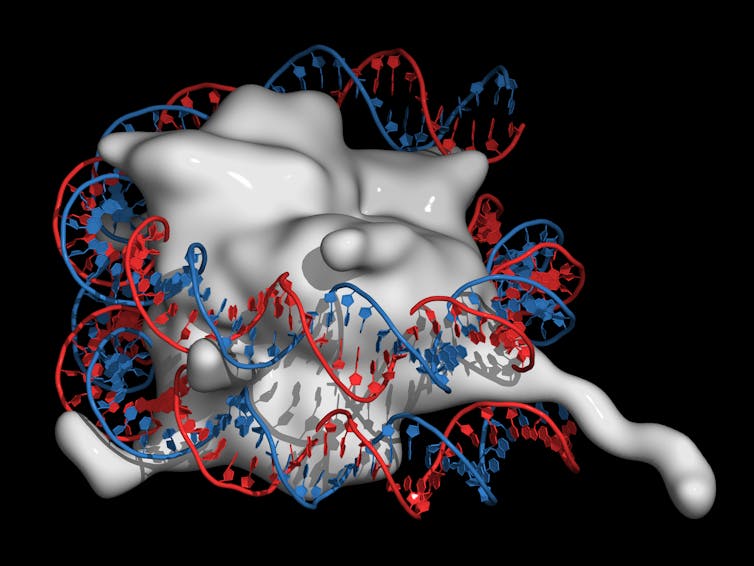
And it causes profound and irreversible changes in how their DNA is
packaged and which genes are turned on and off in the cells of the body,
in organs like the pancreas, the lungs, heart and brain – leading to
lifelong changes in its structure and function.
Only good, independent and reliable information about health from experts.
Showing posts with label stress. Show all posts
Saturday, June 30, 2018
Extreme stress in childhood is toxic to your DNA
TheConversation: The real danger of separating children from parents is not the
psychological stress – it’s the biological time bomb. The screaming and
crying, the anguish and desolation is gut-wrenching. But the fallout
pales in comparison to the less visible long-term effects that are more
sinister and dangerous. Separating children from their parents, in a strange land, among
strangers, causes the most extreme life stress a child can experience.
And it causes profound and irreversible changes in how their DNA is
packaged and which genes are turned on and off in the cells of the body,
in organs like the pancreas, the lungs, heart and brain – leading to
lifelong changes in its structure and function.
Wednesday, June 27, 2018
Having Stress-Related Disorder Associated With Increased Risk of Developing Autoimmune Disease
JAMA: Stress-related disorders brought on by traumatic or stressful life
events were associated with increased risk of developing an autoimmune
disease.
Why The Research Is Interesting: Development of stress-related disorders such as posttraumatic stress disorder (PTSD) may influence multiple bodily systems, including immune function. Whether this contributes to risk for autoimmune disease remains unclear.
Wednesday, April 4, 2018
Social Stress Leads To Changes In Gut Bacteria, Study Finds
Georgia: Exposure to psychological stress in the form of social conflict
alters gut bacteria in Syrian hamsters, according to a new study by
Georgia State University. It has long been said that humans have “gut feelings” about things,
but how the gut might communicate those “feelings” to the brain was not
known. It has been shown that gut microbiota, the complex community of
microorganisms that live in the digestive tracts of humans and other
animals, can send signals to the brain and vice versa.
Tuesday, March 7, 2017
Animal Study Suggests Alcohol Use Before Pregnancy May Increase Vulnerability of Offspring to Stress in Adulthood
NIAAA: The effects of alcohol use during pregnancy on an unborn child are
well known. However, a recent NIAAA-funded study in rats has shown that a
mother’s alcohol use before conception also could have negative effects
on her child’s health and response to stress during adulthood. To study the effects of preconception alcohol use, the research
team, led by Dipak Sarkar, Ph.D., at Rutgers University, gave female
rats 4 weeks of access to a diet containing 6.7 percent alcohol, which
raised their blood alcohol levels similar to that of binge drinking in
humans.
Monday, February 27, 2017
“Late-life” genes activated by biological clock to help protect against stress, aging
Oregon: Researchers at Oregon State University have discovered that a subset
of genes involved in daily circadian rhythms, or the “biological clock,”
only become active late in life or during periods of intense stress
when they are most needed to help protect critical life functions. The findings, made in research done with fruit flies and published
today in Nature Communications, are part of a unique stress response
mechanism that was previously unknown.
Wednesday, January 18, 2017
Study shows discrimination interacts with genetics and affects health

Univeristy of Florida: It’s no secret that discrimination is stressful for those who
experience it, but turns out the issue is more than skin deep—these
stressors can interact with our genetics to negatively impact our
health, a new University of Florida study shows. Study researchers developed a novel measure of unfair treatment to
study the effects of discrimination on health, particularly with respect
to racial disparities in complex diseases, which are illnesses
resulting from both genetic and environmental factors. They used the
measure to investigate hypertension, which is more prevalent in
African-Americans, and found that discrimination interacts with certain
genetic variants to alter blood pressure.
Tuesday, January 17, 2017
For men with prostate cancer, emotional distress may lead to more aggressive treatment
Buffalo: The anxiety many men experience after
being diagnosed with prostate cancer may lead them to choose
potentially unnecessary treatment options, researchers from the
University at Buffalo and Roswell Park Cancer Institute report in a
new study. “Emotional distress may motivate men with low-risk
prostate cancer to choose more aggressive treatment, such as
choosing surgery over active surveillance,” said UB’s
Heather Orom, the lead author on the study, published in the
February issue of the Journal
of Urology.
“It underscores what we have been pushing a long time for, which is, ‘Let’s make this decision as informed and supported as possible.’ If distress early on is influencing treatment choice, then maybe we help men by providing clearer information about prognosis and strategies for dealing with anxiety. We hope this will help improve the treatment decision making process and ultimately, the patient’s quality of life,” added Orom, PhD, associate professor of community health and health behavior in UB’s School of Public Health and Health Professions.
Saturday, January 14, 2017
Stress-associated brain activity connected to cardiovascular risk

Harvard: A study led by investigators at Harvard Medical School, Massachusetts General Hospital and the Icahn School of Medicine at Mount Sinai has linked, for the first time in humans, activity in a stress-sensitive structure within the brain to the risk of subsequent cardiovascular disease. The team’s findings, published in The Lancet, also reveal a pathway leading from activation of that structure—the amygdala—through elevated immune system activity to an increased incidence of cardiovascular events.
Thursday, November 24, 2016
What is exposure therapy and how can it treat social anxiety?
TheConversation: Most of us experience a level of social anxiety at some point in
our lives. We worry about what people think of us, about being excluded,
about being judged or humiliated. Social anxiety
is characterised by an excessive fear of negative evaluation or
judgement, triggered by social or performance situations. For social
anxiety to be considered a disorder, the person must also be distressed
by their social concerns or report a disruption in their life. They may
find it difficult to interact with work colleagues, to make friends, or
even to have brief conversations with others.
Excessive social anxiety makes us feel lonely and reduces our quality of life. Social anxiety disorder is the most common anxiety disorder and begins as early as 11 years of age.
Thursday, November 17, 2016
A glass half empty could be a glass half full of heart disease
Scimex: Pessimism seems to be a strong risk factor for death from coronary
heart disease (CHD), while optimism does not protect from it, according
to a study published in the open access journal BMC Public Health that involved 2,267 middle aged and older Finnish men and women. Researchers
at the Department of Psychiatry, Päijät-Häme Central Hospital, Finland,
found that people with high levels of pessimism seemed to have a higher
risk of CHD-induced mortality, even after adjusting for known
physiological risk factors. Optimism did not seem to have any effect on
that risk.
Monday, November 14, 2016
Repeatedly thinking about work-family conflict linked to health problems
Oregon: Thinking over and over again about conflicts between your job and
personal life is likely to damage both your mental and physical health,
research from Oregon State University suggests.
The study included more than 200 people, with results showing that “repetitive thought” was a pathway between work-family conflict and negative outcomes in six different health categories.
As the term suggests, repetitive thought regarding work-family conflict refers to thinking repeatedly and attentively about the parts of your job and your personal life that clash with each other: for example, that late-afternoon meeting that prevents you from attending your son’s baseball game. It’s a maladaptive coping strategy that impedes daily recovery from stress.
The study included more than 200 people, with results showing that “repetitive thought” was a pathway between work-family conflict and negative outcomes in six different health categories.
As the term suggests, repetitive thought regarding work-family conflict refers to thinking repeatedly and attentively about the parts of your job and your personal life that clash with each other: for example, that late-afternoon meeting that prevents you from attending your son’s baseball game. It’s a maladaptive coping strategy that impedes daily recovery from stress.
Sunday, November 13, 2016
Being fit Protects Against Health Risks Caused by Stress at Work

Basel: It is a well-known fact that fitness and well-being go hand
in hand. But being in good shape also protects against the health
problems that arise when we feel particularly stressed at work. As
reported by sports scientists from the University of Basel and
colleagues from Sweden, it therefore pays to stay physically active,
especially during periods of high stress. Psychosocial stress is one of the key factors leading to
illness-related absences from work. This type of stress is accompanied
by impaired mental well-being and an increase in depressive symptoms. It
also raises the likelihood of cardiovascular risk factors such as high
blood pressure and an unfavorable blood lipid profile. Conversely, a
high fitness level is associated with fewer depressive symptoms and
fewer cardiovascular risk factors.
Monday, November 7, 2016
‘Worried well’ may be boosting their risk of heart disease
BMJ: Potential consequences of health anxiety underlines need to treat it, say researchers People who needlessly worry that they have, or will develop, serious illness - popularly referred to as ‘the worried well’- may be boosting their risk of developing heart disease, suggests research published in the online journal BMJ Open. Anxiety is a known risk factor for heart disease. And health anxiety, which describes persistent preoccupation with havin g or acquiring a serious illness, and seeking prompt medical advice, on the basis of misattributed bodily symptoms in the absence of any physical disease, seems to be no exception, say the researchers. And as such, it needs to be taken seriously and treated properly, they suggest.
Friday, November 4, 2016
Worried but well, may boost chance of a sick heart
Scimex: People who worry about having or developing a serious illness may be
raising their risk of developing heart disease, according to a team of
Norwegian scientists. The researchers surveyed over 7,000 older people's
levels of anxiety about their health and found that those who had
health anxiety were twice as likely develop heart disease as those who
didn't have health anxiety - 6 per cent compared to 3 per cent. Although
this study can't prove that health anxiety causes heart disease, the
authors say that there is still a need for the proper diagnosis and
treatment of health anxiety.
Monday, October 31, 2016
Older adults gain weight when spouse is stressed out

Ann Arbor: Stress isn't good for your waist line. For older married
couples, the added pounds may be caused by a spouse's long-term stress
levels. A new University of Michigan study looked at how the negative quality
of marriage can be detrimental for weight gain—possibly leading to
obesity—when couples 50 and older are stressed. The results varied by
gender.
Thursday, June 18, 2015
Watching "so cute" cats online videos lowers stress and makes you happy
TheConversation: Watching cute cat videos and looking at their online pictures may not
be a waste of time. A new study has found doing so could boost energy
levels and increase feelings of happiness. Published in the journal Computers in Human Behavior the study even suggests that watching internet cats could be used as a form of digital pet therapy or stress relief. Internet data shows two million cat videos were posted on YouTube as
of 2014, totalling nearly 26 billion views. Celebrity cats – such as
Grumpy Cat and and Lil BUB – have also sprung up on social media,
garnering mass followings.
Wednesday, June 17, 2015
Longevity Hormone is Lower in Stressed and Depressed Women
UCSF: Women under chronic stress have significantly lower levels
of klotho, a hormone that regulates aging and enhances cognition,
researchers at UC San Francisco have found in a study comparing mothers
of children on the autism spectrum to low-stress controls. The researchers found that the women in their study with clinically
significant depressive symptoms had even lower levels of klotho in their
blood than those who were under stress but not experiencing such
symptoms.
Eating leads to stress hormone response in men with high body fat
Deakin: Dr Anne Turner from Deakin University says that it is the perfect time for men
who are carrying a few extra kilos to make some positive changes. A recent study published in
BMC
Obesity found that men who had a higher level of body fat actually had a
higher stress hormone response in their body after eating a standardised lunch,
compared to lean men. "We found that men who were even
moderately overweight or obese had a higher cortisol or stress hormone response
to eating the lunch than lean men.
Tuesday, June 9, 2015
How coffee a day keeps stressheads' moods away
PNAS: Scientists have figured out how caffeine could prevent chronically
stressed individuals from developing stress-related mood and memory
disorders, such as depression. The international team of researchers
looked at mice brains and found that caffeine physically blocks a
stress-related chemical from connecting with its targets and triggering
brain-changing events. Researchers report a potential molecular explanation for how chronic
stress induces mood disorders and suggest a possible therapeutic
approach for stress-induced disorders.
Thursday, June 4, 2015
Misunderstood mothers-to-be internalise stress

Queensland: The role that stigma around mental health plays in the stress of a
pregnancy – and birth complications - has been thrust into the spotlight
by a study from researchers at The University of Queensland. Among the key findings was a need for psychological assessment to
place greater importance on the environment surrounding the
mother-to-be, rather than focusing solely on her own coping mechanisms. “In our research the women who felt misunderstood by their partners,
alone, and lacking support and resources chose to silence their true
voices,” Ms Staneva said.
Subscribe to:
Posts (Atom)


