Showing posts with label chronobiology. Show all posts

Friday, May 18, 2018

Chronobiology: Getting the timing right

Munich: Sleep patterns are determined by one‘s chronotype, says Till Roenneberg, and everyone should be allowed to follow its dictates. Here he discusses ways to achieve this goal and outlines the benefits it would bring. It’s three o‘clock in the afternoon and Till Roenneberg has just given a lecture. It’s a good time to talk to a chronobiologist about the biological clock – the mechanism that synchronizes the metabolic operations in our bodies with the light-dark cycle and the changing seasons. It turns out that individuals vary in the diurnal timing of their metabolic processes, and can be classified on this basis into a number of ‘chronotypes’. When allowed to follow our natural rhythms, some of us are early birds, some are night owls, and the rest fall somewhere in between. Roenneberg himself is more of a night owl, so he doesn’t like giving interviews early in the day. But now he has taken the time to explain the wider significance of chronobiology, which came to prominence when three pioneers in the field won the 2017 Nobel Prize in Medicine. The medical implications of the circadian clock are the central theme of the upcoming conference on “The Role of Circadian Biology in Preventing and Treating Pathology”, which Roenneberg helped to organize.

Friday, November 11, 2016

Mismatched light and heat levels can disrupt body clock

ClockLondon: Body clock function can break down when light and temperature levels throughout the day are out of sync, finds new UCL research in fruit flies. The study, published in Cell Reports, examined the activity levels of flies when they were exposed to light and heat at different times. The ‘natural’ cycle involved 12 hours of light and warmth followed by 12 hour of darkness and cold. The light and temperature cycles were then varied so that the light cycle ran between two and 10 hours behind the temperature cycle in each experiment.

How the liver dances to a day/night rhythm
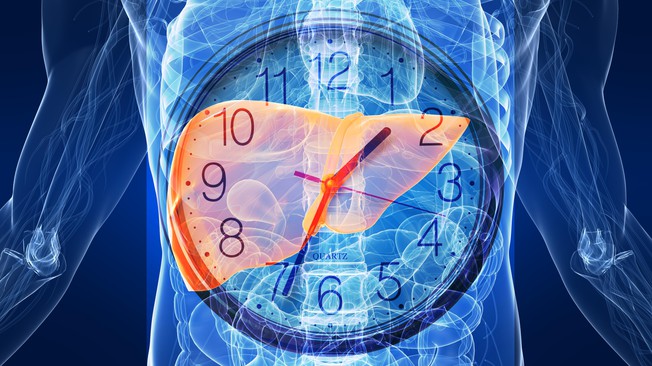
Lausanne: Following the day-night cycle, the liver has its own metabolic rhythm. Using cutting-edge proteomics, scientists at EPFL and Nestlé Institute of Health Sciences have now identified over 500 liver proteins that change in abundance over the course of the day in the cell nucleus, opening a new dimension of metabolism. Biological processes occurring in our bodies are far from static, but instead the rhythm of most of them is dictated by an internal, 24-hour biological metronome called the ‘circadian clock’. During each day-night cycle, many physiological processes follow oscillatory waves orchestrated by this clock, allowing them to adapt and anticipate the body’s demands at a given time of day. EPFL scientists have now used cutting-edge proteomics to monitor the temporal accumulation of over 5,000 different proteins in the nucleus of mouse liver cells, and have identified over 500 that are connected to the 24-hours cycle. The study, published in Cell Metabolism, is the first in this field in terms of scale and resolution, and has significant implications regarding our understanding of the interconnections between rhythmic metabolism and nutrition.