Cochrane: We
reviewed the evidence on the effect of interventions delivered by
mobile phone to help people in taking their medication to prevent cardiovascular disease (for example, heart attacks and strokes). We found four studies which included 2429 participants. Around 17.6 million people die from cardiovascular disease every year. Medications can help to prevent cardiovascular
disease; however, many people who have been given these medications do
not take them as often or as consistently as recommended. This means
that the medication will not work as well as it could to prevent cardiovascular
disease. Interventions delivered through mobile phones, for example,
prompting by text messaging, may be a low cost way to help people to
take their medication as recommended.
Only good, independent and reliable information about health from experts.
Showing posts with label apps. Show all posts
Wednesday, June 27, 2018
Tuesday, June 12, 2018
Copying movements could help manage Parkinson's
Manchester: New research by University of Manchester psychologists has revealed that imitation of movement can help people with Parkinson’s. Dr Ellen Poliakoff and Dr Judith Bek, whose paper appears in the print version of the Journal of Neuropsychology today, are on the team of the pioneering Economic and Social Research Council funded study. The study compared the reactions of 23 people with mild to moderate Parkinson’s and 24 people without the condition.
Wednesday, February 22, 2017
Scientists predict chemistry of romance: there's an app for it
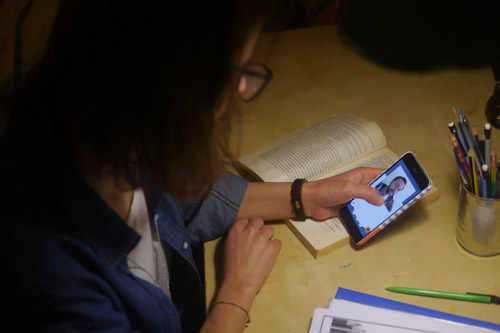
Bristol: Psychologists from the University of Bristol are launching a revolutionary new dating app this Valentine’s Day. Initially only available to students from the University, the creators hope to roll it out the rest of the country very soon. Based on cutting-edge psychological research, ENTWINE is an app
designed instantly to predict intuitive attraction between people,
before they have even met. The platform has been created by Dr Roland Baddeley and Dr Felix Mercer Moss from the University’s School of Experimental Psychology and asks users to evaluate three different ‘selfies’ of their potential date.
Sunday, January 22, 2017
Tablet devices can enhance therapies for agitation among patients with dementia

Harvard: A pilot study led by Ipsit Vahia, a member of the HMS faculty of psychiatry and medical director of Geriatric Psychiatry Outpatient Services at
McLean Hospital, suggests that the use of tablet computers is both a
safe and potentially effective approach to managing agitation among
patients with dementia. The findings were published in the online
version of The American Journal of Geriatric Psychiatry. “Tablet use as a nonpharmacologic intervention for agitation in older
adults, including those with severe dementia, appears to be feasible,
safe and of potential utility,” said Vahia. “Our preliminary results are
a first step in developing much-needed empirical data for clinicians
and caregivers on how to use technology such as tablets as tools to
enhance care and also for app developers working to serve the
technologic needs of this population.”
Thursday, May 7, 2015
Educational App or Digital Candy? Helping Parents Choose Quality Apps for Kids
Psychological Science: There are now over 80,000 apps marketed as “educational” in the Apple
app store, the majority of which are targeted towards children and even
babies. Parents are led to believe that these apps provide real
learning opportunities for their children, but scientific research
suggests that many of the apps are nothing more than digital candy. “Many
apps marketed as ‘educational’ are basically the equivalent of sugary
foods,” says Kathy Hirsh-Pasek of Temple University, co-author on a new report
investigating educational apps. “At best, most of these apps will do no
harm; at worst, they add even more distraction to children’s deeply
distracting lives.”
Subscribe to:
Posts (Atom)


