Showing posts with label gene therapy. Show all posts

Friday, March 3, 2017

Gene therapy restores hearing

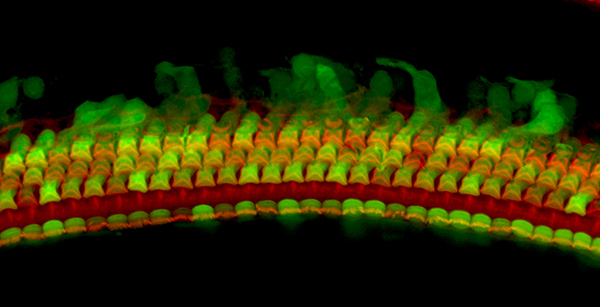
Nature: Delivering a functional gene to the ears of mice with a genetic hearing disorder allows them to detect sound. People with Usher syndrome type I have genetic mutations that cause deafness in childhood, progressive blindness and balance disorders. Gwenaëlle Géléoc at Boston Children's Hospital in Massachusetts and her colleagues studied newborn mice with a form of Usher syndrome type I. They injected a synthetic virus that carried a healthy version of the gene for a protein called harmonin into the animals' ears. The protein resides in sound-sensitive 'hair' cells of the inner ear and helps to transmit auditory signals to the brain. The team found that mice given the gene responded to sounds as quiet as whispers, similarly to normal mice. The treated mice also performed as well in balance tests as normal mice.
In another study, Luk Vandenberghe at the Schepens Eye Research Institute of Massachusetts Eye and Ear in Boston and his colleagues found that the same virus delivered genes to a large number of the target hair cells in the mouse ear.
Nature Biotechnol. http://dx.doi.org/10.1038/nbt.3801; http://dx.doi.org/10.1038/nbt.3781 (2017)
Wednesday, February 15, 2017

Improved gene therapy restores hearing, balance in preclinical tests

Harvard: In the summer of 2015, a team at Harvard Medical School and Boston Children’s Hospital reported restoring rudimentary hearing in genetically deaf mice using gene therapy.  Now the researchers report restoring a much higher level of hearing—down to 25 decibels, the equivalent of a whisper—using an improved gene therapy vector developed at Massachusetts Eye and Ear. The new vector and the studies are described in two back-to-back papers in Nature Biotechnology, published online Feb. 6.

Wednesday, December 21, 2016

Gene therapy for haemophilia

Cochrane: We reviewed the evidence about the safety and effectiveness of gene therapy for treating people with haemophilia A or haemophilia B. Haemophilia is a bleeding disorder caused by defective genes that produce abnormal blood clotting proteins. Gene therapy modifies or replaces these defective genes with normal ones. We looked for trials that used this approach of modifying or replacing defective genes for producing normal blood clotting proteins for the treatment of haemophilia. This is an update of a published Cochrane Review.We found no trials to provide reliable evidence about the risks or benefits of gene therapy for haemophilia. There is a need for trials that assess the long-term feasibility, success and risks of gene therapy for people with haemophilia.

Saturday, November 12, 2016

Harmful effects of a commonly used cancer drug can be alleviated by using gene therapy

Helsinki: Doxorubicin treatment, which is commonly used in a variety of cancers, leads to cardiac atrophy and body wasting. Researchers from the Wihuri Research Institute and the University of Helsinki found that in mouse heart, doxorubicin leads to blood vessel rarefaction, which was prevented by treatment with gene therapy using the VEGF-B growth factor.

Lighting up the Promise of Retinal Gene Therapy

NIH: The retina, like this one from a mouse that is flattened out and captured in a beautiful image, is a thin tissue that lines the back of the eye. Although only about the size of a postage stamp, the retina contains more than 100 distinct cell types that are organized into multiple information-processing layers. These layers work together to absorb light and translate it into electrical signals that stream via the optic nerve to the brain. In people with inherited disorders in which the retina degenerates, an altered gene somewhere within this nexus of cells progressively robs them of their sight.

Monday, November 7, 2016

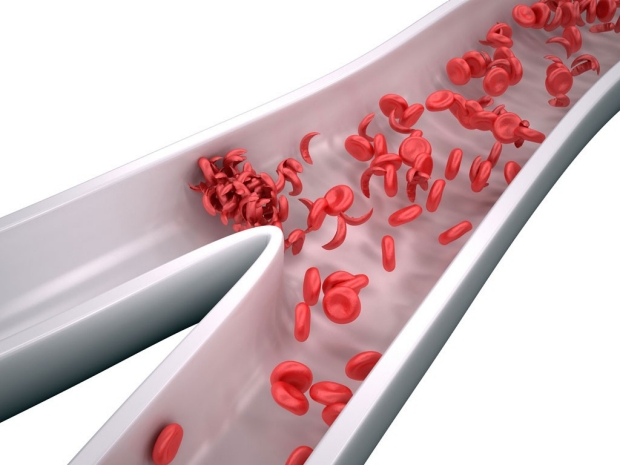
Researchers take step toward gene therapy for sickle cell disease

Stanford: A team of researchers at the Stanford University School of Medicine has used a gene-editing tool known as CRISPR to repair the gene that causes sickle cell disease in human stem cells, which they say is a key step toward developing a gene therapy for the disorder. The team went on to demonstrate that the mended cells could make a functioning hemoglobin molecule, which carries oxygen in normal red blood cells, and then successfully transplanted the stem cells into mice. The researchers say the study represents a proof of concept for the repair of blood-borne genetic diseases, such as sickle cell disease and thalassemia.

Tuesday, June 16, 2015

Gene Therapy Prevents Parkinson’s Disease in Animal Model

Pittsburgh: Gene therapy to reduce production of a brain protein successfully prevented development of Parkinson’s disease in an animal study, according to researchers at the University of Pittsburgh School of Medicine. The findings, published online today in the Journal of Clinical Investigation, could lead to new understanding of how genetic and environmental factors converge to cause the disease, and the development of effective treatments to prevent disease progression.

Wednesday, May 13, 2015

Bionic ear technology used for gene therapy

UNSW: Researchers at UNSW have for the first time used electrical pulses delivered from a cochlear implant to deliver gene therapy, thereby successfully regrowing auditory nerves. The research also heralds a possible new way of treating a range of neurological disorders, including Parkinson’s disease, and psychiatric conditions such as depression through this novel way of delivering gene therapy. The research is published today in the prestigious journal Science Translational Medicine.

Wednesday, April 29, 2015

New gene therapy success in a rare disease of the immune system: Wiskott-Aldrich syndrome

INSERM: French teams, and English teams demonstrated the efficacy of gene therapy treatment for Wiskott-Aldrich Syndrome (WAS). Six children that were treated and followed for at least 9 months had their immune system restored and clinical condition improved. This work, which was published today in the Journal of the American Medical Association (JAMA), was carried out with support from the AFM-Telethon.

Monday, February 9, 2015

New Nanoparticle Gene Therapy Strategy Effectively Treats Deadly Brain Cancer in Rats


Johns Hopkins University US: Gene therapy may effectively treat glioma, a deadly form of brain cancer, but getting the right genes to cancer cells in the brain is difficult. For the first time, Johns Hopkins researchers used biodegradable nanoparticles to kill brain cancer cells in animals and lengthen their survival. The nanoparticles are filled with genes for an enzyme that turns a compound into a potent killer of cancer cells.

Tuesday, January 20, 2015

Researchers tackle thorny side of gene therapy

National Institutes of Health (US) researchers have uncovered a key factor in understanding the elevated cancer risk associated with gene therapy. They conducted research on mice with a rare disease similar to one in humans, hoping their findings may eventually help improve gene therapy for humans.