Clinicalomics: Investigators from Sorbonne University in Paris have now assessed the
feasibility and the prognostic value of circulating tumor DNA (ctDNA) in
pancreatic adenocarcinoma, a significant advance in a hard-to-diagnose
disease that is expected to become the second leading cause of cancer
death in the U.S. by 2030. There remain several challenges to conducting translational research
on pancreatic cancer, including the difficulty in obtaining tumor
samples from patients, since most studies have been limited to patients
with the resectable disease until now. However, only 10% to 15% of
patients with pancreatic adenocarcinoma have resectable disease at
diagnosis—making identification of robust prognostic or predictive
biomarkers critical for all patients with pancreatic adenocarcinoma,
whatever the stage of the disease.
Only good, independent and reliable information about health from experts.
Showing posts with label diagnosis. Show all posts
Wednesday, December 21, 2016
Tuesday, June 23, 2015
Researchers develop new breath test to diagnose oesophageal and gastric cancer

London: Researchers have devised a breath test that can help doctors diagnose the early signs of oesophageal and gastric cancer in minutes. The test has produced encouraging results in a clinical study, and will now be tested in a larger trial involving three hospitals in London. Researchers analysed breath samples of 210 patients using the test. They found that the test can discriminate between malignant and benign oesophageal cancer in patients for the first time. The test is 90 per cent accurate and provides results in minutes, which can take up to four to six hours to process using other methods. The test can also be applied to detect gastric (stomach) cancer tumours.
Wednesday, June 17, 2015
Paper biosensor with nano-battery based upon microbial respiration
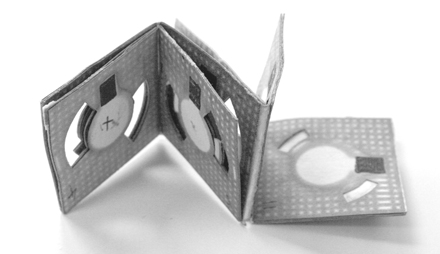
Binghamton: Origami, the Japanese art of paper folding, can be used to create
beautiful birds, frogs and other small sculptures. Now a Binghamton
University engineer says the technique can be applied to building
batteries, too. Seokheun “Sean” Choi developed an inexpensive, bacteria-powered battery made from paper, he writes in the July edition of the journal Nano Energy.
Thursday, June 11, 2015
Eye imaging software could aid disease diagnosis
Dundee: Imaging technology that scans blood vessels in the eye could be used
to help diagnose a wide range of diseases, according to a study carried
out by the Universities of Edinburgh and Dundee. Researchers say software designed to assess the health of vessels in
the retina could help scientists spot the early signs of heart disease,
diabetes and dementia.Changes to the retina are often a sign of sickness elsewhere in the
body. The software – known as VAMPIRE – allows scientists to analyse the
shape of blood vessels in thousands of images at a time and can
identify known indicators of disease.
Wednesday, June 10, 2015
A pocket-sized medical lab being tested in Switzerland
Lausanne: The device – a sort of Swiss army knife of medical
tests – was created by Qloudlab, a start-up based at EPFL, and is
currently undergoing certification at the CHUV hospital. This miniature
laboratory is a quick, easy and inexpensive way to monitor various
health parameters either in hospital or at home. Fitting a medical laboratory into one’s pocket is
no magic trick. All it takes is a clever combination of embedded
electronic systems, modular sensors and a mobile app. The product, sleek
in design, is easy to carry around because it fits in the palm of one
hand. And like a Swiss army knife, it can be adapted to meet specific
needs. “Thanks to interchangeable connectors, it will eventually be able
to run the gamut of blood, urine and saliva tests and measure a number
of parameters,” said Arthur Queval, the founder of Qloudlab, an EPFL
spin-off.
Tuesday, June 9, 2015
New blood test for viral infections shows promise
NHS: "New test uses a single drop of blood to reveal entire history of viral infections," The Guardian reports. Every time you are infected by a virus, your immune system produces
specific types of antibodies in response. These antibodies remain in
your body long after the infection has gone. The new test, called
VirScan, is able to assess all these antibodies, building up a detailed
immune "history" of viral infections.
Researchers looked at how well the test performed on blood samples from more than 500 people from North and South America, Africa and Asia.
Monday, June 8, 2015
VirScan reveals current and past infections in a single test
Harvard: From a single drop of blood, researchers can now simultaneously test
for more than 1,000 different strains of viruses that may have currently
or previously infected a person. Using a new method known as VirScan, researchers from Harvard Medical
School and Brigham and Women’s Hospital tested for evidence of past
viral infections. They detected 10 viral species per person on average. The new work sheds light on the interplay between a person’s immunity
and the human virome—the vast array of viruses that can infect
humans—with implications both for the clinic and for the field of
immunology. The team reported its findings in Science on June 5.
Monday, June 1, 2015
New Technology May Allow Urine Sampling Rather Than Blood Testing
MedicalResearch.com Interview with: R. Kenneth Marcus, FRSC & FAAAS Professor of Chemistry Clemson University
Prof. Marcus: What we have developed is best termed an enabling technology. The use of urine rather blood as a sampling medium has obvious advantages. Proteins in urine are very efficiently collected for subsequent survey and quantitative analysis in terms of identifying potential biomarkers. In the case of sample-limited analysis, single nanomolar concentrations of spiked proteins can be extracted and detected by MALDI-MS from 1 microliter certified urine sample volumes. Sensitivity can obviously be improved using larger volumes.
Machine learning breakthrough could revolutionize medicine
Alberta: Computer
system that creates personalized metabolic profiles could help doctors
predict diseases like Alzheimer's, cancer and diabetes before they
develop. A breakthrough in machine learning
has also brought about a “game changer” for the science of
metabolomics—and will hasten the development of diagnostic and
predictive tests for Alzheimer’s, cancer, diabetes and numerous other
conditions, leading to improved prevention and treatment. And that’s
just the tip of the iceberg.Wednesday, May 13, 2015
Why single blood markers for disease will become a thing of the past
TheConversation: A number of recent studies have reported on the use of biomarkers,
particularly blood-based ones, that offer the potential for screening
diseases such as cancer and HIV. A biomarker can be a gene, a gene mutation, protein, other molecule
or clinical measurement that indicates a given disease state. Biomarkers
can be diagnostics (telling us of the presence of a given disease),
prognostic (telling us of the outcome for a patient with a particular
disease) and predictive (telling us of the response of an individual to a
given therapy). The latter has led to the rise of so-called
personalised or precision medicine.
Subscribe to:
Posts (Atom)


