
Showing posts with label newborn. Show all posts
Showing posts with label newborn. Show all posts
Wednesday, April 4, 2018
For opioid-dependent newborns, a mother’s love is the best medicine
Saturday, October 29, 2016
Reducing Risk of Lung Distress in Preterm Babies

Monday, February 1, 2016
Vaginal Microbes Can Be Partially Restored to C-Section Babies
 UCSD: In a small pilot study, researchers at University of California, San
Diego School of Medicine and Icahn School of Medicine at Mount Sinai
determined that a simple swab to transfer vaginal microbes from a mother
to her C-section-delivered newborn can alter the baby's microbial
makeup (microbiome) in a way that more closely resembles the microbiome
of a vaginally delivered baby.
UCSD: In a small pilot study, researchers at University of California, San
Diego School of Medicine and Icahn School of Medicine at Mount Sinai
determined that a simple swab to transfer vaginal microbes from a mother
to her C-section-delivered newborn can alter the baby's microbial
makeup (microbiome) in a way that more closely resembles the microbiome
of a vaginally delivered baby.Monday, June 8, 2015
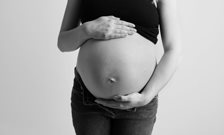
Depression during pregnancy could increase risk of offspring depression in adulthood
Friday, May 22, 2015
Two out of ten plastic rings for babies release chemicals with hormone-like effect

Thursday, May 21, 2015
Study to discover babies' risk of becoming overweight

Thursday, April 30, 2015
Babies feel pain like adults

Monday, April 27, 2015
Who are the heavy babies?

Thursday, April 16, 2015
Oxytocin makes females react to baby cries

Thursday, March 19, 2015
Bodysuit or sleep sack? That is the serious question

CNRS: Scientists observed the effect of preterm babies'
clothing on their behavior. Newborns placed in a sleep sack were less active
and touched parts of their bodies less frequently than those dressed in a
simple bodysuit. The scientists suppose that the former may have been more
stressed for two reasons: their movements were hampered, so that comforting
self-touching was less frequent. This study is published on 17 March 2015 in Scientific
Reports.
Thursday, March 5, 2015
Antiseptic prevents deaths in newborns
Cochrane: A low-cost antiseptic used to cleanse the cord after birth could
help reduce infant death rates in developing countries by 12%, a
systematic review published in the Cochrane Library suggests. Authors of
the review found that when chlorhexidine was used on babies born
outside of a hospital, it reduced the number of newborn babies who died
or suffer from infections.
Chlorhexidine skin care for prevention of mortality and infection in neonates
Cochrane: Infections
are the single most important cause of neonatal deaths worldwide and
are responsible for almost a third of all neonatal mortality.
Affordable, feasible and efficacious interventions to reduce neonatal
infections and improved neonatal survival are needed. Chlorhexidine, a
broad spectrum antiseptic agent, is active against common organisms
causing perinatal infections. Use of chlorhexidine on neonatal skin or
cord, or both, for prevention of infection is a possible strategy to
improve neonatal survival. In this review
we assessed the effects of neonatal skin or cord care with
chlorhexidine compared to routine care or no treatment on neonatal
survival and infections in newborn infants born in the hospital or
community.
Friday, September 19, 2014
Meconium ileus
Meconium is the first stool of a newborn. This stool is very thick and sticky. Meconium ileus is a bowel obstruction that occurs when the meconium is thicker and stickier than normal meconium, creating a blockage of the small intestine. Most infants with meconium ileus have cystic fibrosis.
Subscribe to:
Posts (Atom)