Pennsylvania: Many
groups are working to discover new, safer ways to deliver drugs that
fight cancer to the tumor without damaging healthy cells. Others are
finding ways to boost the body’s own immune system to attack cancer
cells. For the first time, researchers at Penn State have combined the
two approaches by conjugating biodegradable polymer nanoparticles
encapsulated with chosen cancer-fighting drugs into immune cells to
create a smart, targeted system to attack cancers of specific types.
Only good, independent and reliable information about health from experts.
Showing posts with label immune system. Show all posts
Tuesday, March 7, 2017
Nanodiscs deliver personalized cancer therapy to immune system
Ann Arbor: Researchers at the University of Michigan have had initial success in
mice using nanodiscs to deliver a customized therapeutic vaccine for
the treatment of colon and melanoma cancer tumors. "We are basically educating the immune system with these nanodiscs so
that immune cells can attack cancer cells in a personalized manner,"
said James Moon, the John Gideon Searle assistant professor of
pharmaceutical sciences and biomedical engineering.
Tuesday, November 15, 2016
First time flu infection may affect lifetime immunity
NHS: "A person's chances of falling ill from a new strain of flu are at
least partly determined by the first strain they ever encountered, a
study suggests," BBC News reports. Researchers created a modelling study, based on historic data, which aimed to look at the reasons why past flu epidemics of influenza A
– commonly referred to as "bird flu" – have affected different age
groups. It seems it comes down to the strains that were circulating when
you were born.
Monday, November 14, 2016
Immune system uses gut bacteria to control glucose metabolism
Oregon: Researchers at Oregon State University and other institutions have
discovered an important link between the immune system, gut bacteria and
glucose metabolism – a “cross-talk” and interaction that can lead to
type 2 diabetes and metabolic syndrome when not functioning correctly.
The findings, published today in Nature Communications, are one example of how different mammalian systems can affect each other in ways not previously understood. A better understanding of these systems, researchers say, may lead to new probiotic approaches to diabetes and other diseases.
Tuesday, November 8, 2016
Tick-tock: immune T cells know when their time’s up
Scimex: An Australian research team has revealed that the immune cells
enlisted to fight infections in our body are under the control of two
internal ‘clocks’, upending previous theories on how immune responses
are regulated. The team discovered that during an immune response the clocks
allocate a certain amount of time in which the cells can divide, as well
as prescribing the cells’ lifespan. The finding sheds new light on how
the body controls immune responses, as well as explaining how cancers
such as leukaemia and lymphoma maybe caused by errors in this system.
Monday, November 7, 2016
what are antibodies and why are viruses like dengue worse the second time?
TheConversation: Our immune system is like a highly trained army. It fends off
invading pathogens, usually very effectively. The problem is that
sometimes it makes mistakes and attacks us. This can result in allergies, autoimmune diseases or just misfires in the immune system’s attack of invading cells.
But there’s another way the immune system can fail us – by throwing down the welcome mat for viruses on their second invasion.
Labels
antibodies,
dengue,
immune system,
immunity,
mosquitoes
Sunday, November 6, 2016
How statins aid the immune system
Karolinska Institute: Statins protect against cardiovascular disease in more
ways than previously thought. In a study, researchers from Karolinska
Institutet are able to show the immunological effects of statins, and
present a new hypothesis
on why satins are effective at preventing heart attacks. The study is published in
The Journal of the American Heart Association
. Atherosclerosis can lead to a number
of serious medical conditions, such as heart attack, stroke and
intermittent claudication. These and other cardiovascular diseases are
on the increase around the world, and are the leading causes of death in
the west. Johan Frostegård, professor at KI’s Institute of
Environmental Medicine, has had a long-standing interest in
atherosclerosis and the possible underlying causes of this chronic
inflammation. Atherosclerosis is visible on the blood vessel walls as
plaque consisting of accumulated dead cells and oxidised (rancid) LDL
cholesterol (the so-called “bad” cholesterol) and two types of immune
cell, T cells and dendritic cells, which are the key players in this
chronic inflammation.
Immune cells can regulate blood pressure

Karolinska Institute: Researchers at Karolinska Institutet and the Feinstein
Institute for Medical Research have discovered that the human immune
system has a hitherto unknown role – blood pressure regulation.
Collaborating with colleagues from Canada, they have found that a
special kind of immune cell called acetylcholine-producing lymphocytes
can regulate blood pressure in laboratory mice. The study, which is
published in
Nature Biotechnology
, could open the way for new forms of treatment for hypertension.
Friday, January 9, 2015
Immune system
NIH. US: The immune system is a network of cells,
tissues, and organs that work together to protect the body from
infection. The human body provides an ideal environment for many
microbes, such as viruses, bacteria, fungi, and parasites, and the
immune system prevents and limits their entry and growth to maintain
optimal health.
Wednesday, October 8, 2014
Immune system
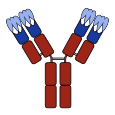
The defense system of the human body is made up of entire organs and vessel systems like the lymph vessels, but also of individual cells and proteins. The inner and outer surfaces of the body are the first barriers against pathogens (germs). These surfaces include the skin and all mucous membranes, which form a kind of mechanical protective wall. Several things support this protective wall:
Subscribe to:
Posts (Atom)


