Showing posts with label melanoma. Show all posts

Sunday, March 21, 2021

Melanoma patients respond to immunotherapy after changes to gut microbiome

Oregon State University : Statistical modeling developed by Oregon State University researchers has confirmed that changes to melanoma patients’ gut microbiome led them to respond to a type of treatment capable of providing long-term benefit.

Findings were published in Science.

The modeling technique invented by Andrey Morgun of the OSU College of Pharmacy and Natalia Shulzenko of Oregon State’s Carlson College of Veterinary Medicine is known as transkingdom network analysis.

Friday, May 18, 2018

Double hit on melanoma unlocks barrier to immunotherapy

Lausanne: Researchers at EPFL and UNIL have discovered a dangerous liaison between immune cells that limits the efficacy of immunotherapy in melanoma. But they also found a way to disrupt it. The study is published in Science Translational Medicine. Immunotherapies are treatments that stimulate a patient’s immune cells to attack the tumor. They can be very effective in melanoma – a common and aggressive form of skin tumor – but still fail in the majority of the patients. To address this, researchers are trying to identify the factors that enable successful immunotherapy, as well as those that may limit it. The ultimate goal is to open new avenues for immunotherapies that are more broadly effective in melanoma, and potentially other cancer types.

Friday, December 23, 2016

Diabetes Drug vs. Cancer

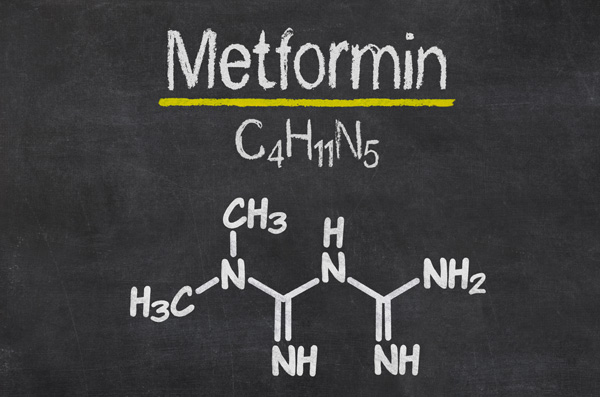
Harvard: Considerable evidence has indicated that a drug used for more than 50 years to treat Type 2 diabetes can also prevent or slow the growth of certain cancers. But the mechanism behind metformin’s anticancer effects has been unknown. Now, a team of Harvard Medical School investigators at Massachusetts General Hospital has identified a pathway that appears to underlie metformin’s ability both to block the growth of human cancer cells and to extend the lifespan of the C. elegans roundworm. Their findings imply that this single genetic pathway plays an important role in a wide range of organisms.

Wednesday, December 21, 2016

Immunotherapy in the Precision Medicine Era: Melanoma and Beyond

PLOS: Innovations in cancer immunotherapy over the past decade have reinvigorated the field, which currently stands poised to transform treatment of certain important cancer types. While recent discoveries in immunotherapy have occurred in an era of intense focus on precision medicine—spurred in large part by advances in sequencing technologies allowing for unprecedented insights into individual and tumor genomes—the field of cancer immunotherapy is rooted in a history that is anything but precise. The idea that the immune system could be used to target cancer has existed for over a century.

Thursday, November 10, 2016

Knowing risk factors could help catch melanomas

Scimex: Australian researchers have pinpointed a set of risk factors that could help doctors tailor individuals’ skin examinations and catch melanoma at an early stage. The new study published online today by JAMA Dermatology shows the team has identified high risk patients who may benefit from tailored surveillance. The incidence of melanoma that occurs on the skin is increasing in predominantly white-skinned populations and Australia’s incidence is among the highest in the world.

Monday, February 1, 2016

The Cell that Caused Melanoma

Harvard: A team led by Harvard Medical School researchers at Boston Children’s Hospital has, for the first time, visualized the origins of cancer from the first affected cell and watched its spread in a live animal.The researchers’ work, published in the Jan. 29 issue of Science, could change the way scientists understand melanoma and other cancers and could one day lead to new, early treatments before the cancer has taken hold.

Wednesday, July 1, 2015

Citrus Fruit Consumption Associated with Increased Melanoma Risk

Journal of Clinical Oncology: Citrus products are widely consumed foods that are rich in psoralens and furocoumarins, a group of naturally occurring chemicals with potential photocarcinogenic properties. The risk of cutaneous malignant melanoma associated with citrus consumption was evaluated.
The risk was : +10%  for two to four times per week, +26% for five to six times per week, +27% for once to 1.5 times per day, and +36% for ≥ 1.6 times per day.  Among individual citrus products, grapefruit showed the most apparent association with risk of melanoma, which was independent of other lifestyle and dietary factors.
Conclusion: Citrus consumption was associated with an increased risk of malignant melanoma in two cohorts of women and men. Nevertheless, further investigation is needed to confirm our findings and explore related health implications.

Wednesday, June 24, 2015

Precision Oncology: Creating a Genomic Guide for Melanoma Therapy

NIH: It’s still the case in most medical care systems that cancers are classified mainly by the type of tissue or part of the body in which they arose—lung, brain, breast, colon, pancreas, and so on. But a radical change is underway. Thanks to advances in scientific knowledge and DNA sequencing technology, researchers are identifying the molecular fingerprints of various cancers and using them to divide cancer’s once-broad categories into far more precise types and subtypes. They are also discovering that cancers that arise in totally different parts of the body can sometimes have a lot in common. Not only can molecular analysis refine diagnosis and provide new insights into what’s driving the growth of a specific tumor, it may also point to the treatment strategy with the greatest chance of helping a particular patient.

Mayo Clinic and TGen Help Launch Clinical Trials to Combat Advanced Skin Cancer

Mayo Clinic and the Translational Genomics Research Institute (TGen) are helping launch a national clinical trial that will apply the latest in precision medicine to treat advanced melanoma skin cancer. The study leverages advances in genomics, informatics, and health information technology, yielding more precise medical treatments for patients with this devastating disease. Mayo Clinic is the only clinical site in Arizona to offer this new treatment, sponsored by Stand Up to Cancer (SU2C) and the Melanoma Research Alliance. These clinical trials are the culmination of nearly four years of research under an SU2C Melanoma Dream Team grant.

Friday, June 12, 2015

Think indoor tanning is a safer alternative to sitting in the sun? Think again

TheConversation: June 21 marks the official start of summer, signaling months of long days spent in the sun, vacations to warm and tropical locations, and, of course, suntans. In a quest for a perfect tan, many people – especially young white women between age 18 and 25 – may head to a tanning salon, using tanning booths, sunbeds and sunlamps to kick-start their tan. Others (including people who are more prone to burn instead of tan) may head to the salon to slowly develop a “base tan,” with the mistaken belief that it will prevent a sunburn. For many consumers of indoor tanning salons, this approach offers what they believe to be a safer alternative to outdoor tanning. But here’s the thing: indoor tanning is just as damaging to your health as lying out in the real sun.

Thursday, June 11, 2015

Interest in Learning About Skin Cancer Appears to Increase During Summer According To Google Searches

JAMA: Google searches for information on melanoma and skin cancer increased over the summer months during a five-year period, although the level of interest did not correlate with the melanoma mortality to incidence ratio, suggesting that increased search volumes may not be associated with early detection, according to a research letter published online by JAMA Dermatology. Researcher Kyle T. Amber, M.D., of MacNeal Hospital, Berwyn, Ill., and coauthors used Google Trends, a research tool which quantifies interest in topics at the population level by analyzing all search queries for a specific term, to extract data for each state from 2010 to 2014 for the terms “skin cancer” and “melanoma.” Search volume indexes (SVIs) are values based on total searches during a specified period per selected region.

Friday, June 5, 2015

Rates of new melanomas – deadly skin cancers – have doubled over last three decades

CDC: Melanoma rates doubled between 1982 and 2011 but comprehensive skin cancer prevention programs could prevent 20 percent of new cases between 2020 and 2030, according to this month’s Vital Signs report. Skin cancer is the most common form of cancer in the U.S., and melanoma is the most deadly type of skin cancer. More than 90 percent of melanoma skin cancers are due to skin cell damage from ultraviolet (UV) radiation exposure.

Tuesday, June 2, 2015

Immunotherapy drug combo could combat melanoma

NHS: "New era in the war on cancer," is the somewhat over-hyped headline on the front of the Daily Mail. The new era refers to the use of immunotherapy – using drugs to coax the immune system into attacking cancerous cells while leaving healthy cells unharmed. The results of a number of studies on immunotherapy have recently been presented at a conference in Chicago. The study we are looking at investigated the use of a combination of two immunotherapy drugs, ipilimumab and nivolumab, in treating advanced melanoma; the most serious type of skin cancer.

Friday, May 29, 2015

Modified herpes virus 'could combat skin cancer'

NHS: "Patients with aggressive skin cancer have been treated successfully using a drug based on the herpes virus," The Guardian reports. A new study suggests a novel form of immunotherapy could be effective for treating some cases of advanced skin cancer. This was a large trial examining the use of a new immune treatment called talimgogene laherparepvec (T-VEC) for advanced melanoma (the most serious type of skin cancer) that could not be removed surgically.

Tuesday, May 26, 2015

Quarter of sun-exposed skin samples had DNA mutations

NHS: A sobering BBC News headline greets sun worshippers on the eve of the spring bank holiday: "More than a quarter of a middle-aged person's skin may have already made the first steps towards cancer." Sunlight is made up of ultraviolet (UV) radiation. Low levels of exposure to UV light are actually beneficial to health – sunlight helps our bodies produce vitamin D. But prolonged exposure can change (mutate) the DNA in the cells. Over time the mutations accumulate, turning the skin cells cancerous, which can lead to either non-melanoma or melanoma skin cancer.

Friday, May 22, 2015

Flying high means more melanoma

JAMA: US scientists have pooled data from previous studies on the incidence of melanoma in airline pilots and flight crew, who are are exposed to higher levels of cosmic and UV radiation than the general population. They report that flight crew have approximately twice the incidence of melanoma compared with the general population, and say that further research into better protection from cosmic radiation is needed. According to a recent study, airline pilots and cabin crew are occupationally exposed to higher levels of cosmic and UV radiation than the general population, but their risk of developing melanoma was not yet established.

Thursday, April 30, 2015

Explainer: how does Keytruda treat melanoma and why is it so costly?

TheConversation: Keytruda® (pembrolizumab) is the latest drug to be registered in Australia for the treatment of widespread melanoma. This is the third class of drugs that improves survival in widespread melanoma to be registered since July 2011. Prior to this no chemotherapy drug prolonged survival once melanoma had spread.

Tuesday, April 14, 2015

Locating new leads in skin cancer genetics

Nature: Scientists at the University of Otago and the University of Auckland have discovered new genes that may play a role in how a specific type of melanoma develops, bringing them a step closer in understanding the complexities of skin cancer. The researchers identified over one thousand 'candidate cancer genes' in mice and, amongst their findings, revealed 46 genes which they say could potentially help predict patients' individual survival chances for the cancer. They conclude that their findings "provide a rich new resource of candidate genes for melanoma progression and drug targeting".

Thursday, April 9, 2015

Delay of Surgery for Melanoma Common Among Medicare Patients

JAMA: In a study that included more than 32,000 cases of melanoma among Medicare patients, approximately 1 in 5 experienced a delay of surgery that was longer than 1.5 months, and about 8 percent of patients waited longer than 3 months for surgery, according to an article published online by JAMA Dermatology. Melanoma is a leading cause of new cancer diagnoses in the United States, accounting for most skin cancer­related deaths. Surgical excision is the primary therapy for melanoma. Surgical delay may result in the potential for increased illness and death from other malignant neoplasms, and may cause anxiety and stress.

Wednesday, April 8, 2015

Personalized melanoma vaccines marshal powerful immune response

Washington: Personalized melanoma vaccines can be used to marshal a powerful immune response against unique mutations in patients’ tumors, according to early data in a first-in-people clinical trial at Washington University School of Medicine in St. Louis. The tailor-made vaccines, given to three patients with advanced melanoma, appeared to increase the number and diversity of cancer-fighting T cells responding to the tumors. The finding is a boost to cancer immunotherapy, a treatment strategy that unleashes the immune system to seek out and destroy cancer.